


What is barfing? An overview
Barfing is an alternative way of feeding pets that consists mainly of raw and natural foods. Barf is on the lips of all animal lovers. But what exactly is this nutritional trend all about and why is barfing so popular? We explain everything you need to know about the importance of barfing, all the advantages and disadvantages and which products are good for your four-legged friends.
The barfing nutrition trend - background to the meaning
Barfen means "biologically species-appropriate raw feeding". This feeding method for pets is based on a balanced combination of raw meat, offal, bones, vegetables and fruit. The aim of barfing is to offer your pet a natural diet that is based on the diet of our pets' wild ancestors. The idea behind it is to adapt the diet of pets to that of their wild ancestors, who mainly ate raw meat, bones and some vegetable matter.
The modern barfing movement was started in the 1970s by various vets, nutritionists and pet owners. One particularly influential proponent of this diet was the Australian vet Dr Ian Billinghurst. He suggested that adult dogs were best fed a diet of raw meat, bones and vegetables, similar to the diet of wolves.
Since then, barfing has spread worldwide and found both supporters and critics. Despite the debate, the ongoing dietary trend has found many supporters. Many pet owners worldwide have opted to feed their pets this method or at least incorporate elements of it into their pets' diets.
The benefits of barfing
Advocates argue that barfing leads to better skin and coat health, improved dental health and a general increase in well-being in pets.
But what are the arguments in favour? Basically, barfing is a natural form of nutrition that is closely linked to the original diet of many of our domesticated animals. In this way, you offer your dog a type of nutrition that is more similar to their natural diet in the wild.
Another significant advantage of barfing is the possibility of customisation. Your dog is unique and has its own nutritional needs. With barfing, you can customise the food composition specifically to the individual needs of your four-legged friend - depending on their age, state of health or activity level.
In addition, barf food does not contain any unnecessary additives. This means that your dog does not consume any unnecessary or potentially harmful preservatives, colourings or fillers. Barf food is pure and unadulterated.
Finally, many pet owners report improved digestion in their pets after switching to barf. Raw food can be easier for many animals to digest, resulting in firmer stools and an overall better digestive system.
All barf benefits at a glance
-
natural nutrition
-
individual customisation of the feed composition
-
no additives, i.e. no unnecessary preservatives, colourings or fillers
-
improved digestion
The disadvantages of barfing
For pet owners, barfing is time-consuming if they want to buy and prepare all the ingredients themselves. It's easier with our Liebesgut barf menus from the flavour protection packaging. They already contain all the important barf ingredients (raw meat, fresh vegetables and oils) in the right mix and portion.
Barfing also requires a certain amount of knowledge and understanding of the nutritional requirements of pets and what nutrients they need. Without this knowledge, you can easily make mistakes in your pet's diet, which can lead to nutritional deficiencies.
In addition, barfing can be quite expensive and time-consuming, especially if you choose high-quality ingredients and want to prepare everything yourself. However, our Liebesgut Barf food eliminates the cost and time constraints. In our products, all the ingredients are already put together in a perfect combination, so you can be sure that your dog is getting a balanced diet without having to dig deeper into your pocket.
Another concern with barfing is the risk of transmitting pathogens through raw meat. Raw food, especially meat, can develop bacteria and other pathogens if left in the bowl for a long time. However, Liebesgut Barf flavour packaging offers a great solution to this problem. Our packaging contains perfect individual portions that your four-legged friend eats quickly.
All barf disadvantages at a glance
-
Time-consuming
-
knowledge required about composition and preparation
-
Costs
-
Health risks
A suitable barf menu for your dog could look like this:
-
Proteins: e.g. beef, chicken, goat or lamb
-
Vegetables: e.g. broccoli, spinach, carrots and courgettes
-
Carbohydrates: e.g. cooked rice or oatmeal
-
Fats: e.g. salmon oil or linseed oil for essential fatty acids
-
Extras: e.g. eggshell powder (calcium) and dried seaweed (iodine)
A balanced barf menu for your four-legged friend should contain all the essential nutrients they need for a healthy life.
As an essential component of barf food, proteins primarily support muscle development. A good barf menu offers beef, chicken, goat or lamb as the main source of protein, for example. Choose the right variety depending on your four-legged friend's preferences and tolerance.
Vegetables provide important vitamins and minerals. A combination of broccoli, carrot, spinach and courgette not only offers variety, but also a good mix of nutrients. Broccoli is bursting with vitamins and antioxidants, carrots provide beta-carotene and courgettes are easy to digest and good for the stomach.
Even though dogs are mainly carnivores, carbohydrates are another good source of energy. Cooked rice or oatmeal are considered easily digestible carbohydrates.
Fats are essential for energy metabolism and support healthy skin and coat. Salmon oil or linseed oil contain essential fatty acids that can reduce inflammation and ensure a shiny coat.
In addition to the main ingredients, extras can also be added to the barf menu. Eggshell powder, for example, is a fantastic natural source of calcium. It is essential for healthy bones and teeth. Dried seaweed, on the other hand, provides iodine, which is essential for thyroid function.
Barf is a species-appropriate diet for your four-legged friend
If you want to switch to barfing, make sure you use high-quality ingredients and a balanced composition. At Liebesgut, we have created special product ranges for puppies, adult dogs and sensitive four-legged friends.
Organic quality at the highest level, a considerable proportion of meat and local, organically certified ingredients define our work at Liebesgut. We reject factory farming, animal testing and genetic engineering. Instead, we offer barf dog food that is completely free from artificial flavours, colours and preservatives as well as antibiotics. Our food is also ideal for dogs with lactose or gluten intolerance.
But our commitment is not limited to product sales. Our experienced team will support you with help and advice on all aspects of your four-legged friend's barf diet. You are welcome to take advantage of our specialist nutritional advice. We will give you useful advice on the ideal meal for your dog. Take a look at our Liebesgut magazine and be inspired by our current, informative articles for animal lovers.
Would you like to experience Liebesgut up close? Visit us in one of over 130 Fressnapf stores. Discover our barf product range and see for yourself!
What do I need to consider when feeding my dog barf?
In addition to the correct preparation and handling of raw meat, the most important thing is that you feed your dog what he or she needs. Every dog is different, has its own preferences and individual needs.
First of all, you should make sure that your dog can tolerate raw food and the planned ingredients and that there are no relevant intolerances. Raw meat is usually easy to digest, but has a lot of protein, which can upset some dogs' stomachs. Raw vegetables are also not suitable for every dog.
How exactly you put together the barf menu depends very much on the breed, age and activity of your pet. In general, you can remember that about 80 % of the food should consist of animal products and 20 % of plant material. The animal part is divided into approximately 50 % muscle meat and 50 % offal, the vegetable part should consist of 75 % vegetables and 25 % fruit. If your dog has pre-existing conditions or special dietary requirements, the proportions must be adjusted accordingly. If you are unsure how the menu should be put together for your four-legged friend, you should ask your vet. Our nutritional counsellors will of course also be happy to guide you. Our organic barf menus are already perfectly balanced for most dogs, even if they have intolerances, you will find suitable barf sets here.
A big advantage of barfing is that you can determine exactly which additives are added to your dog's food - you can also simply mix medication or food supplements into the food. With well-balanced food, you can ensure that your dog gets exactly the nutrients it needs."
Selected for You
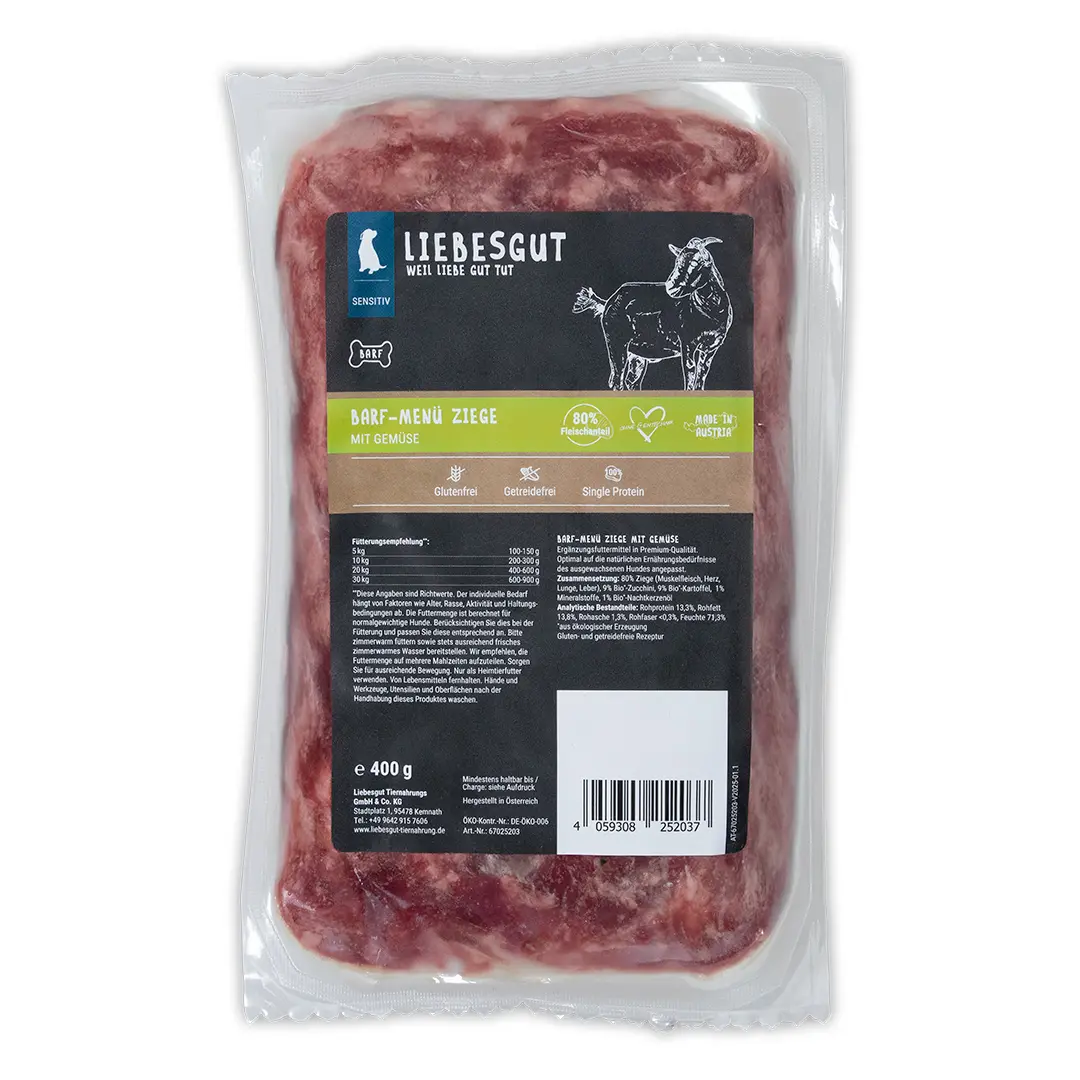
Barf Sensitive dog food (frozen)
Contents: 5.6 kg (€14.98* / 1 kg)
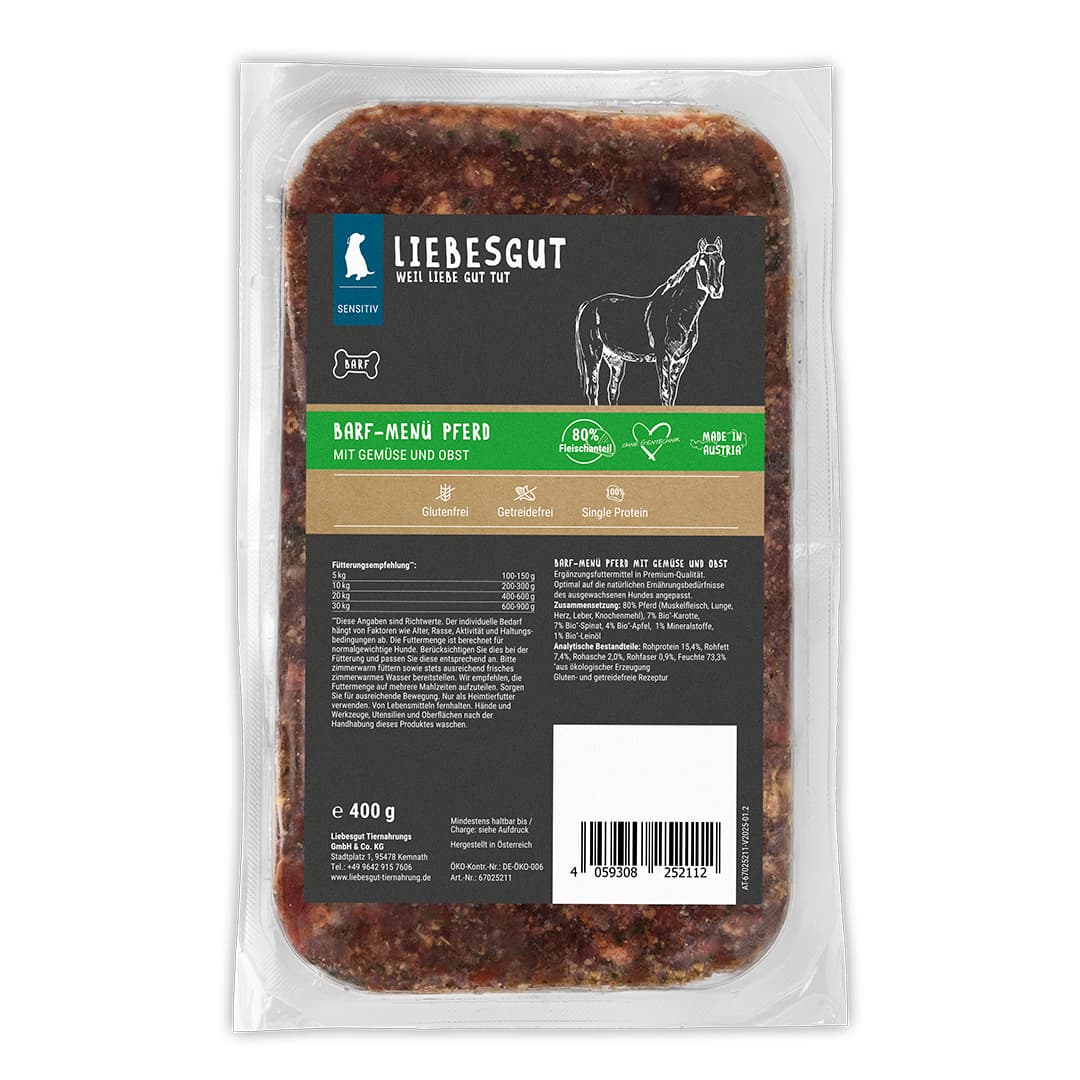
Barf Sensitive dog food (frozen)
Contents: 5.6 kg (€14.98* / 1 kg)

Barf Sensitive dog food (frozen)
Contents: 7 kg (€11.98* / 1 kg)

Bio-Barf Sensitive dog food (frozen)
Contents: 5.6 kg (€14.98* / 1 kg)
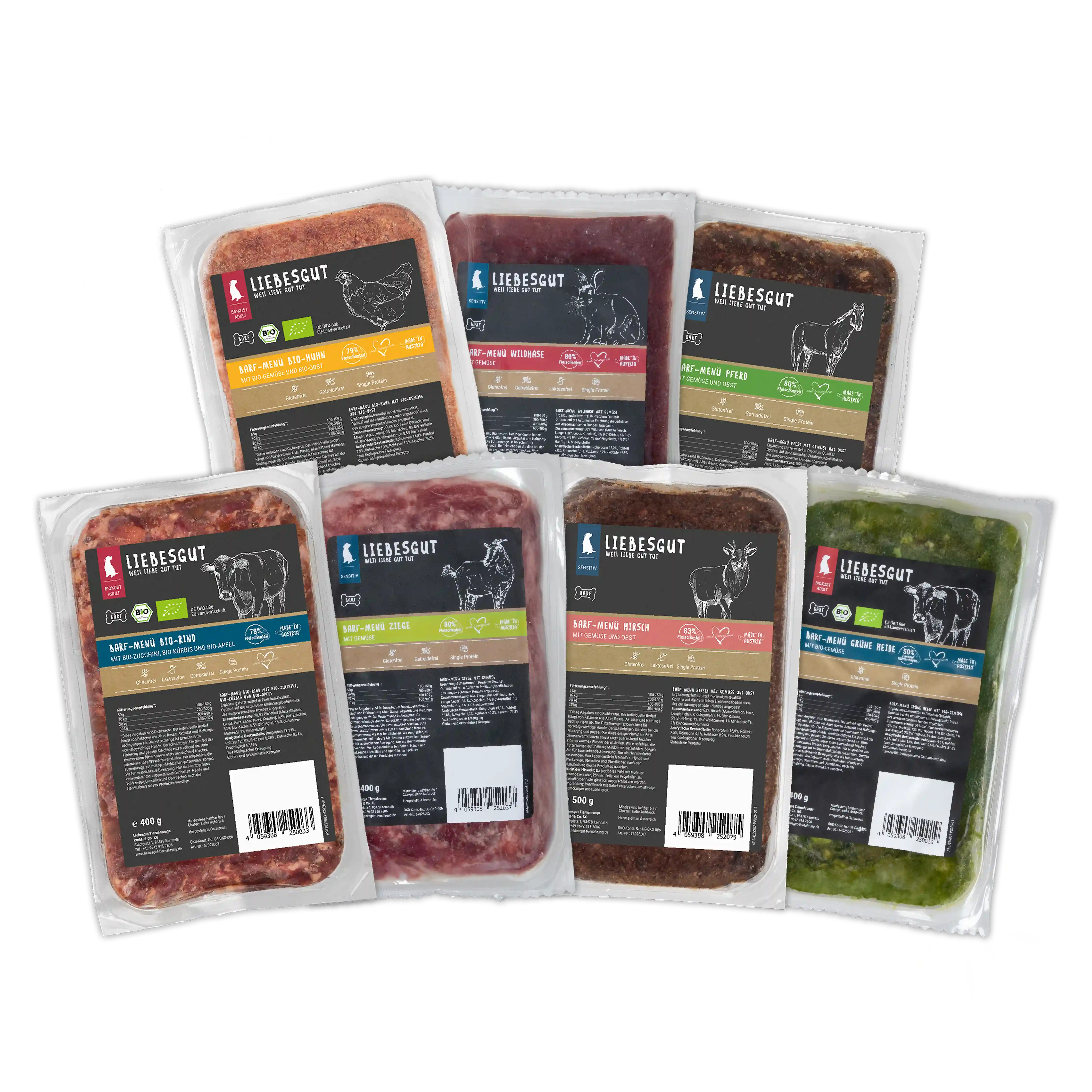
How do I switch my dog to barf food?
The best way is step by step. This will allow your dog's stomach and intestines to adjust to the new diet. For example, you can start by replacing around 10% of your dog's current food with barf. Then increase this proportion over 7-10 days until your dog has completely switched to barf. During this phase, keep a close eye on your dog's eating behaviour, bowel movements and general well-being.
Frequently asked questions about barfing
Will my dog get all the nutrients and trace elements it needs by feeding barf food?
With the right planning or our products, which contain a careful selection of ingredients, a barf diet can provide all the necessary nutrients and trace elements that your dog needs. Check regularly whether your dog is tolerating the barf diet well. Depending on your dog's age, state of health and activity level, different barf compositions are available. At Liebesgut you will find 3 product lines that we have specialised in for adult dogs, puppies and sensitive four-legged friends. This means your dog gets all the nutrients it needs at its individual stage of life.
Can I feed puppies barf food?
Yes, you can feed your puppy barf food. However, it must contain all the necessary nutrients in the right quantities, as puppies have special nutritional requirements for their rapid growth and development. Try our Liebesgut barf puppy food specially designed for puppies.
Which vegetables or fruit can I feed my dog when barfing?
Many vegetables such as broccoli, carrots, spinach and courgettes are very suitable for dogs' stomachs. When it comes to fruit, apples, pears and berries are a good choice. Seeds and stones have already been removed from the Liebesgut complete Barf menu. Grapes, onions and avocado, for example, are poisonous for dogs. Here you can find out which fruit and vegetables are suitable or unsuitable.
Selected for You
Barf Sensitive dog food (frozen)
Contents: 5.6 kg (€14.98* / 1 kg)
Barf Sensitive dog food (frozen)
Contents: 5.6 kg (€14.98* / 1 kg)
Barf Sensitive dog food (frozen)
Contents: 7 kg (€11.98* / 1 kg)
Bio-Barf Sensitive dog food (frozen)
Contents: 5.6 kg (€14.98* / 1 kg)