


Love is the only additive in our organic food
We are switching! From now on we only offer organic products! At the start of this change at Liebesgut there is a lot to save for you! From 5 % up to 15 % you can secure the discounts the whole weekend! (voucher codes attached in the picture)
You already found out why we have completely switched to organic in our last post. If you missed it, you can read it again at any time. Click here for the article!
The guiding principles of organic farming and all its benefits for health, the environment and animals were explained.
We are staying on this topic. Today's article is also dedicated to organic farming. The only difference is that we are looking specifically at the use of medicines in animal husbandry. Compared to conventional farming, the use of antibiotics in organic products is more strictly regulated and therefore offers numerous advantages for our ecosystem and consequently for all living creatures.
Consequences of the high use of medicines in conventional farming
Conventional farming requires a high use of medication due to the limited space available in animal husbandry, as otherwise diseases would constantly break out. The high stocking density ensures a high transmission rate of diseases. In pig and poultry farming in particular, medication is administered preventively, i.e. animals are treated before they are even sick.
The use of antibiotics as growth accelerators, which is permitted in 34 countries, has been banned in Germany since 2006. However, antibiotics may also be administered to healthy animals in the herd if a small number of conspecifics show symptoms of illness. This can have a similar effect to the banned prophylactic administration of antibiotics.
The problem with this is that bacteria are quite skilful survivors and can develop increased resistance as they have high mutation rates. Heavy use of antibiotics leads to antibiotic-resistant MRSA and ESBL bacteria. This in turn means that, in the worst case, antibiotics are no longer effective and reserve antibiotics have to be used. The causes of germ transmission are inadequate hygiene in slaughterhouses or cutting plants and insufficient heating of the meat during preparation. Resistant germs also enter the groundwater through rinsed manure in the fields or generally through the ventilation systems of the stables.
Antibiotics can also be found in drinking water, as can hormones and other xenobiotics, which really have no place there and can seriously disrupt our metabolic processes, as well as those of our pets. Hormones are messenger substances that take over certain regulatory functions and have specific effects on the organ of success. A disturbance of the sensitive hormone balance can have harmful effects on the entire body.
High oestrogen levels in the water lead to falling reproduction rates in fish, as sperm production in males is greatly reduced.
For the Scientific Advisory Council for Agricultural Policy, a "significantly reduced use of pharmaceuticals" is one of the guidelines for livestock farming that is accepted by the population. By improving animal health, the overall use of medicines in livestock can be reduced.
The stables must be adapted to the animals, not the animals to the stables. Stock care and animal breeding must also be improved accordingly. Neuland farmers, pasture-based farms and organic farms have been demonstrating for years that things can be done differently.
Examples from other EU member states (e.g. Denmark) and the experience of many organic farms show that it is possible to reduce the use of antibiotics without compromising animal health. Medication is used much less frequently there.
Stricter requirements for organic farming
At Liebesgut, we are in favour of the responsible use of medicines, and only when it is really necessary and not at the expense of farm animals and the environment.
Medication is also used in organic farming, as there is an obligation to help the sick animal immediately and avoid suffering. However, homeopathic and phytotherapeutic medicines are preferred to chemically-synthesised, allopathic remedies or antibiotics. The responsibility for the use of antibiotics lies with the vet. The preventive administration of conventional medicines, such as antibiotics, is prohibited.
Special requirements of the EU Organic Regulation apply to the use of conventional veterinary medicinal products:
- The conventionally specified withdrawal period must be doubled
- For medicines with a withdrawal period of 0 days, a minimum withdrawal period of 48 hours must be observed
- Treatments must be documented in detail (notification to inspection body) and the treated animals must be clearly labelled
- Animals may be treated with conventional medicines a maximum of three times per year (with the exception of vaccines and antiparasitics)
- Fattening animals whose lifespan is less than one year may only be treated with such preparations once in their lifetime (with the exception of vaccines and antiparasitics)
- No use of growth or performance promoters
- No use of hormones to control reproduction
Failure to comply with these rules may result in exclusion from organic marketing.
Antibiotics are not cough sweets. They can make the difference between life and death, which is why their use should be carefully considered. Health is our most important asset, and we must not spoil it with the ill-considered use of antibiotics. Organic products enable sustainable, responsible consumption.
The stricter requirements and better animal husbandry in organic farming ensure that medicines do not have to be used so often in the first place. This results in healthy products that provide valuable and natural nutrients.
Our recommendations for your four-legged friend:
Related products
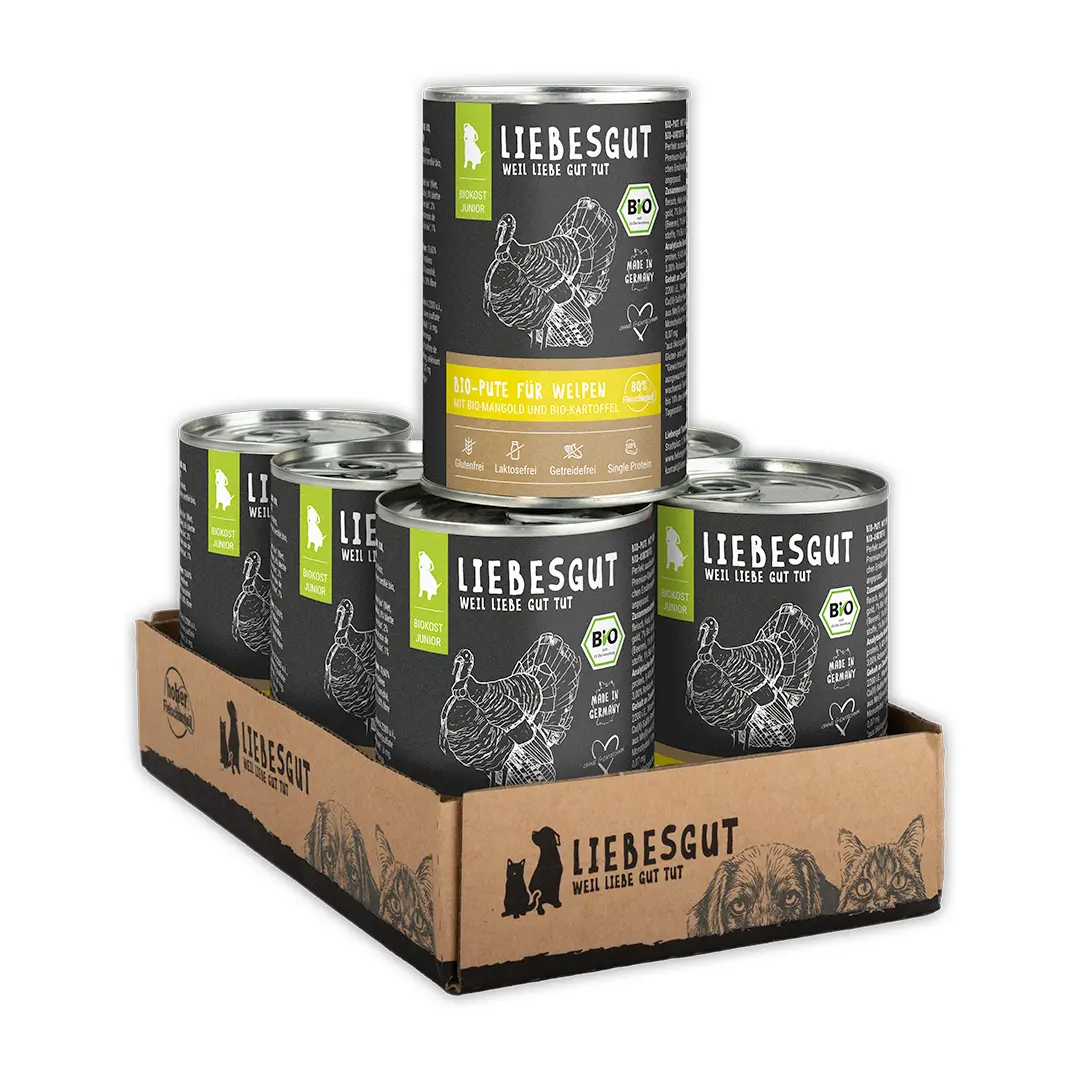
Bio Hundefutter Junior
Contents: 2.4 kg (€8.98* / 1 kg)
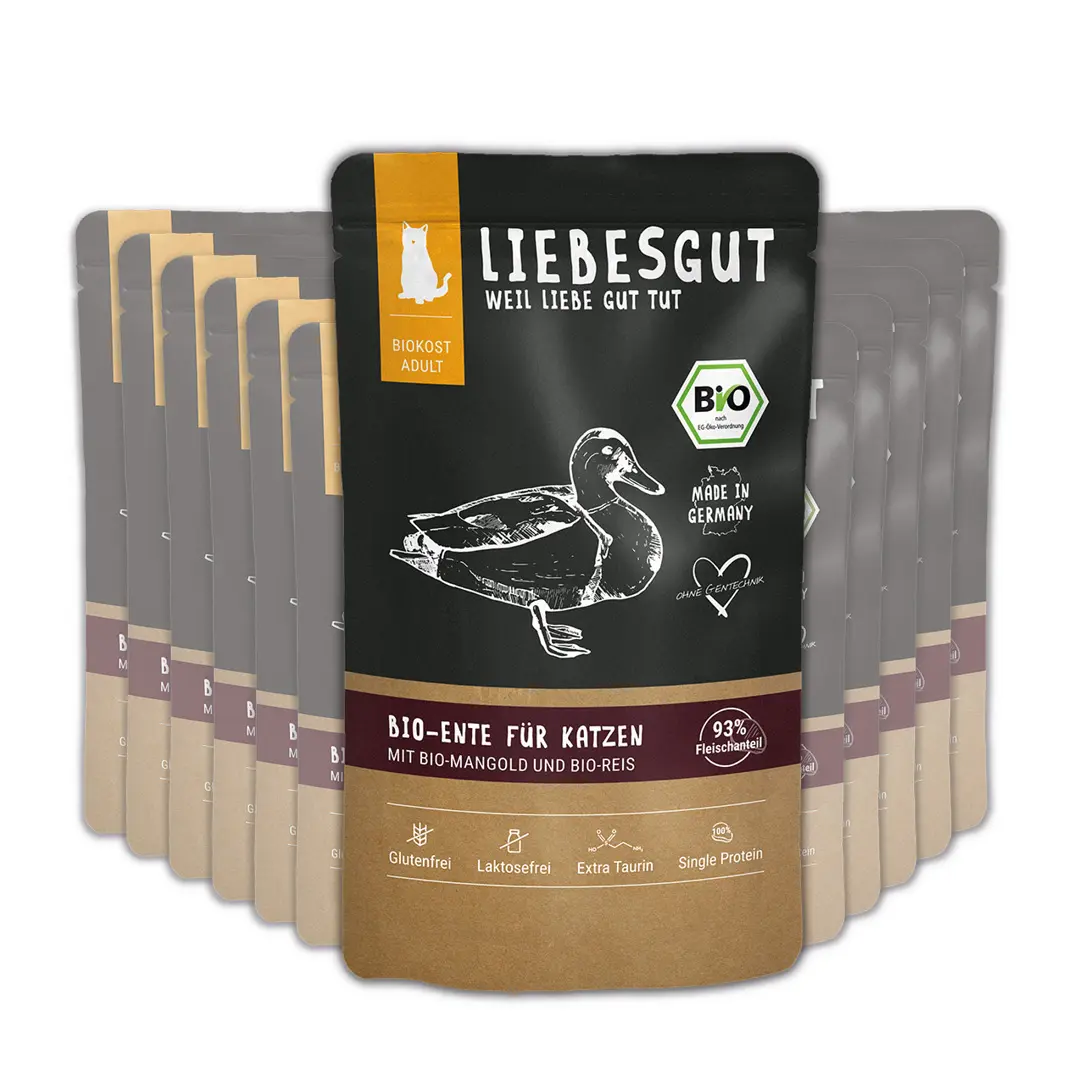
Bio Katzenfutter Adult
Contents: 1.2 kg (€15.91* / 1 kg)
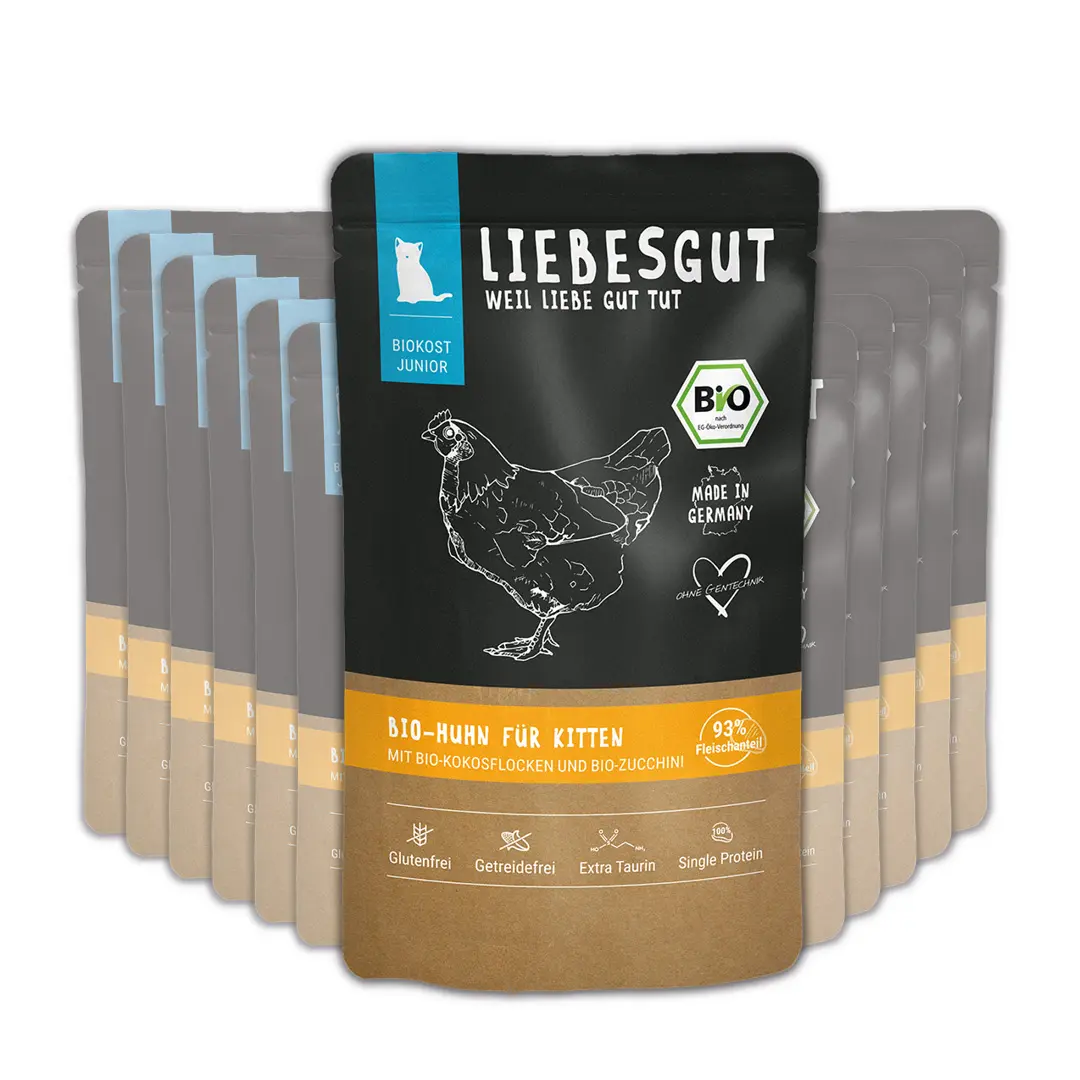
Bio Katzenfutter Junior
Contents: 1.2 kg (€11.13* / 1 kg)

Sensitive dog food
Contents: 2.4 kg (€9.98* / 1 kg)