


We are 100% organic from July and still 100% love
We are switching completely to organic products from July. Why? You can find out here.
Organic is no longer an issue that only concerns the classic Birkenstock wearers. Organic has arrived in the centre of society and represents values that move the masses. Ever since the enormous popularity of the bee protection referendum in Bavaria, it has been clear that yes, the environment concerns us all and many people are prepared to do something about it.
The industrialisation of agriculture has led us down the wrong path. The accompanying intensification of fertilisation, the use of pesticides, the use of growth regulators and the simplification of crop rotation, the decoupling of arable and livestock farming.
We are all aware of the consequences of this; after all, they often appear in the newspapers. Surfaces and groundwater are polluted. There are pollutant residues in drinking water and food. Soils are jeopardised by contamination and erosion. The decline in biodiversity and our unique flora and fauna is progressing and climate change is also being fuelled by agricultural emissions such as CO2, methane and N20.
This sounds anything but rosy, which is why we no longer want to be part of it. We focus on love for animals and the environment. Switching to a completely organic range is the only logical consequence. Food is life, gives us energy and strength and should not poison us or make us ill.
What exactly does organic actually mean? The concept behind it
Organic farming focuses on maximising the use of the farm's own material cycle. This means that as much as possible comes from the farm's own production and is utilised again on the farm. Production is adapted to the location. Renewable resources are conserved and natural control mechanisms are used instead of chemical-synthetic means of production.
In plant cultivation, easily soluble mineral fertilisers and synthetic chemical pesticides are largely avoided.
That all sounds much better. The main aim of organic farming is to create a cycle in order to work with nature instead of against it.
What concrete effects does this have on us?
Health benefits
Organic farming has an indirect impact on us in that the environment is less polluted with harmful substances such as antibiotics, hormones, pesticides and nitrates. The air we breathe and the water we drink should be pure and clean.
Direct effects logically result from the direct consumption of food. Organic food is healthier, as the contamination of products with antibiotics, hormones, pesticides and nitrates is significantly reduced or even completely eliminated.
Species-appropriate animal husbandry
Organic farming is based on the principle of the co-creation of farm animals. Animal welfare has been a major issue since the early days of the organic movement.
The location and operating conditions determine the type and scope of animal husbandry, so it is not just a matter of mass production and maximising the number of products. Care is taken to ensure that each farm produces as much as it can without exhausting its own capacities.
The feed is species-appropriate and comes mainly from our own production. The husbandry systems are adapted to the species-appropriate needs of the animals. Animal health is maintained and promoted by optimising husbandry, feeding, breeding and care. The performance level of the animals is adapted to the farm-specific conditions and should not be compulsively increased at the expense of animal health.
No routine operations are permitted and since 2012 castration has only been allowed with prior anaesthesia.
Free from genetic engineering
It is important to emphasise the strict ban on genetic engineering. Nobody knows what long-term effects genetic engineering has on the organism, which is why we say from the bottom of our hearts: "No thanks!" Organic farming is also doing pioneering work in practice, control, advice and education to ensure freedom from genetic engineering.
Products from the organic segment demonstrably cause less damage to the environment and all living creatures. They are healthier, tastier and free from genetic engineering. We want to do something good for your animal and offer only the best products. For all these reasons, our entire range is now certified organic and continues to be full of love. True to our motto, because love is good for you!
Our recommendations for your four-legged friend:
Related products

Hundefutter Adult
Contents: 2.4 kg (€9.98* / 1 kg)
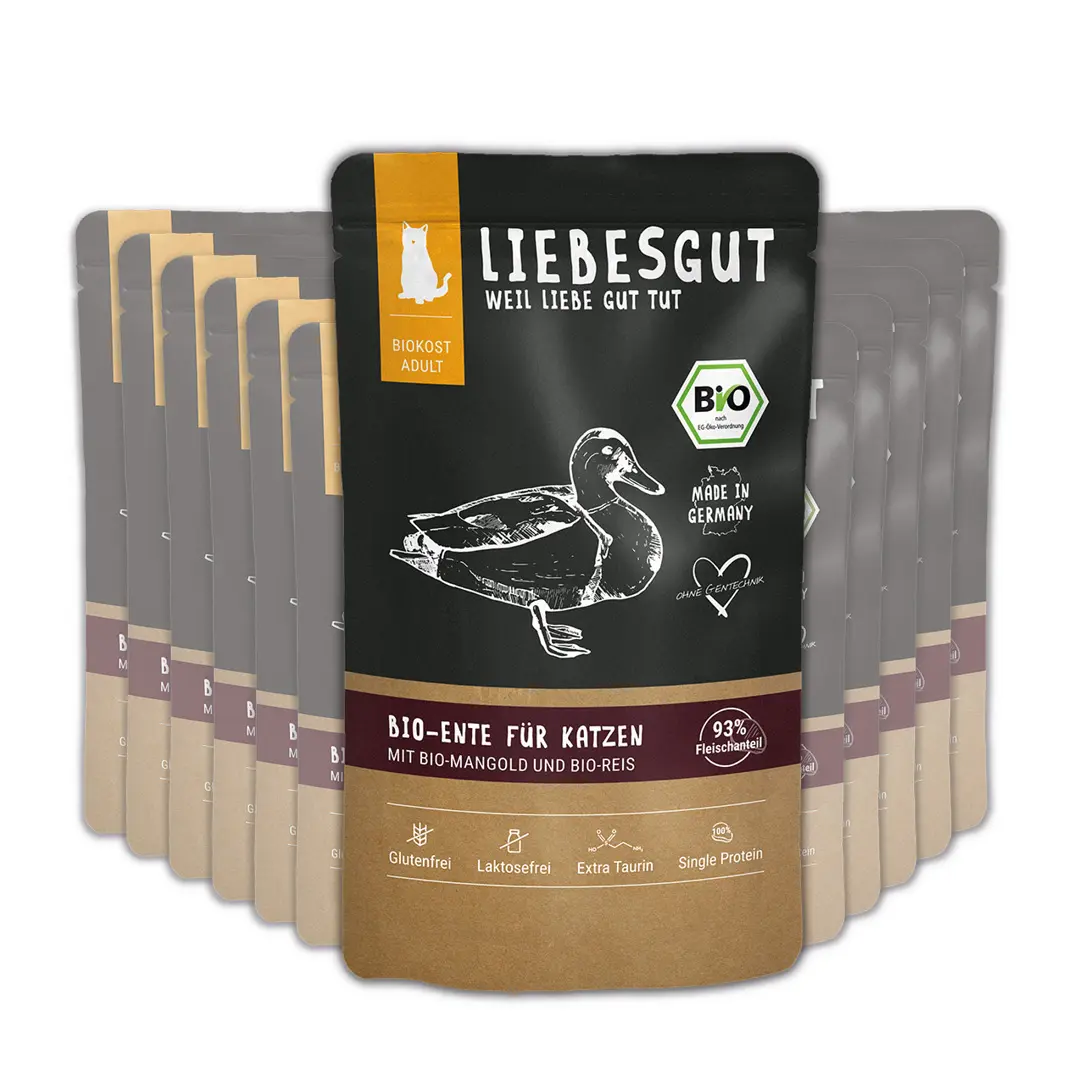
Bio Katzenfutter Adult
Contents: 1.2 kg (€15.91* / 1 kg)
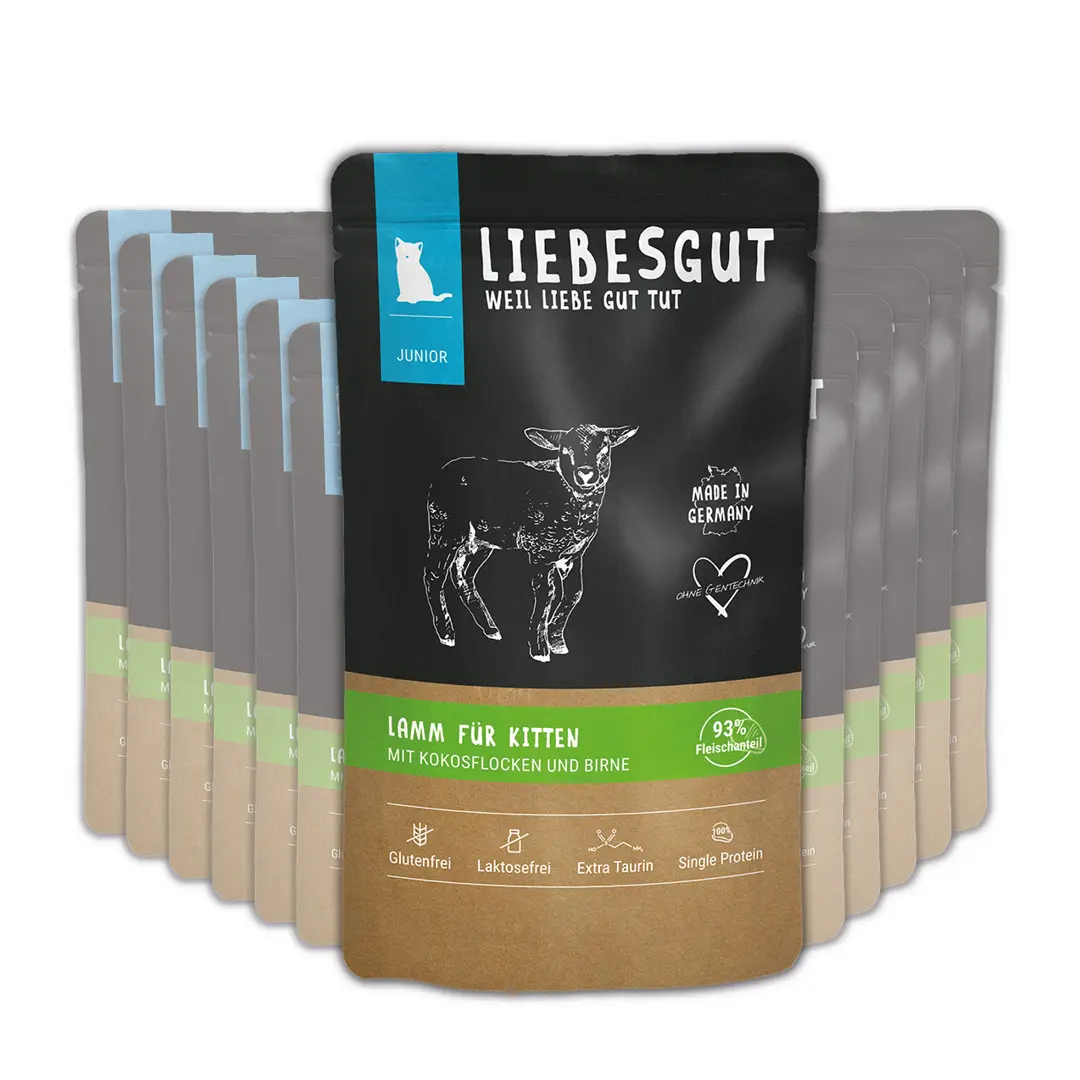
Katzenfutter Junior
Contents: 1.2 kg (€10.14* / 1 kg)

Hundefutter Sensitiv
Contents: 2.4 kg (€9.73* / 1 kg)