


Why our rabbits are wild but not organic
At Liebesgut, we are committed to sustainable, healthy feed production in harmony with animals and nature. All our products are certified organic, except, strangely enough, the rabbit. We explain why in this article.
Organic certification is based on strict criteria. The feeding and husbandry of the animals is closely monitored and is therefore entirely subject to human control.
Liebesgut rabbits come from northern Germany and Scandinavia, are wild animals and do not live in stables.
This means that free-range animals cannot be labelled organic, as no precise controls are possible.
If you would like to find out more about the characteristics of wild rabbits, you are welcome to read the profile. You will find exciting information about their characteristics, their distribution, their habitat, their special sensory abilities and their reproduction. Did you know, for example, that rabbits can tell the difference between the water and salt content of plants? Read on and find out even more fun facts about wild rabbits.
Profile: Wild rabbit
Characteristics:
- much smaller than the brown hare, with shorter ears without black tips, dark eyes
- Hair grey-brown on top, the neck rusty-brown, the belly and underside of the short tail (flower) are white in colour
- both sexes are the same size, the body length is 40 - 50 cm, the weight is 1.5 to 2 kg
- Rabbits have significantly shorter hind legs than hares, as they only have to make short sprints to their nearby burrows to avoid predators
Distribution:
- originally only found in Iberia and North Africa, brought to southern Europe by the Romans, later naturalised in many places
- today found throughout Europe, with the exception of northern Scandinavia and Iceland
- the high reproduction rates of rabbits and lack of predators sometimes lead to extensive disturbances in ecosystems that are not adapted to them (e.g. Australia, New Zealand and America)
Habitat:
- open landscapes with low vegetation, loose soil for burrowing
- in the area of origin at the borders of landscape types such as wet grassland or sandy vegetation zones
- avoids large forest areas
- few larger, suitable habitats are available in today's intensively utilised Central European landscapes
Food:
- mainly grasses, also other plants, generalist feeder
- not picky (in contrast to the brown hare), as the small radius of action (burrow as centre and security!) and high densities do not allow specialisation
- the seasonal availability of food can regulate rabbit populations
- Rabbits can differentiate between the water and salt content of plants
Sensory abilities and behaviour:
- during fights or when attacked by predators, they emit long, shrill cries
- Drum on the ground with their hind legs as a warning signal
- have a large number of glands that communicate information about their individual status and territory to group members and other rabbit families
- the sense of smell is therefore very well developed. The sense of sight reacts mainly to movement. Rabbits often stand on their hind legs to hear and see into the distance. Tactile hairs are used for orientation in the burrow and in the tubes
- family burrows are created. Hierarchies prevail within the family, which are sometimes defended by aggressive fights
- the group/family defends a territory
Reproduction and life expectancy:
- Mating season begins in February / March
- after a gestation period of 28-30 days, the female lays 5-10 young, which are naked and blind, in a nesting tube dug for this purpose (nest stool)
- a doe can have 2 to 4 litters per year
- from the 20th day, the young are also suckled outside the burrow. Weaning takes place shortly before the next litter
- Rabbits are sexually mature at 6 - 8 months
- average life expectancy does not exceed 2 years
Natural enemies:
- many ground and air predators in the area of origin (all predator species, almost all larger birds of prey)
Hunting rights:
- Wild rabbits may be hunted all year round, subject to § 22(4): leading animals must be spared during the breeding season.
Hunting serves to maintain the biological balance due to a lack of natural enemies. So instead of spending their entire lives in a hutch, wild rabbits have a free life and can live out their natural behaviour. Wildlife management is necessary to keep populations within an appropriate range. By utilising the rabbit meat, the cycle is closed.
We therefore do not use the BIO label for rabbits because it is more important to us that the animal has had a species-appropriate life in freedom.
All our menus have been developed by vets and nutritional specialists. The all-natural recipes bring together all the essential nutrients for the animal's particular living conditions. Our single protein in this menu: Wild rabbit. In addition to fresh muscle meat, animal-healthy offal and fresh vegetables, fruit and herbs provide important nutrients for a vital and long life. High-quality oils ensure a special balance of fatty acids. All recipes are created with love for your four-legged friend. We only offer the best food, because love is good for you.
Bibliography:
Niethammer, J.; Krapp, F. (2003): Handbook of the Mammals of Europe. Volume 3/II: Lagomorpha - Lagomorpha. Aula Verlag Wiesbaden.
Our recommendations for your four-legged friend:
Selected for You
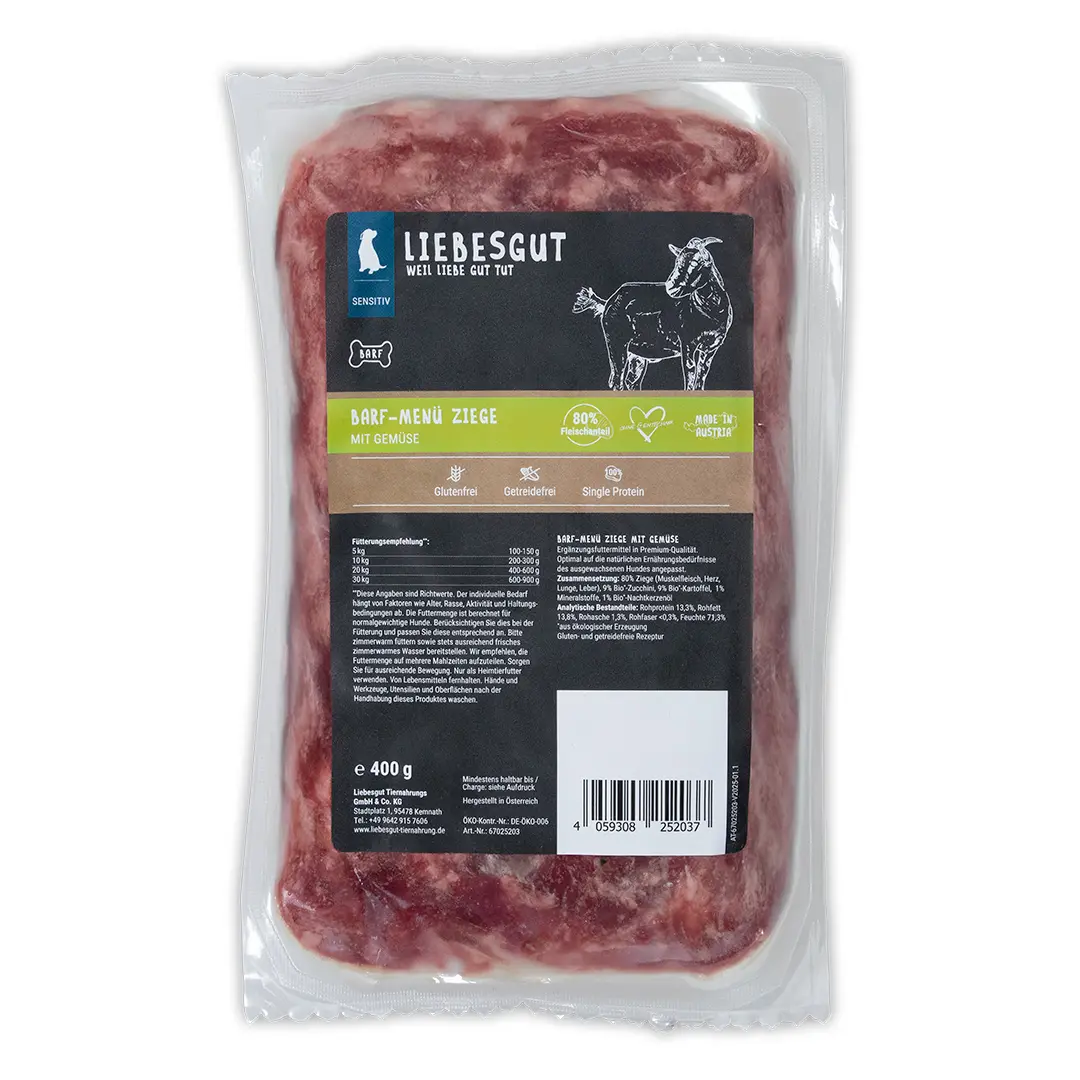
Barf Sensitive dog food (frozen)
Contents: 5.6 kg (€14.98* / 1 kg)
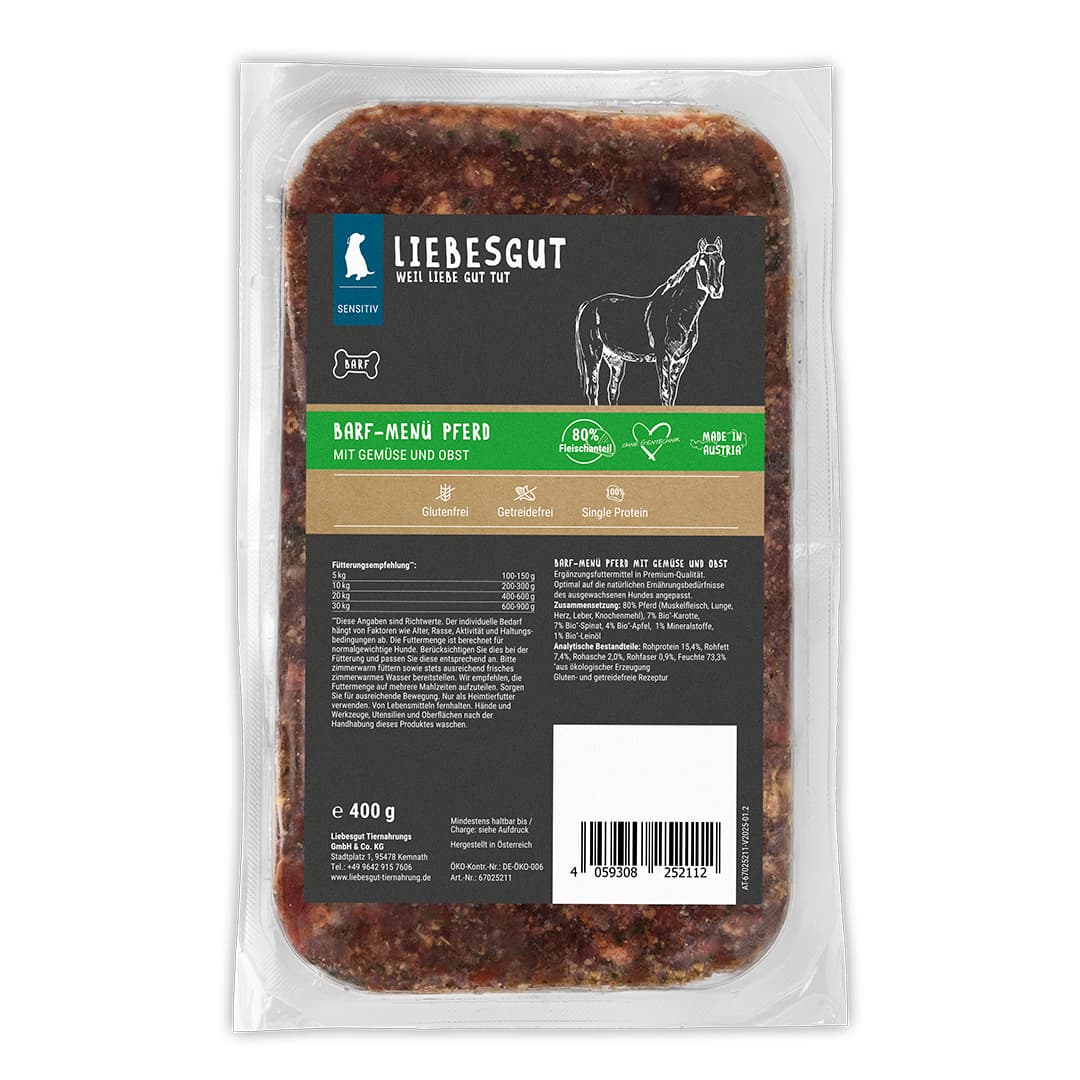
Barf Sensitive dog food (frozen)
Contents: 5.6 kg (€14.98* / 1 kg)

Organic Barf Dog Food Adult (TK)
Contents: 5.6 kg (€11.23* / 1 kg)
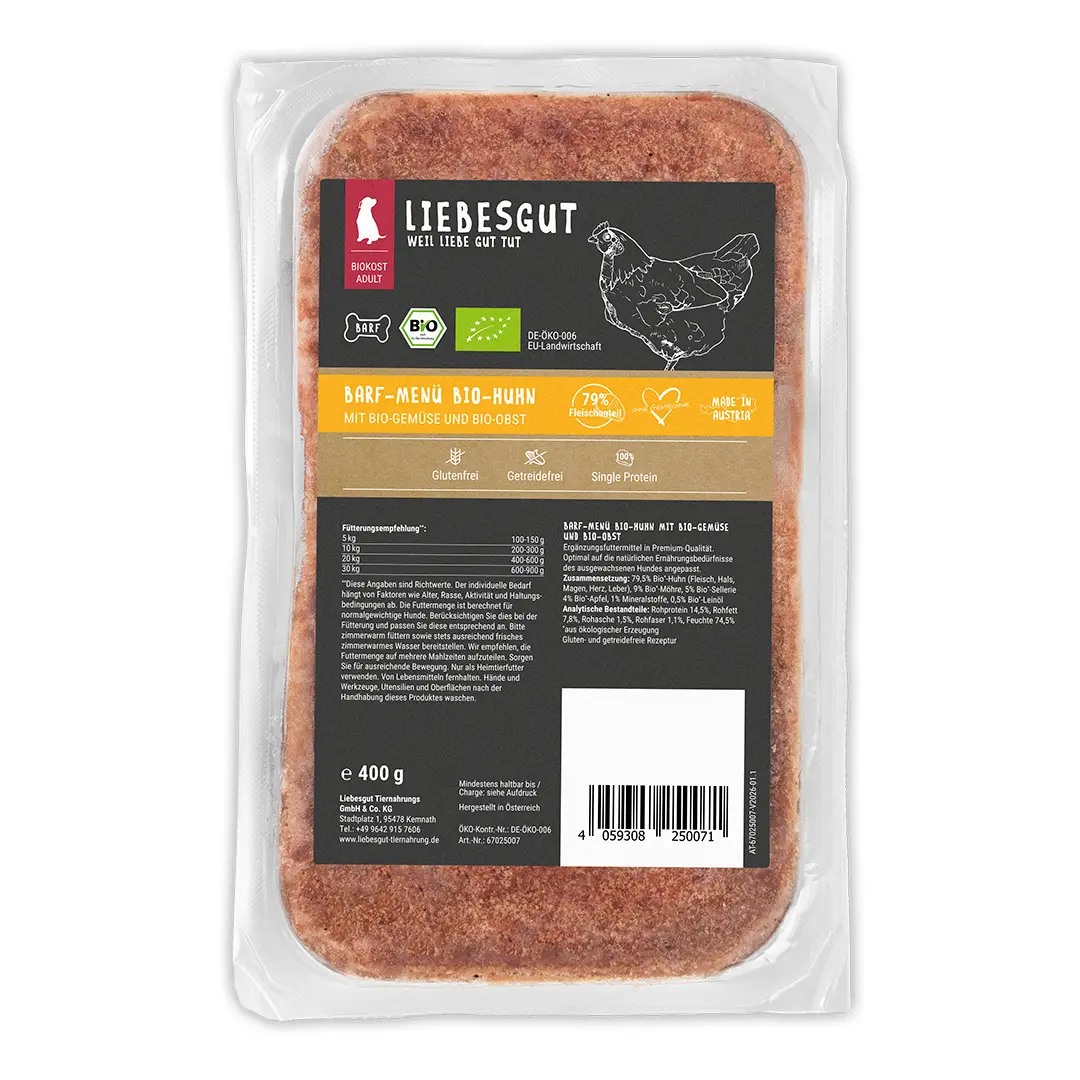
Organic Barf Dog Food Adult (TK)
Contents: 5.6 kg (€11.23* / 1 kg)
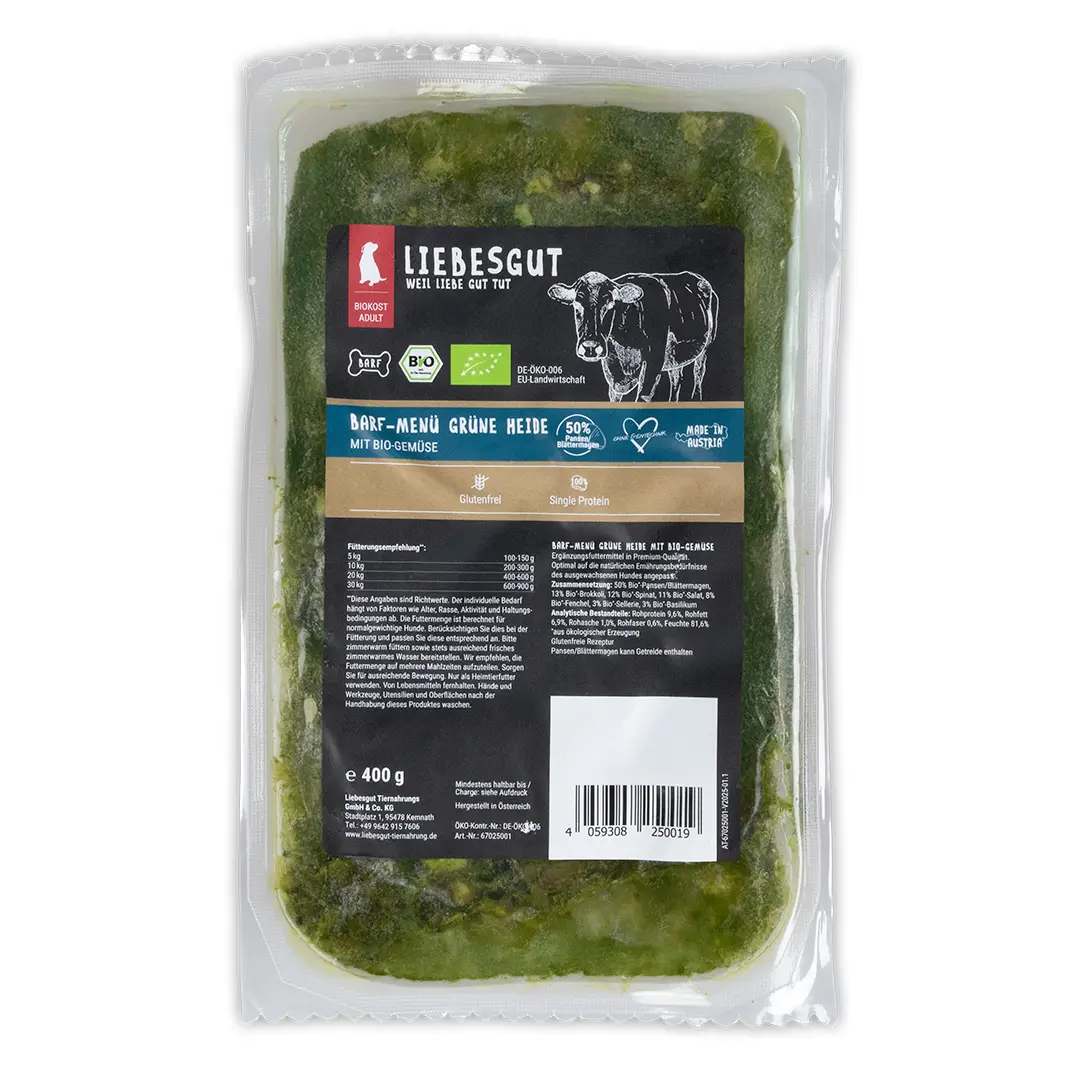
Organic Barf Dog Food Adult (TK)
Contents: 5.6 kg (€11.23* / 1 kg)

Barf Sensitive dog food (frozen)
Contents: 7 kg (€11.98* / 1 kg)

Bio-Barf Sensitive dog food (frozen)
Contents: 5.6 kg (€14.98* / 1 kg)

Bio Snack für Hunde
Contents: 0.15 kg (€40.60* / 1 kg)

Adult & Sensitive dog food
Contents: 16.8 kg (€8.69* / 1 kg)

Adult & Sensitive dog food
Contents: 19.2 kg (€8.70* / 1 kg)

Adult dog food
Contents: 7.2 kg (€8.60* / 1 kg)

Adult dog food
Contents: 14.4 kg (€7.19* / 1 kg)

Junior dog food
Contents: 7.2 kg (€8.30* / 1 kg)

Sensitive dog food
Contents: 9.6 kg (€8.75* / 1 kg)

Sensitive dog food
Contents: 19.2 kg (€7.72* / 1 kg)
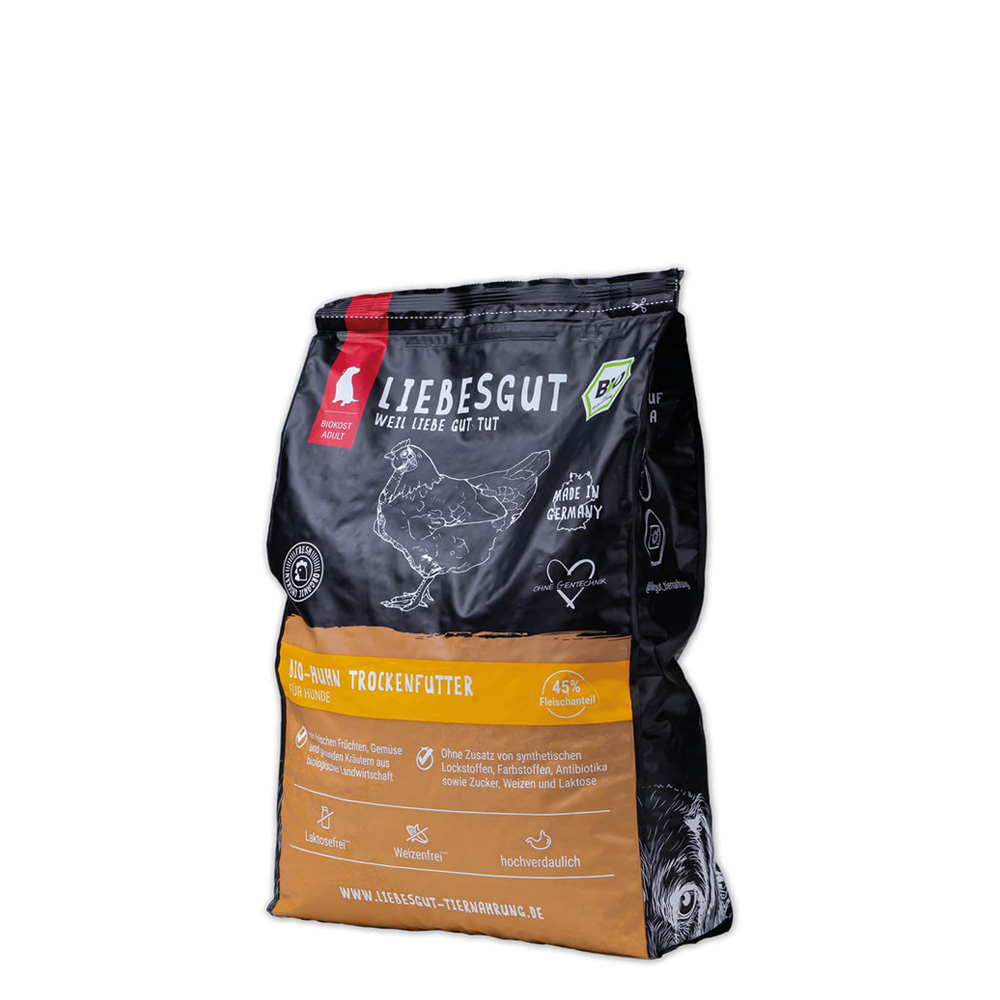
Organic dry dog food
Contents: 1.5 kg (€9.06* / 1 kg)
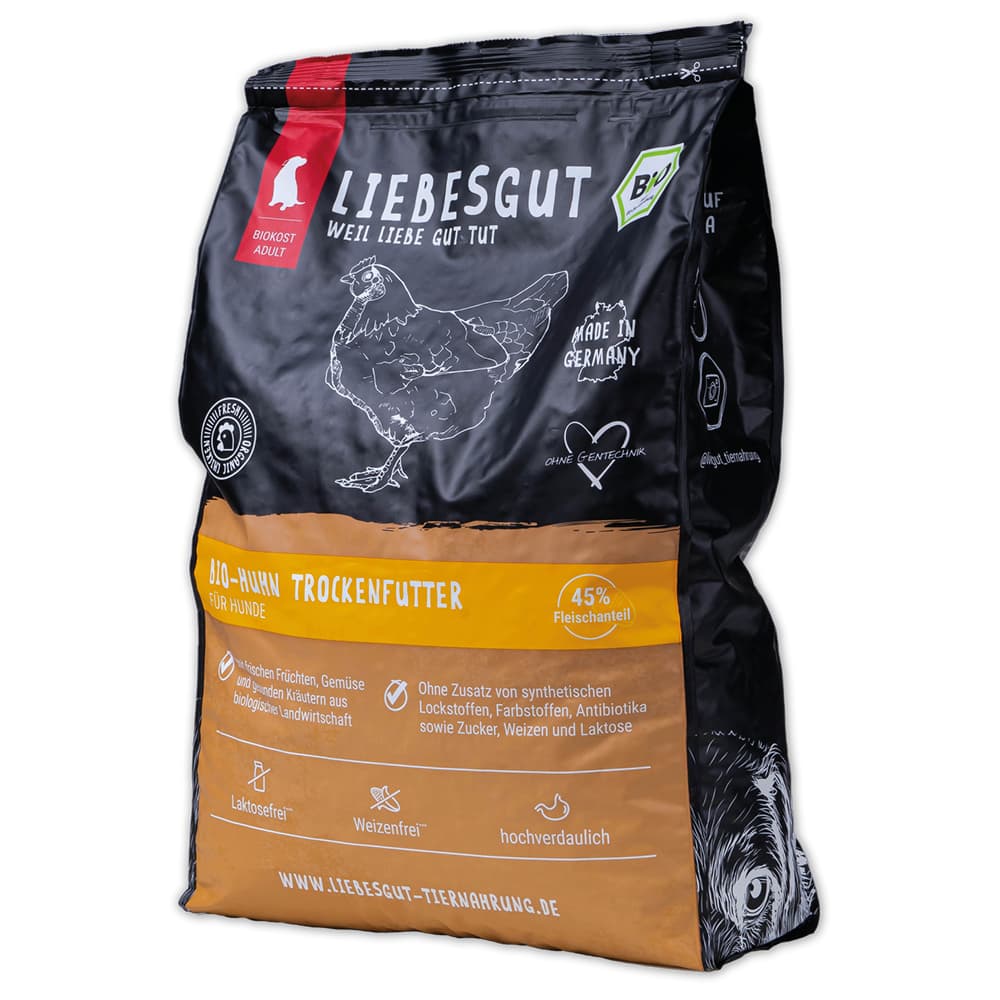
Organic dry dog food
Contents: 5 kg (€7.34* / 1 kg)

Sensitive dog food
Contents: 4.8 kg (€8.74* / 1 kg)
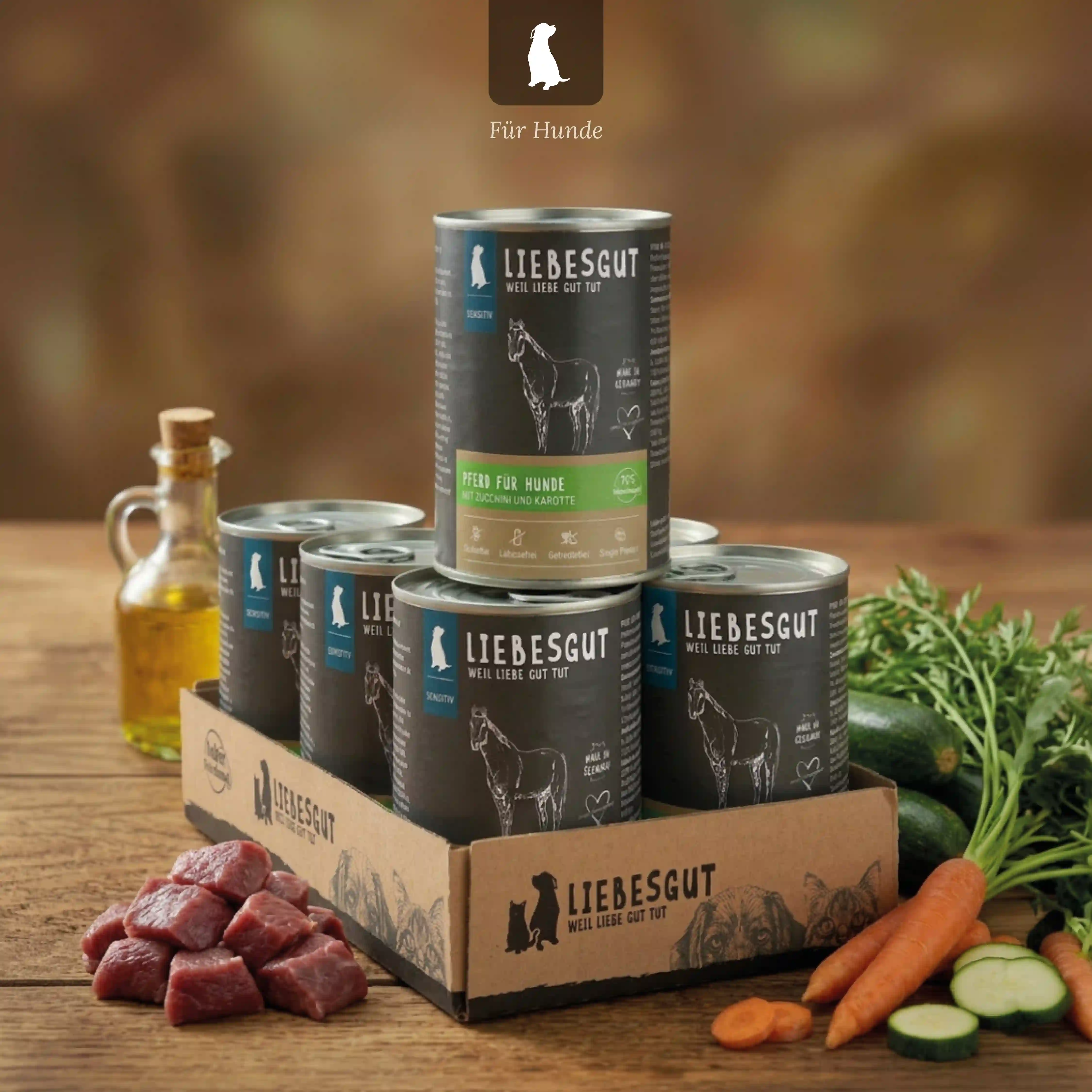
Sensitive dog food
Contents: 2.4 kg (€9.73* / 1 kg)
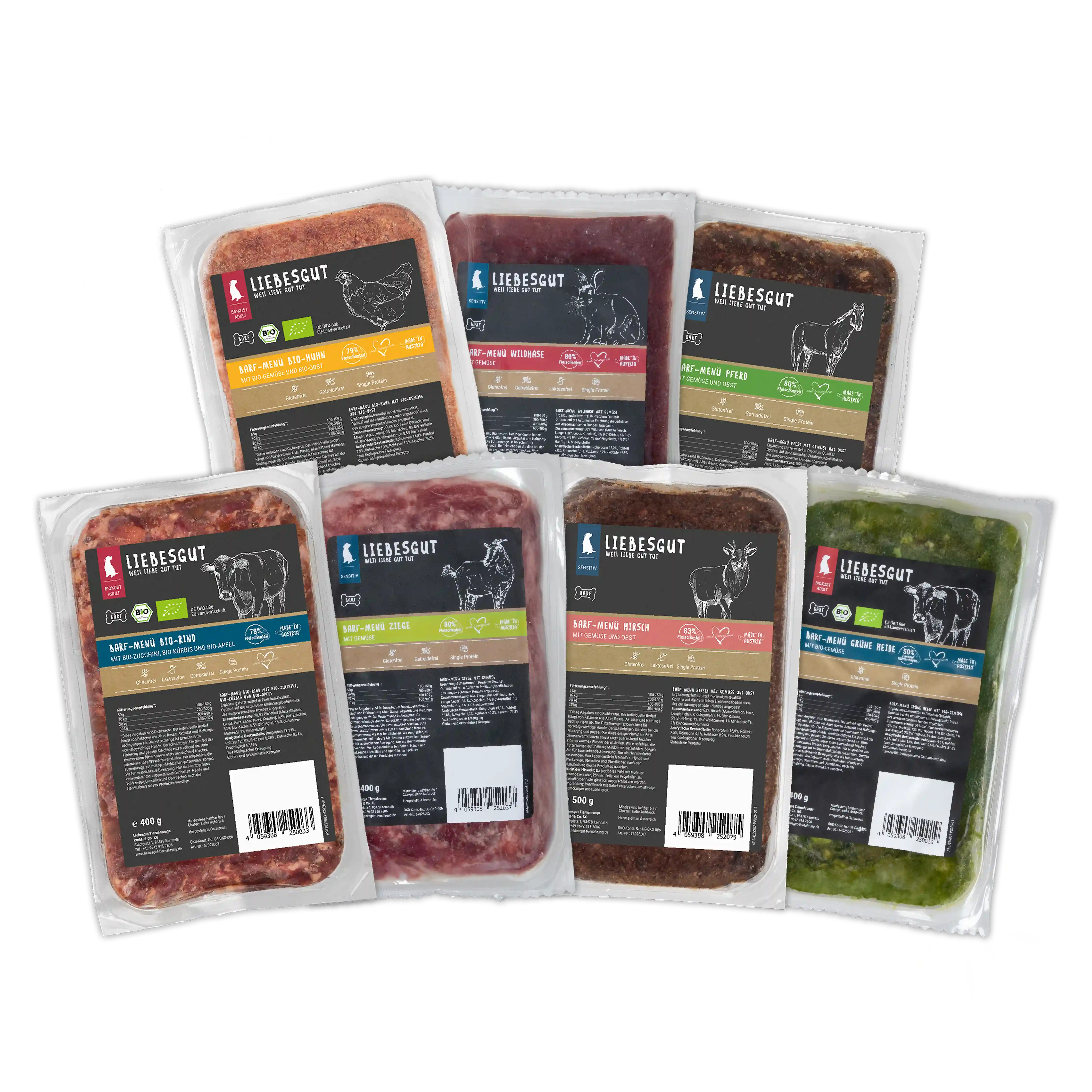

Organic snack for dogs & cats
Contents: 0.9 kg (€37.94* / 1 kg)

Organic dog treats
Contents: 0.9 kg (€48.70* / 1 kg)

Organic snack for dogs
Contents: 0.9 kg (€34.78* / 1 kg)

Organic snack for dogs
Contents: 0.9 kg (€31.61* / 1 kg)

Organic snack for dogs
Contents: 0.9 kg (€34.78* / 1 kg)
Selected for You
Barf Sensitive dog food (frozen)
Contents: 5.6 kg (€14.98* / 1 kg)
Barf Sensitive dog food (frozen)
Contents: 5.6 kg (€14.98* / 1 kg)
Organic Barf Dog Food Adult (TK)
Contents: 5.6 kg (€11.23* / 1 kg)
Organic Barf Dog Food Adult (TK)
Contents: 5.6 kg (€11.23* / 1 kg)
Organic Barf Dog Food Adult (TK)
Contents: 5.6 kg (€11.23* / 1 kg)
Barf Sensitive dog food (frozen)
Contents: 7 kg (€11.98* / 1 kg)
Bio-Barf Sensitive dog food (frozen)
Contents: 5.6 kg (€14.98* / 1 kg)
Bio Snack für Hunde
Contents: 0.15 kg (€40.60* / 1 kg)
Adult & Sensitive dog food
Contents: 16.8 kg (€8.69* / 1 kg)
Adult & Sensitive dog food
Contents: 19.2 kg (€8.70* / 1 kg)
Adult dog food
Contents: 7.2 kg (€8.60* / 1 kg)
Adult dog food
Contents: 14.4 kg (€7.19* / 1 kg)
Junior dog food
Contents: 7.2 kg (€8.30* / 1 kg)
Sensitive dog food
Contents: 9.6 kg (€8.75* / 1 kg)
Sensitive dog food
Contents: 19.2 kg (€7.72* / 1 kg)
Organic dry dog food
Contents: 1.5 kg (€9.06* / 1 kg)
Organic dry dog food
Contents: 5 kg (€7.34* / 1 kg)
Sensitive dog food
Contents: 4.8 kg (€8.74* / 1 kg)
Sensitive dog food
Contents: 2.4 kg (€9.73* / 1 kg)
Organic snack for dogs & cats
Contents: 0.9 kg (€37.94* / 1 kg)
Organic dog treats
Contents: 0.9 kg (€48.70* / 1 kg)
Organic snack for dogs
Contents: 0.9 kg (€34.78* / 1 kg)
Organic snack for dogs
Contents: 0.9 kg (€31.61* / 1 kg)
Organic snack for dogs
Contents: 0.9 kg (€34.78* / 1 kg)