


What's on the menu today - a healthy meal plan for your cat
We love her for her elegance, her beauty and her headstrong character. The cat is a lovely cuddly tiger, but has always kept her freedom and her own head. She is a skilful hunter. Its anatomy is perfectly designed to catch prey.
It roams around as a silent lone hunter of small prey such as mice and birds. Its ancestor, the Libyan hawkcat, lived in the hot, dry regions of Africa and Arabia.
Nutritionally, it is characterised by the fact that it needs frequent meals, eats its food slowly and selectively and only drinks small amounts of water.
Due to its enzyme equipment, the cat is strictly adapted to the prey animal as a food source. It is a carnivore, a meat-eater. It is strongly influenced by its food, which is why it is difficult to change to a specific complete food once it has become accustomed to it.
General information on the cat's metabolism
Due to their strong protein catabolism, cats have a high protein requirement, especially for the amino acid methionine. There is no reduction in the productivity of transaminases even when cats are starving.
They have a high demand for amino nitrogen. If the protein concentration is too low, the cat refuses the food or shows low acceptance. The diet should contain at least 12 g vRP (digestible crude protein) per MJ/ME (megajoule/convertible energy). Cats have a low tolerance for carbohydrates. Depending on the degree of digestion, starch should not exceed 5g / kg BM (body mass), otherwise diarrhoea may occur as a result of microbial starch fermentation in the large intestine.
Essential nutrients for cats
Arachidonic acid, taurine, B vitamins, vitamin A, linolenic acid, proteins and arginine are essential.
Amino acids: arginine, taurine
Arginine is an essential amino acid, as citrulline and ornithine are not synthesised in the intestinal mucosa due to the lack of pyrolin-5-carboxylate synthetase. The cat requires 8 g/kg dry matter. For maintenance, growth or reproduction it is 15 g/kg dry matter. A lack of arginine leads to hyperammonaemia, i.e. an abnormally high ammonium content in the blood.
Taurine is essential due to the low activity of cysteic acid decarboxylase. This amino acid is only present in animal tissue. The requirement in wet feed is 2g / kg DM (dry matter). In dry feed it is 1g / kg dry matter. A taurine deficiency leads to retinal atrophy (progressive, degenerative change in the retina), dilated cardiomyopathy (abnormal enlargement of the heart muscle) and fertility disorders.
Fatty acids:
Arachidonic acid is essential for cats during reproduction. The requirement is 0.2 g/kg feed TS. This fatty acid is only found in animal tissue. Recommendations for linoleic acid, alpha-linolenic acid and eicosapentaenoic acid are 5.5, 0.2 and 0.1 g/kg DM (dry matter) respectively. The content of linoleic acid should be 100 mg/kg DM (body mass).
Vitamins: Vitamin A
Vitamin A is only found in animal tissue. The cat has a deficiency of carotene dioxygenase, which is why the conversion of β-carotene into vitamin A is not possible. Vitamin A content of some organs: Heart, chicken 1,128 IU/kg DM (international unit/kg dry matter) Liver, chicken 1,380,000 IU/kg DM
Vitamins: Niacin (from B-complex)
Although the enzymes for niacin synthesis from tryptophan are present, this metabolic pathway is not utilised, as tryptophan is primarily used for energy production due to the high activity of picolinate carboxylase. The most important component of food is water. Cats drink little, so water should always be offered. The less water is contained in the food, the higher the drinking water intake must be. The minimum amount of liquid is 40 - 60 ml/kg KM.
Example diet plan
The daily energy requirement of a 3 kg cat is 0.88 MJ ME (metabolisable energy), for a 4 kg cat it is 1.06 MJ ME. However, this varies greatly depending on activity, age and body composition. For example, indoor cats need less energy than outdoor cats that are forced to exercise.
Menu 1: Salmon with apple
Plan for cat weighing 3 kg
Energy content of the food approx. 0.4 MJ ME / 100 g energy requirement approx. 0.88 MJ ME
In the morning: feed 100 g wet food
In the evening: feed 100 g wet feed
Menu 2: Rabbit with chard
Plan for cat weighing 4 kg
Energy content of the food approx. 0.5 MJ ME / 100 g energy requirement approx. 1.06 MJ ME
In the morning: feed 100 g wet food
In the evening: feed 100 g wet food
Here you can see as a little inspiration how much you should theoretically feed your velvet paw. But be careful! Every cat is individual and, as mentioned above, how much food your cat actually needs depends on its exercise, age and weight. Keep an eye on your cat's physical condition and adjust the amount if necessary. We offer a wide selection of delicious varieties so that you can vary your pet's meals. Take a look in the shop and let off some culinary steam. Thank you for reading. If you have any further questions, please send me an e-mail.
Stay healthy and lively, Daniela.
Our recommendations for your four-legged friend:
Selected for You

Adult cat food
Contents: 7.2 kg (€8.38* / 1 kg)
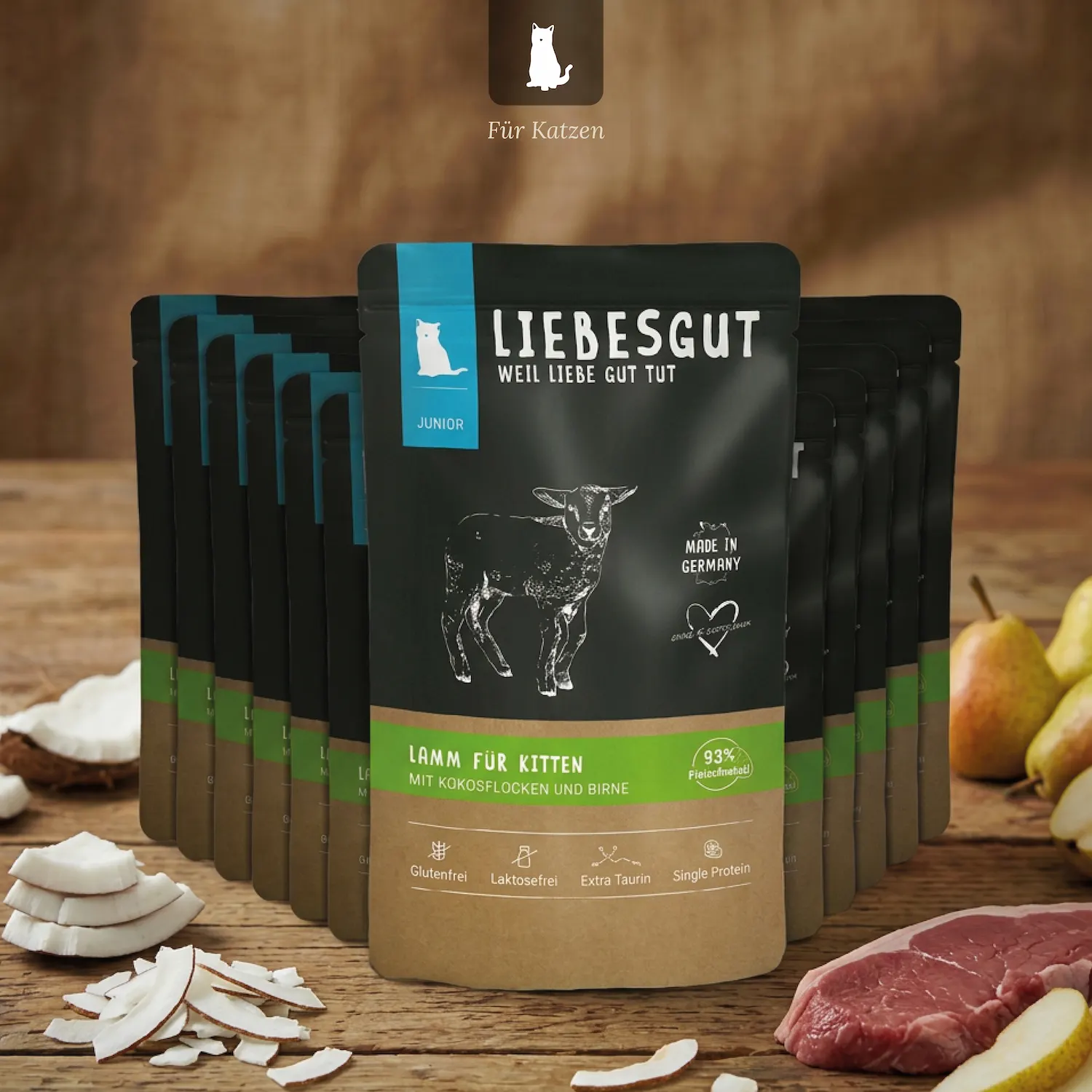
Junior cat food
Contents: 1.2 kg (€16.91* / 1 kg)

Organic cat food Adult
Contents: 2.4 kg (€12.95* / 1 kg)
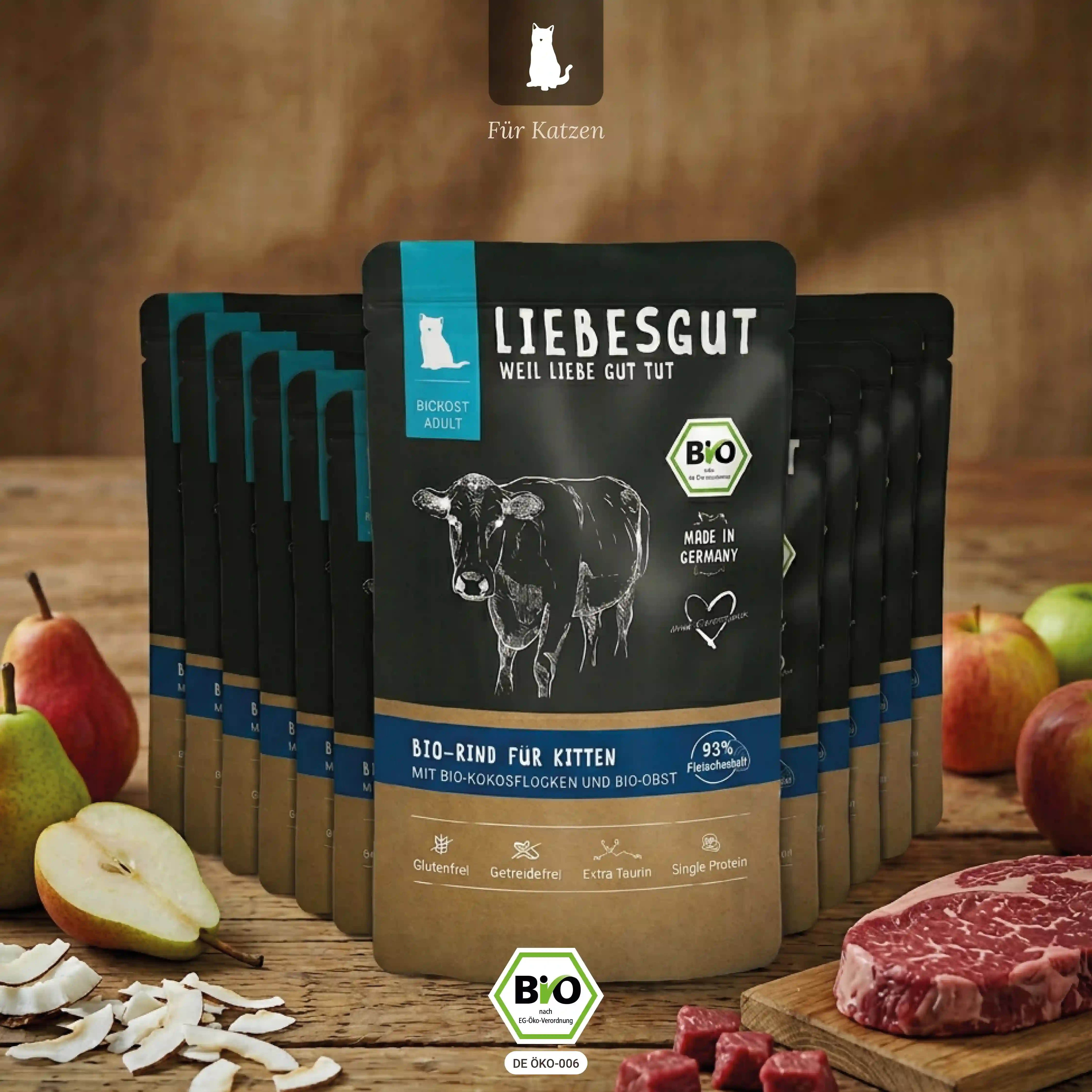
Organic cat food Junior
Contents: 1.2 kg (€16.91* / 1 kg)

Organic cat food Junior
Contents: 2.4 kg (€12.45* / 1 kg)

Organic cat food Adult
Contents: 2.4 kg (€9.23* / 1 kg)
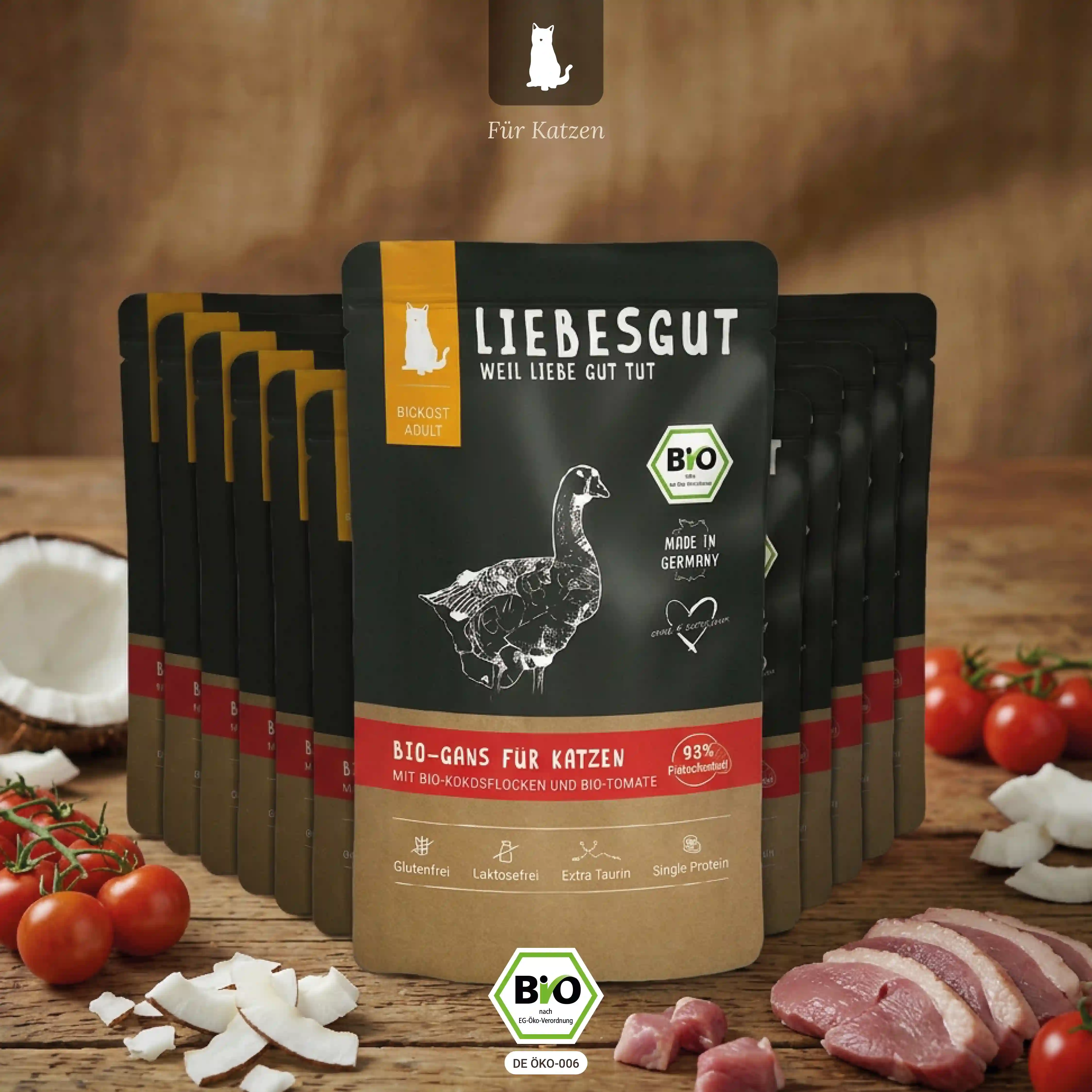
Organic cat food Adult
Contents: 1.2 kg (€15.91* / 1 kg)

Organic cat food Adult
Contents: 1.2 kg (€16.91* / 1 kg)
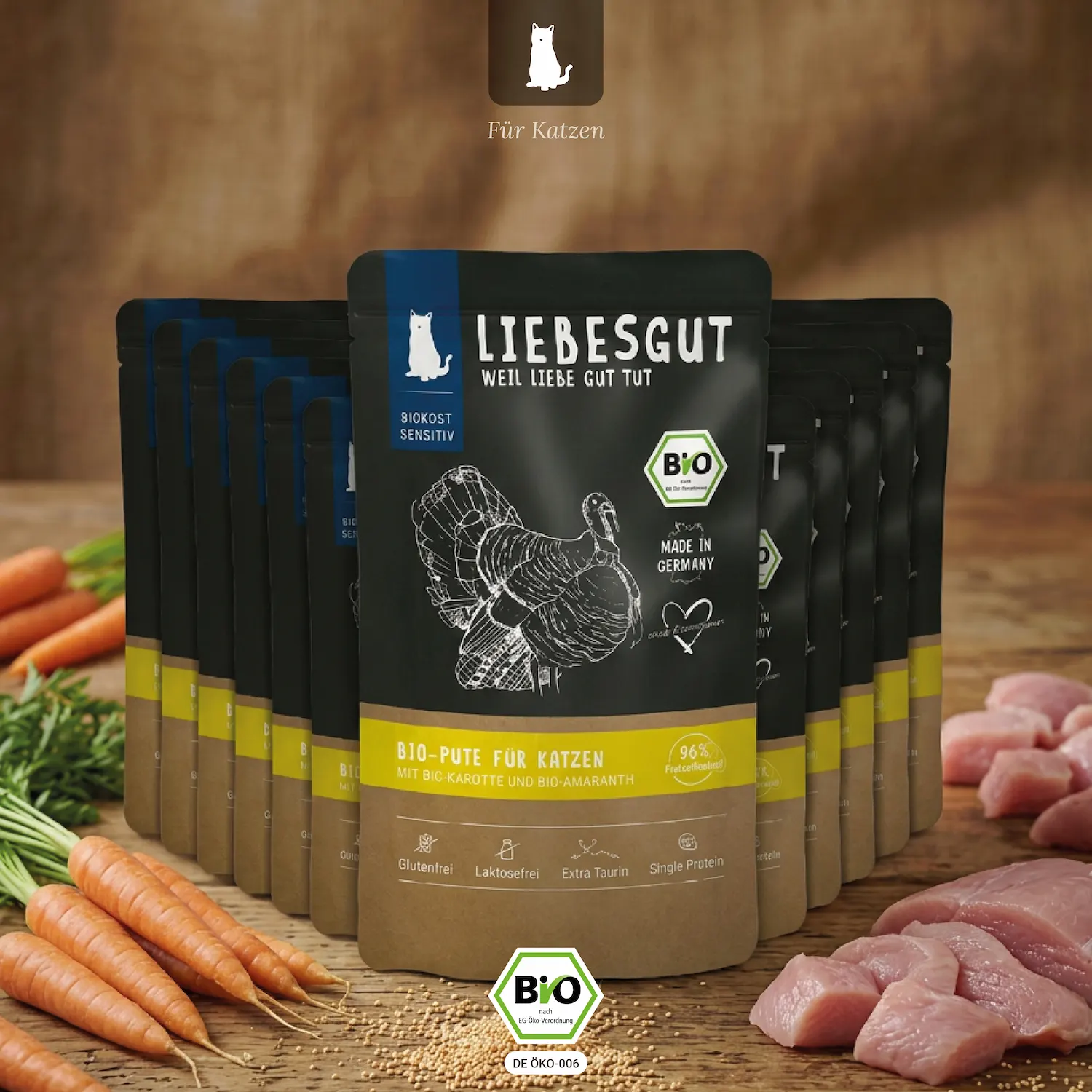
Sensitive organic cat food
Contents: 1.2 kg (€15.91* / 1 kg)

Sensitive cat food
Contents: 2.4 kg (€9.98* / 1 kg)

Adult cat food
Contents: 0.8 kg (€15.58* / 1 kg)
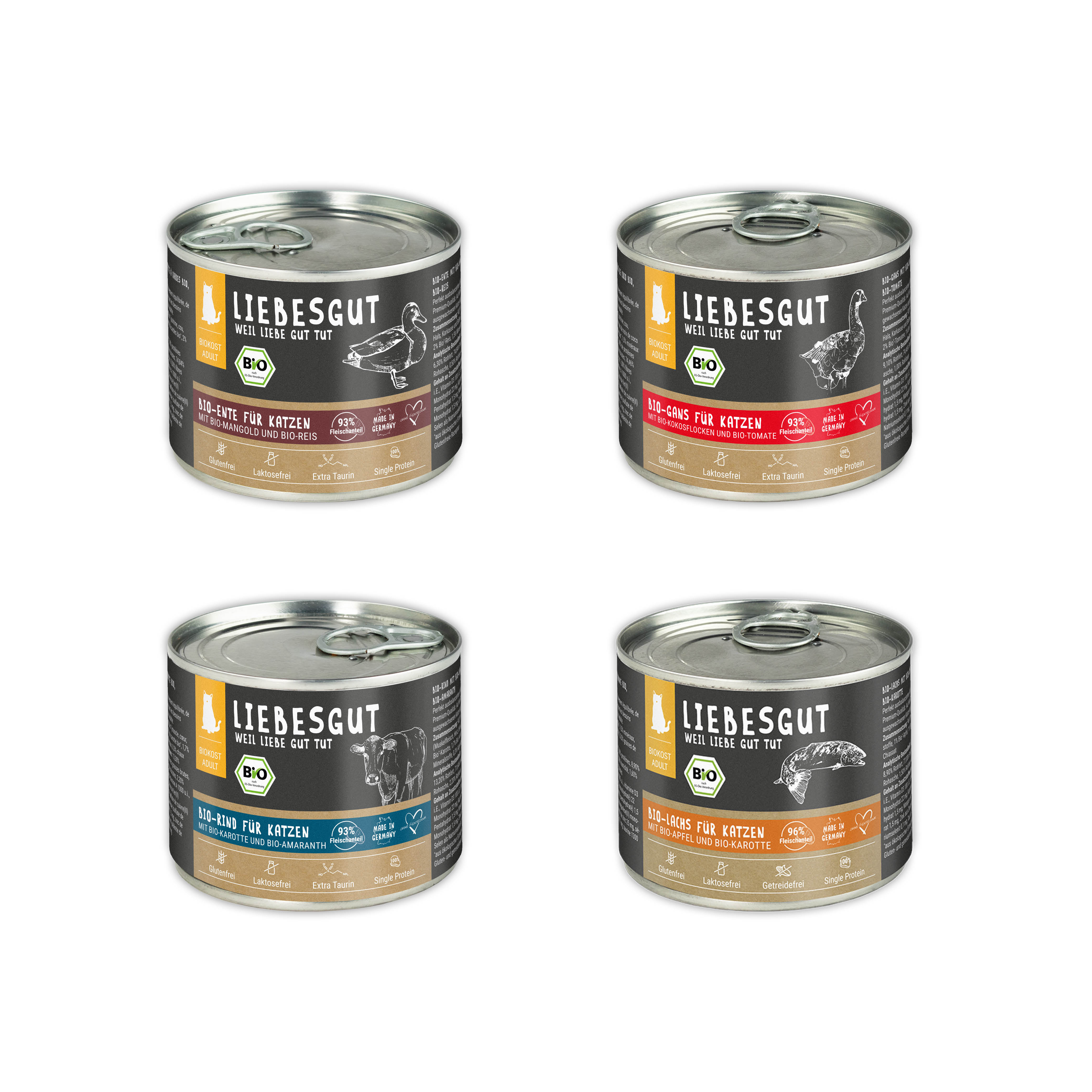
Adult cat food
Contents: 1.6 kg (€12.18* / 1 kg)
Selected for You
Adult cat food
Contents: 7.2 kg (€8.38* / 1 kg)
Junior cat food
Contents: 1.2 kg (€16.91* / 1 kg)
Organic cat food Adult
Contents: 2.4 kg (€12.95* / 1 kg)
Organic cat food Junior
Contents: 1.2 kg (€16.91* / 1 kg)
Organic cat food Junior
Contents: 2.4 kg (€12.45* / 1 kg)
Organic cat food Adult
Contents: 2.4 kg (€9.23* / 1 kg)
Organic cat food Adult
Contents: 1.2 kg (€15.91* / 1 kg)
Organic cat food Adult
Contents: 1.2 kg (€16.91* / 1 kg)
Sensitive organic cat food
Contents: 1.2 kg (€15.91* / 1 kg)
Sensitive cat food
Contents: 2.4 kg (€9.98* / 1 kg)
Adult cat food
Contents: 0.8 kg (€15.58* / 1 kg)
Adult cat food
Contents: 1.6 kg (€12.18* / 1 kg)