


The perfect litter tray: how to make your cat happy
The perfect litter tray: how to make your cat happy
The great thing about our velvet paws is not just their independence. They are also supposedly "easy to care for" when it comes to their excretory behaviour: just put a box of litter down and that's it. But it's not quite that simple. If you really want to make your cat happy, there are a few things you should bear in mind so that they feel really comfortable in their "quiet little place". How to give your kitty the perfect litter tray.
The perfect number
As a rule of thumb, you can remember Always have one more litter tray than there are cats. So: One cat = 2 litter trays, two cats = 3 litter trays, etc. Why? Cats naturally defecate and urinate in different places. And: If there are more than two cats in the household, each cat must have the opportunity to use a quiet, safe and preferably clean litter tray. If there are several floors, it is best to have at least one litter tray per floor.
The perfect litter tray
- is large so that the cat can move around easily. Rule of thumb: 1.5 times as long as the cat (head to base of tail). It's best to use the largest litter tray you can find (XXL or Jumbo).
- is open at the top so that the cat can see when danger is approaching (other cat, dog, small child) and can escape quickly if necessary.
- is positioned so that at least two sides are free to provide several escape routes.
- Caution: Kittens, very small, old or sick cats may have problems with a high entrance - it is better to use a flat model.
The perfect location
- is quiet, but not too secluded.
- is safe from troublemakers.
- is accessible from several sides.
- is far away from food and water (at least three metres).
- is not close to the sleeping and resting areas.
The perfect litter
- is not dusty (can settle in the lungs, risk of allergies).
- absorbs urine well.
- is easy to clean.
- is soft and pleasant for the paws (test it yourself with the flat of your hand).
- is free from fragrances. They can trigger allergies. In addition, cats' noses are extremely sensitive. What is a pleasant odour for you stinks to high heaven for your cat.
Our tip: Before they go to the litter tray, simply let them try our delicious menus for cats. We even have the right wet food for the youngest kittens!
And here are a few more answers to the most important questions about the litter tray
How high should the litter be?
At least 5, preferably 7 to 10 cm. The cat must be able to dig a hole without any problems and then scrape it shut again.
How often do I need to clean the litter tray?
Lumps of urine and faeces should be removed with a scoop at least 2 to 3 times a day. Every one to two weeks, the litter should be completely replaced and the litter tray completely cleaned.
What is the best way to clean the litter tray?
With hot water and a neutral-smelling household cleaner. If you like, you can occasionally use an enzyme cleaner to remove the urine odour. Never use disinfectants, corrosive, perfumed, ammonia or chlorine-based products!
Does my outdoor cat need a toilet at all?
Definitely yes. Even outdoor cats "have to" go inside sometimes, e.g. when they are ill, the weather outside is bad or the neighbour's cat is annoying. There are also outdoor cats who generally like to come home to do their business.
Can I use the toilet for the rest of my cat's life?
No, at some point even the best cleaning won't help. The scratching scratches the floor and walls. The urine odour settles and can no longer be removed properly. Therefore: It is best to buy a new litter tray every year, at the latest after two years.
My cat is suddenly unclean, what now?
If your cat becomes unclean from one day to the next, please take it to the vet immediately! In most cases, urinary tract infections, diabetes or pain due to another illness are the cause. If the vet finds nothing and your cat is completely healthy, check the toilet management again: Is the litter tray clean? Is it big enough? Where is it located? How many litter trays are available for your cats? Are the litter trays open or covered? What litter do you use? If necessary, get professional help from a cat psychologist.
Did you know that we also offer cat litter? Our BIO Liebesgut cat litter is dust-free, particularly absorbent, odourless and beautifully soft and pleasant for cats' paws. Designed as an eco cat litter made from cellulose and packaging waste, our cat litter is produced in a particularly hygienic, environmentally friendly and climate-friendly way. It is biodegradable and you can dispose of it in the compost or organic waste bin.
Our recommendations for your four-legged friend:
Selected for You

Adult cat food
Contents: 7.2 kg (€8.38* / 1 kg)

Junior cat food
Contents: 1.2 kg (€16.91* / 1 kg)

Organic cat food Adult
Contents: 2.4 kg (€12.95* / 1 kg)
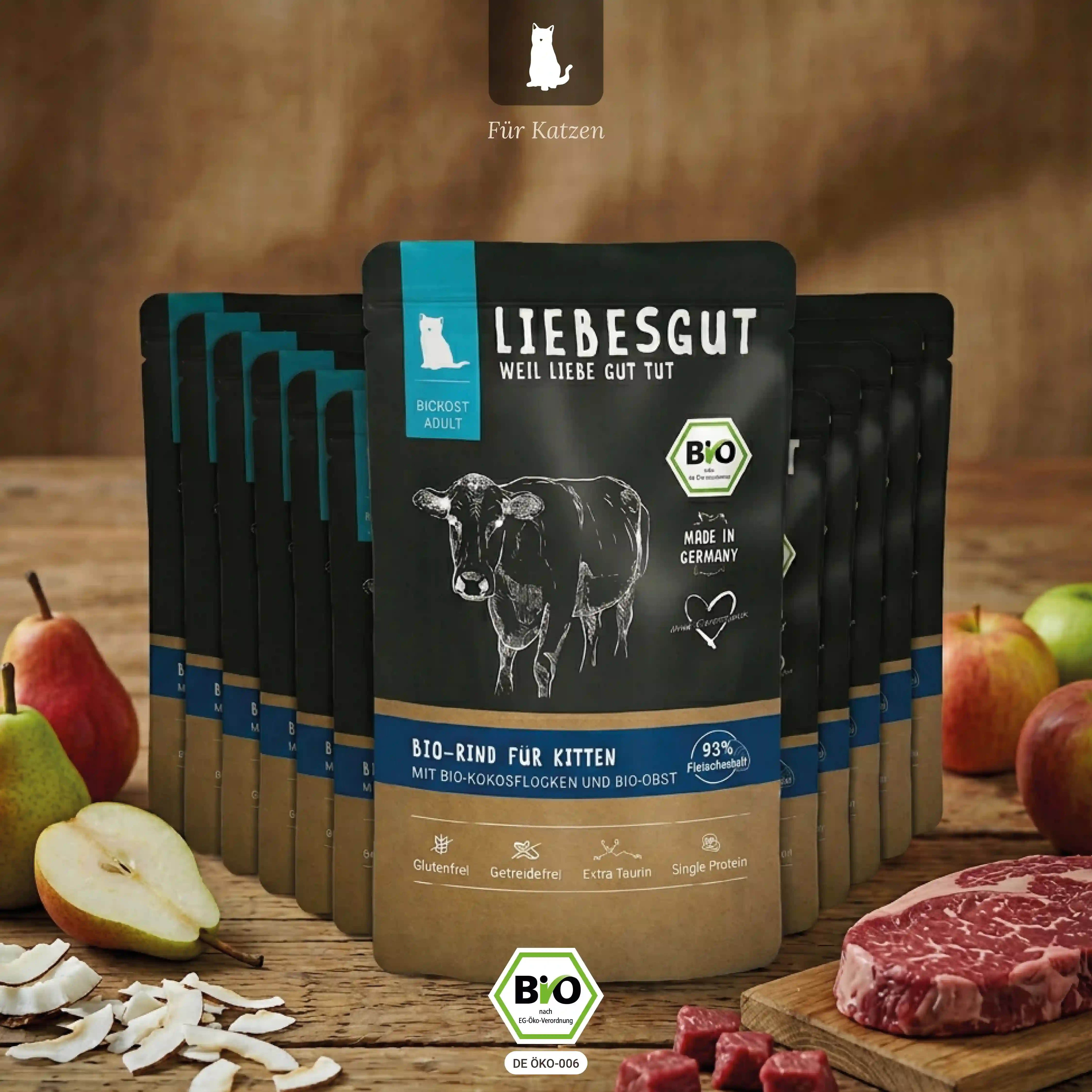
Organic cat food Junior
Contents: 1.2 kg (€16.91* / 1 kg)

Organic cat food Junior
Contents: 2.4 kg (€12.45* / 1 kg)

Organic cat food Adult
Contents: 2.4 kg (€9.23* / 1 kg)
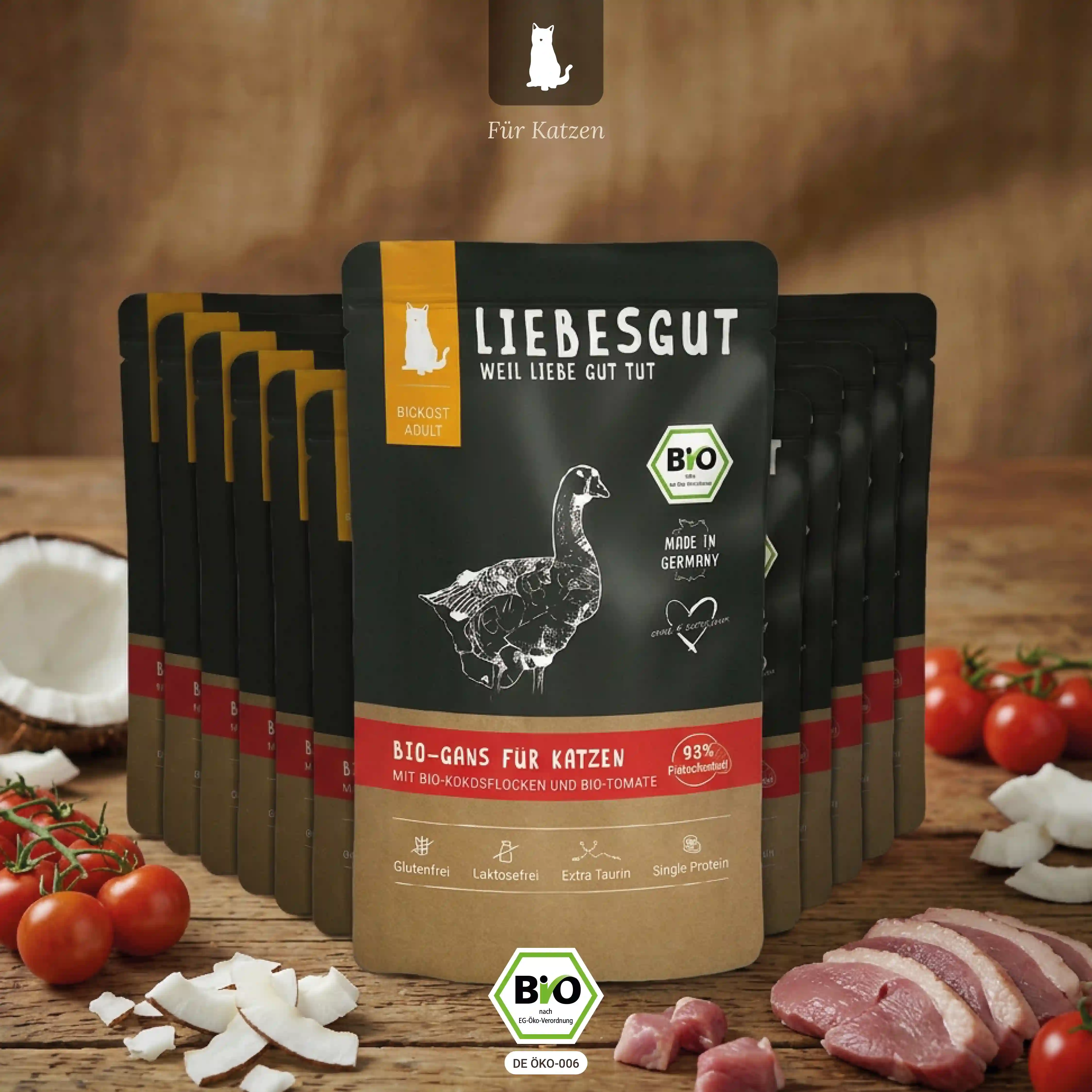
Organic cat food Adult
Contents: 1.2 kg (€15.91* / 1 kg)

Organic cat food Adult
Contents: 1.2 kg (€16.91* / 1 kg)

Sensitive organic cat food
Contents: 1.2 kg (€15.91* / 1 kg)

Sensitive cat food
Contents: 2.4 kg (€9.98* / 1 kg)

Adult cat food
Contents: 0.8 kg (€15.58* / 1 kg)
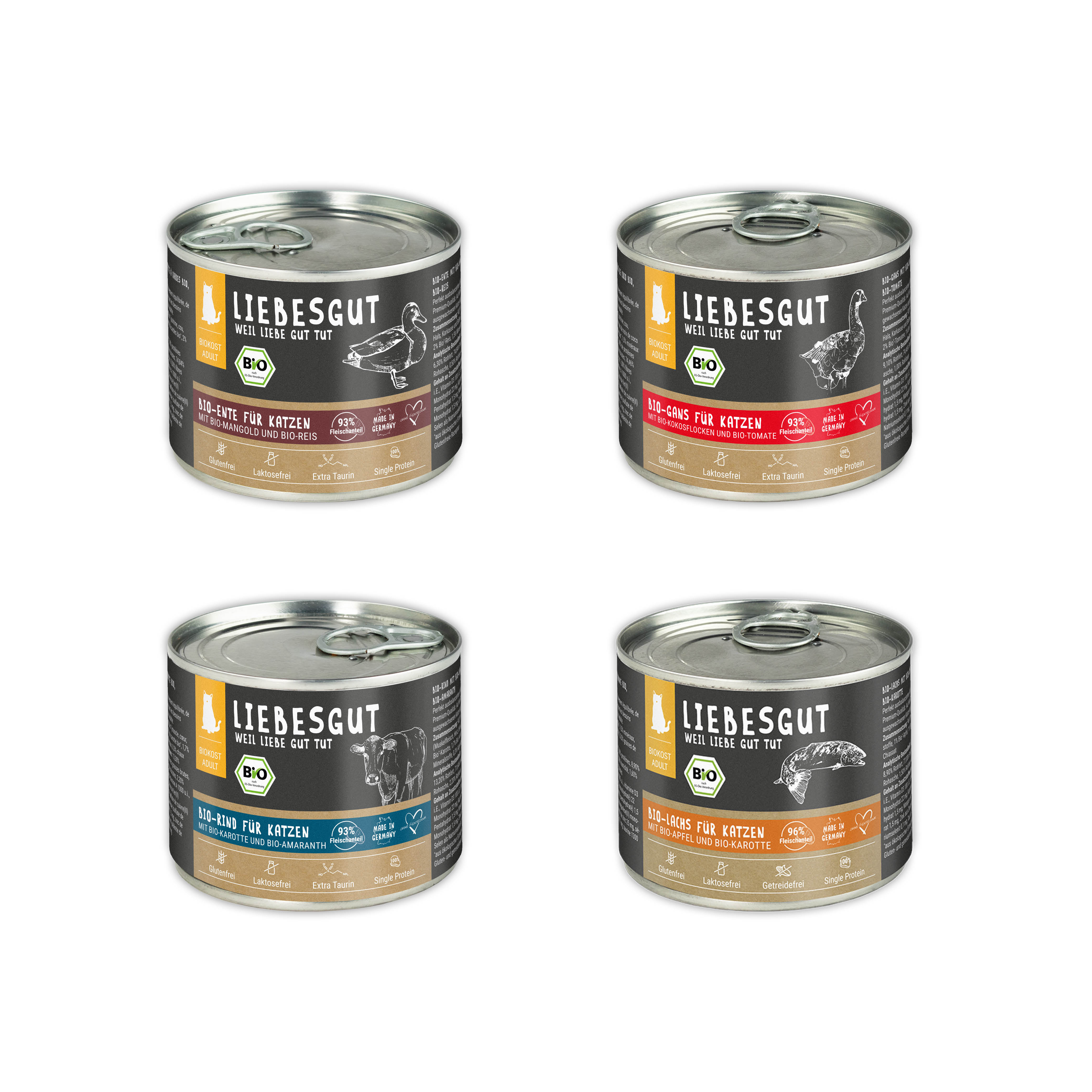
Adult cat food
Contents: 1.6 kg (€12.18* / 1 kg)
Selected for You
Adult cat food
Contents: 7.2 kg (€8.38* / 1 kg)
Junior cat food
Contents: 1.2 kg (€16.91* / 1 kg)
Organic cat food Adult
Contents: 2.4 kg (€12.95* / 1 kg)
Organic cat food Junior
Contents: 1.2 kg (€16.91* / 1 kg)
Organic cat food Junior
Contents: 2.4 kg (€12.45* / 1 kg)
Organic cat food Adult
Contents: 2.4 kg (€9.23* / 1 kg)
Organic cat food Adult
Contents: 1.2 kg (€15.91* / 1 kg)
Organic cat food Adult
Contents: 1.2 kg (€16.91* / 1 kg)
Sensitive organic cat food
Contents: 1.2 kg (€15.91* / 1 kg)
Sensitive cat food
Contents: 2.4 kg (€9.98* / 1 kg)
Adult cat food
Contents: 0.8 kg (€15.58* / 1 kg)
Adult cat food
Contents: 1.6 kg (€12.18* / 1 kg)