


Overweight in cats
Too many treats, too frequent main meals or not enough exercise? There are countless causes and consequences of obesity, but there are also just as many ways to fight the pounds.
The easiest way to recognise whether a cat is overweight or even obese is by its ribs. If the ribs are visible through the skin and fur, this indicates underweight. If the ribs are not visible on the outside but can be felt with the fingers, the cat is of normal weight. If the ribs can no longer be felt with the hands, this indicates that the cat is overweight. At this point, a visit to the vet is advisable.
If cats are overweight, they suffer from a variety of symptoms, just like humans. In addition to the health consequences, including bladder and liver problems, joint diseases, constipation and type 2 diabetes, etc., the extra pounds also cause movement difficulties: jumping becomes a pain, warm summer days restrict movement and breathing problems often occur.
The sum of these symptoms leads to a shortened lifespan for the cat. Reason enough for masters and mistresses to fight obesity with diligence and perseverance. This is especially true for domestic cats, as they are a high-risk group due to their lack of exercise. Neutering also leads to weight problems. The main reason for this is an altered hormone balance. Regular weight checks, e.g. monthly, are advisable here.
Overweight: what to do?
The first step is to check the type and quantity of food. Under no circumstances should the amount of food be drastically reduced in one go. Due to their evolution, cats are adapted to massively attack their fat reserves in lean times. Sounds good at first, but unfortunately the animal's liver is not able to cope with this and is damaged in the process. The result: fatty liver. It is therefore best to reduce the amount of food slowly, then the kitty will not immediately beg for more. This is where the first effort is required from the owner: weigh the amount of food given! Treats must also be taken into account. Ideally, the amount should be spread over several meals if time permits.
The following applies to the food: less energy content, but if possible the same amount of food. Your pet will then feel full, but will not be loaded with too much fat.
You should also avoid dry food, as the ratio of nutrients to the amount of food means that your pet will not feel full as quickly. Wet food has the clear advantage that it fills your dog up much faster due to its increased moisture content. The additional water intake is also to be favoured, as cats are generally poor drinkers and prefer to regulate their water balance through their food intake.
However, a change of food or reduction in quantity alone is not enough. For domestic cats in particular, the rule now is: plenty of exercise - and this is where humans come in! They must encourage their pets to let off steam. To do this, you need to take the time to put in a few training sessions with your furry friend. A string or ball is often enough for this. To keep your pet busy when you're not at home, there are exercise games for cats available from specialist retailers that don't require human activity. Unfortunately, cats often quickly lose interest in such toys. Tip: Prepare with catnip! Don't lose heart if your cat doesn't show much interest in playing at first. Because it is overweight, it simply cannot hold out for so long. His limbs and joints may even ache with every movement, but this will get better with every gram of fat he loses.
If your pug is an outdoor cat, it can also be helpful to talk to the neighbours. Cats are lovable animals that are very good at socialising with people. Cats have been observed to go on regular "feeding tours" in their neighbourhood. In other words, they made pilgrimages from house to house and had their second feeding stations there, as many people like to offer food to the cats that visit them at regular intervals. After all, you want to be a good host.
Here is a summary of all the tips:
- Check food for energy content and change if necessary
- Carefully regulate the amount of food
- Do not give in to begging
- Keep the animal active
- Consult the vet
- Weigh regularly
- Hang in there!
Our recommendations for your four-legged friend:
Selected for You

Adult cat food
Contents: 7.2 kg (€8.38* / 1 kg)

Junior cat food
Contents: 1.2 kg (€16.91* / 1 kg)

Organic cat food Adult
Contents: 2.4 kg (€12.95* / 1 kg)
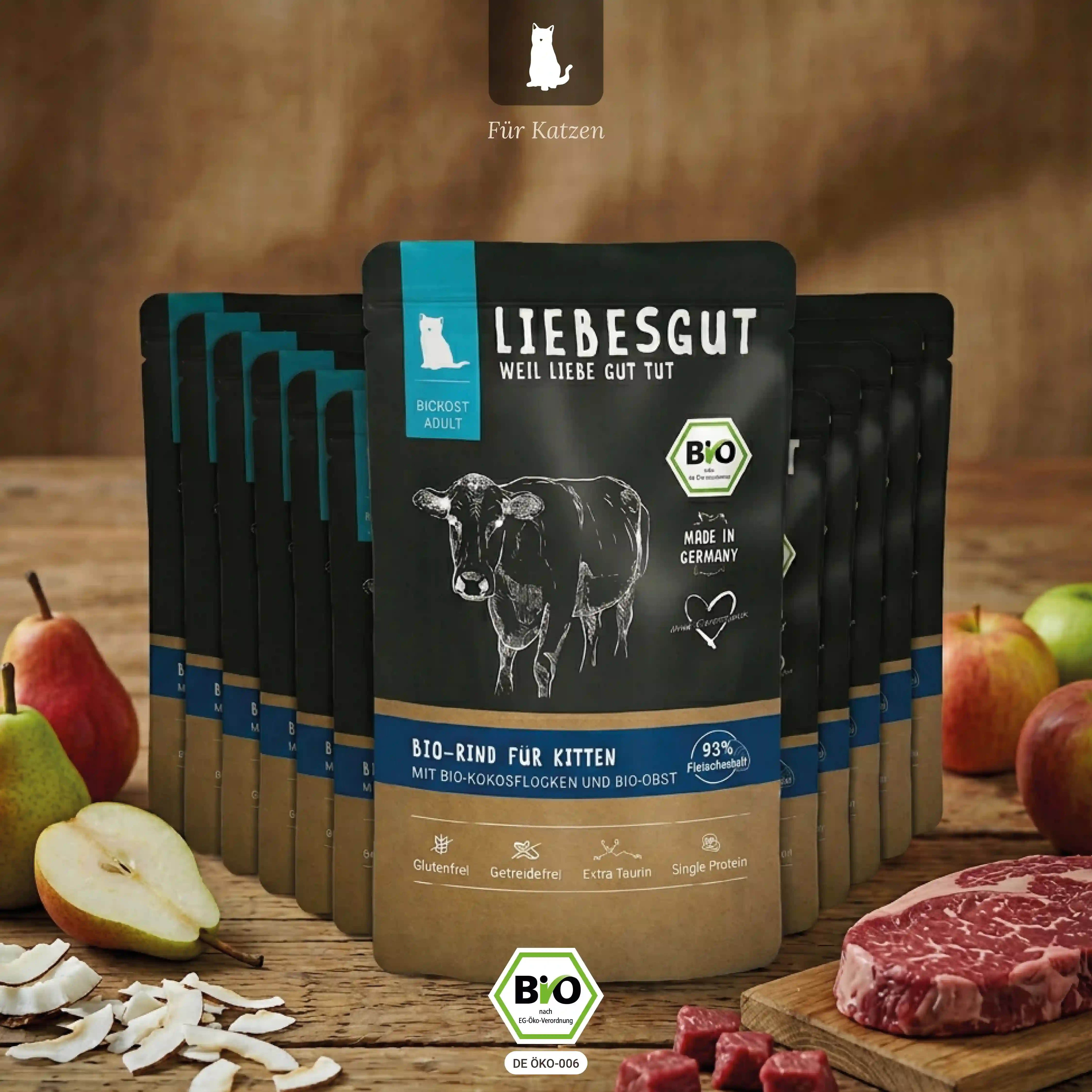
Organic cat food Junior
Contents: 1.2 kg (€16.91* / 1 kg)

Organic cat food Junior
Contents: 2.4 kg (€12.45* / 1 kg)

Organic cat food Adult
Contents: 2.4 kg (€9.23* / 1 kg)
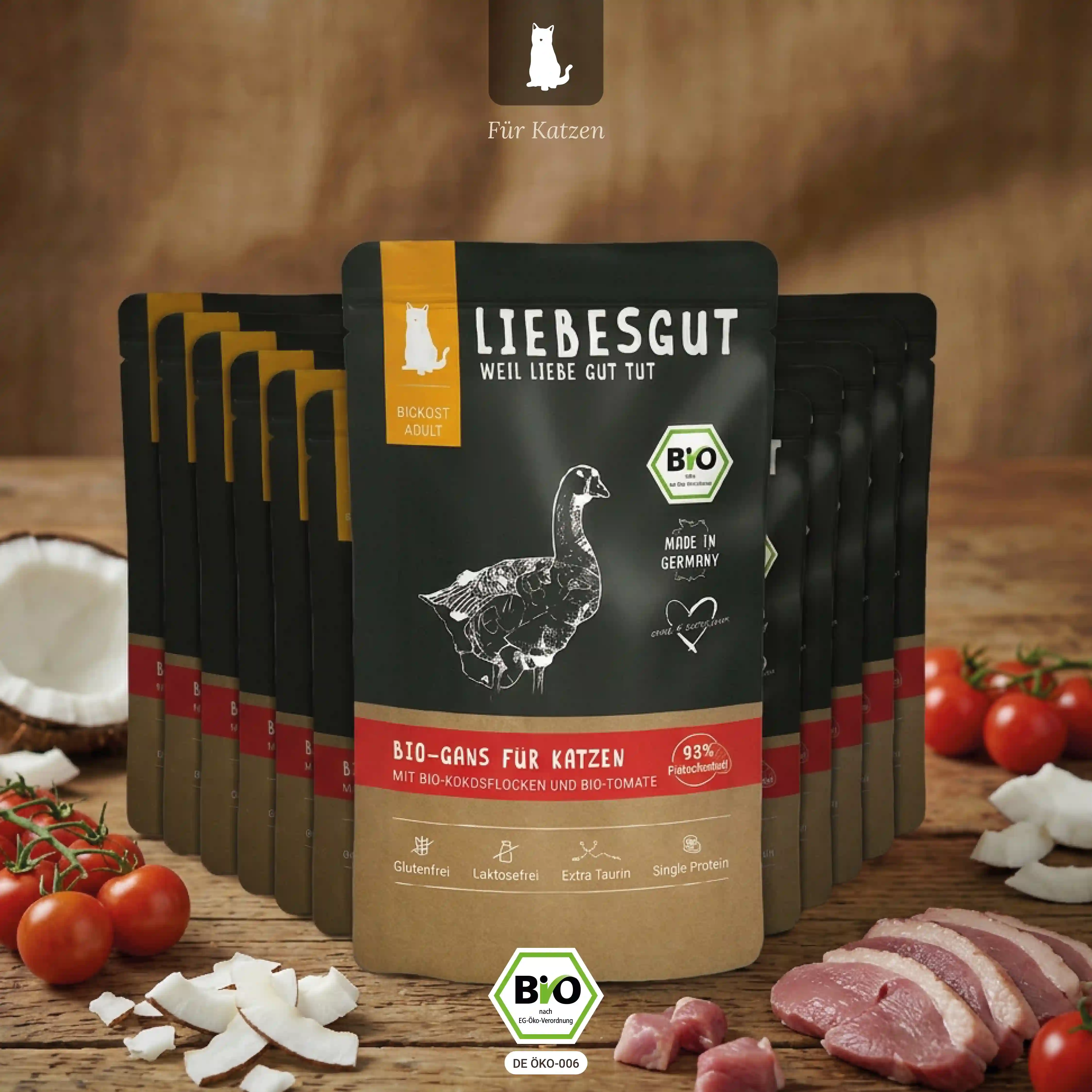
Organic cat food Adult
Contents: 1.2 kg (€15.91* / 1 kg)

Organic cat food Adult
Contents: 1.2 kg (€16.91* / 1 kg)

Sensitive organic cat food
Contents: 1.2 kg (€15.91* / 1 kg)

Sensitive cat food
Contents: 2.4 kg (€9.98* / 1 kg)

Adult cat food
Contents: 0.8 kg (€15.58* / 1 kg)
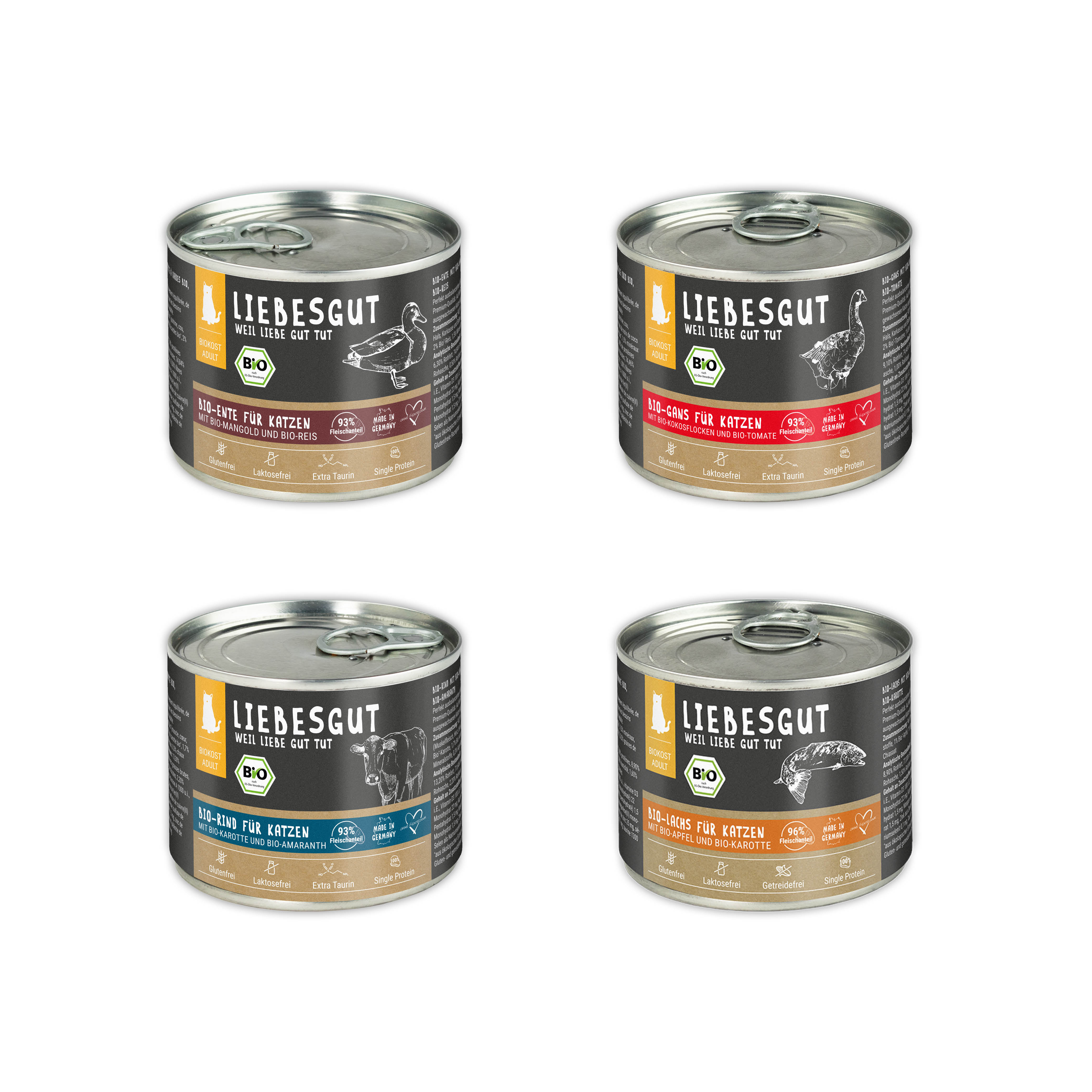
Adult cat food
Contents: 1.6 kg (€12.18* / 1 kg)
PASSENDE PRODUKTE
Kategorie BIO Katzenfutter anzeigenSelected for You
Adult cat food
Contents: 7.2 kg (€8.38* / 1 kg)
Junior cat food
Contents: 1.2 kg (€16.91* / 1 kg)
Organic cat food Adult
Contents: 2.4 kg (€12.95* / 1 kg)
Organic cat food Junior
Contents: 1.2 kg (€16.91* / 1 kg)
Organic cat food Junior
Contents: 2.4 kg (€12.45* / 1 kg)
Organic cat food Adult
Contents: 2.4 kg (€9.23* / 1 kg)
Organic cat food Adult
Contents: 1.2 kg (€15.91* / 1 kg)
Organic cat food Adult
Contents: 1.2 kg (€16.91* / 1 kg)
Sensitive organic cat food
Contents: 1.2 kg (€15.91* / 1 kg)
Sensitive cat food
Contents: 2.4 kg (€9.98* / 1 kg)
Adult cat food
Contents: 0.8 kg (€15.58* / 1 kg)
Adult cat food
Contents: 1.6 kg (€12.18* / 1 kg)