


Our new product for cats: rabbit with chard and rice flakes
We love her because of her elegance, her beauty and her headstrong character. The cat is a cuddly tiger, but has always kept her freedom and her own head. She is an extremely skilful hunter. Its anatomy is perfectly designed to catch prey.
Due to its enzyme equipment, the cat is strictly adapted to the prey animal as a food source. It is a carnivore, a meat-eater. It is strongly influenced by its food, which is why it is difficult to switch to a specific complete food once it has become accustomed to it.
General information on the cat's metabolism
Due to their strong protein catabolism, cats have a high protein requirement, especially for the amino acid methionine.
There is no reduction in the productivity of transaminases even in a state of starvation.
They have a high demand for amino nitrogen. If the protein concentration is too low, the cat refuses to eat or shows low acceptance. The diet should contain at least 12 g vRP (digestible crude protein) per MJ/ME (megajoule/convertible energy).
Cats have a low tolerance for carbohydrates. Depending on the degree of digestion, starch should not exceed 5g / kg BM (body mass), otherwise diarrhoea may occur as a result of microbial starch fermentation in the large intestine.
So what does our new product contain?
Sensitive organic food: rabbit with chard and rice flakes
Analytical constituents: 13 % crude protein, 8 % crude fat, 74.5 % moisture, 2.1 % crude ash, 0.9 % crude fibre.
For comparison, the nutrients in the prey animal (mouse): 70 - 80 % water, 12 - 15 % protein, 7 - 12 % fat, 2 % carbohydrates, 1 % minerals (crude ash).
Composition and functions:
96 % rabbit (60 % muscle meat, 20 % heart)
Meat is the skeletal muscle with attached or stored fat, connective tissue and other components. Rabbit meat is low in fat. Depending on the fat content of the meat, there is a different energy/protein correlation. Low-fat meat therefore has a relatively higher protein content. The protein in muscle meat has an optimal amino acid composition. The digestibility of meat is approx. 98 %. This is somewhat lower in products rich in connective tissue due to the lower enzymatic degradability of collagen. Meat is low in calcium and sodium as well as vitamins A and D. It is highly digestible and contains a lot of vitamin B1.
96 % rabbit (10% liver)
Liver contains important trace elements such as iron and copper as well as vitamins A, B12, B2 and biotin. It is high in protein (20%) and low in fat (approx. 5%). Depending on its origin and slaughter conditions, liver contains approx. 2% glycogen. The digestibility is high. There is no risk from harmful residues under local conditions. Regular residue tests show a favourable situation.
96 % rabbit (10% lung)
Lungs are rich in protein, but are sometimes more difficult to digest due to the high proportion of connective tissue. Digestibility is usually just under 90 %. Compared to meat, the protein has a somewhat less favourable amino acid composition and, due to cross-linking of the protein threads in the collagen, also a lower precaecal digestibility.
1 % cereal grains (rice) are rich in starch but low in protein. They have a low crude fibre content and are low in fat. Cereals are low in calcium. Phosphorus is mainly bound to phytic acid. There is a moderate content of trace elements.
0.5 % Chia seeds are high in protein and have a variable fat content depending on processing. They tend to be low in calcium.
1 % Swiss chard contains a lot of vitamin K, vitamin A and E as well as sodium, magnesium, potassium and iron. Beetroot products are high in pectin and low in protein. They are used as dietary fibre.
1.5 % minerals (bulk elements):
Calcium is found in small amounts in soft tissues and controls various metabolic processes such as blood clotting or muscle contraction. It is also important for the permeability of blood capillaries.
Phosphorus is a component of nucleic acids, nucleotides, phospholipids (e.g. lecithin) and many proteins. It has a central function in the activation of various substrates in metabolism (phosphorylation) and for cellular energy metabolism (formation of energy-rich phosphates, e.g. adenosine triphosphate (ATP) or creatine phosphate)
The calcium-phosphorus ratio should be between 2:1 and 1:1.
Magnesium is distributed 50/50 between soft tissue and skeleton. As a component of numerous enzymes, especially phosphatases, it is indispensable in carbohydrate, fat and protein metabolism. After absorption, which averages around 40 %, magnesium is distributed to the body tissues.
In contrast to potassium, sodium and chloride are mainly localised extracellularly, particularly in the blood. In addition, not inconsiderable amounts of Na (almost 50 % of the body's total) are found in the skeleton, while chloride is found in higher concentrations in the skin and stomach.
Potassium
The majority is found intracellularly. Potassium is essential for the regulation of osmotic pressure in the cells, but also for the activity of numerous enzymes involved in glycolysis and oxidative phosphorylation.
Additive content per kg
Vitamin A
Vitamin A is a fat-soluble protein. It acts on the epithelia (protection), influences the expression of numerous genes and thus protein synthesis (growth hormone), bone growth, the visual process and is important for the defence against infections on the outer skin and mucous membranes.
Vitamin D3
Vitamin D3 is fat-soluble and promotes the absorption of calcium and phosphorus in the intestine. In combination with parathyroid hormone, renal phosphorus excretion is reduced.
Conversion of 7-dehydrocholesterol to cholecalciferol in the skin by UV rays does not take place in cats and dogs.
Iron
Iron is a central component of oxygen-transferring compounds (haemoglobin, myoglobin), as well as of enzymes that regulate oxygen transfer in the cells (peroxidases, catalases, cytochromes).
Copper
Copper is only found in small quantities in the organism. Copper is important as a component of specific enzyme systems, e.g. phenyl oxidases (pigment formation), ferric oxidases (Fe transport and haematopoiesis), cytochrome oxidases (cellular energy metabolism) or lysyl oxidases (structural integrity of the connective tissue components elastin and collagen).
Manganese
The manganese content in the organism is rather low. However, this trace element is essential for the function of various enzymes, e.g. those involved in mucopolysaccharide synthesis or phosphorylation.
Zinc
Zinc is mainly found in the skeleton and is a component of numerous metalloenzymes that are essential for the stability of quaternary protein structures and biomembranes. It is also found in many other enzyme systems of carbohydrate, fat and nucleic acid metabolism. Signs of skin loss (parakeratosis), but also disorders of spermatogenesis and collagen synthesis, as well as the desaturation of essential fatty acids and antibody formation in the event of a deficiency, indicate the diverse functions of this element. Pigment granules from zinc-protein complexes in the tapetum lucidum of the retina reflect light and improve twilight vision. Cell growth and proliferation are not possible without zinc, so it is also important for wound healing.
Selenium
Selenium is a component of glutathione peroxidase, which inactivates harmful free radicals (peroxides). Together with vitamin E, which inhibits the formation of such radicals, it is essential for the integrity of cell membranes.
Taurine
Taurine is essential due to the low activity of cysteic acid decarboxylase. This amino acid is only present in animal tissue. The requirement in wet feed is 2g / kg DM (dry matter). In dry feed it is 1g / kg dry matter. A taurine deficiency leads to retinal atrophy (progressive, degenerative change in the retina), dilated cardiomyopathy (abnormal enlargement of the heart muscle) and fertility disorders.
Rabbit with chard and rice flakes is an optimally balanced complete feed of the best organic quality. It contains all the important nutrients your velvet paw needs. It is gluten-free, lactose-free, single-protein and therefore suitable for allergy sufferers. Our most important addition is a huge portion of love, which you give your cat every day with high-quality food.
Bibliography
Kamphues, Josef, Supplements for animal nutrition, 12th edition, M. & H. Schaper, Hanover, 2014
Zentek, Jürgen, Nutrition of the dog, 8th edition, Enke, Stuttgart, 2016
Our recommendations for your four-legged friend:
Selected for You

Adult cat food
Contents: 7.2 kg (€8.38* / 1 kg)
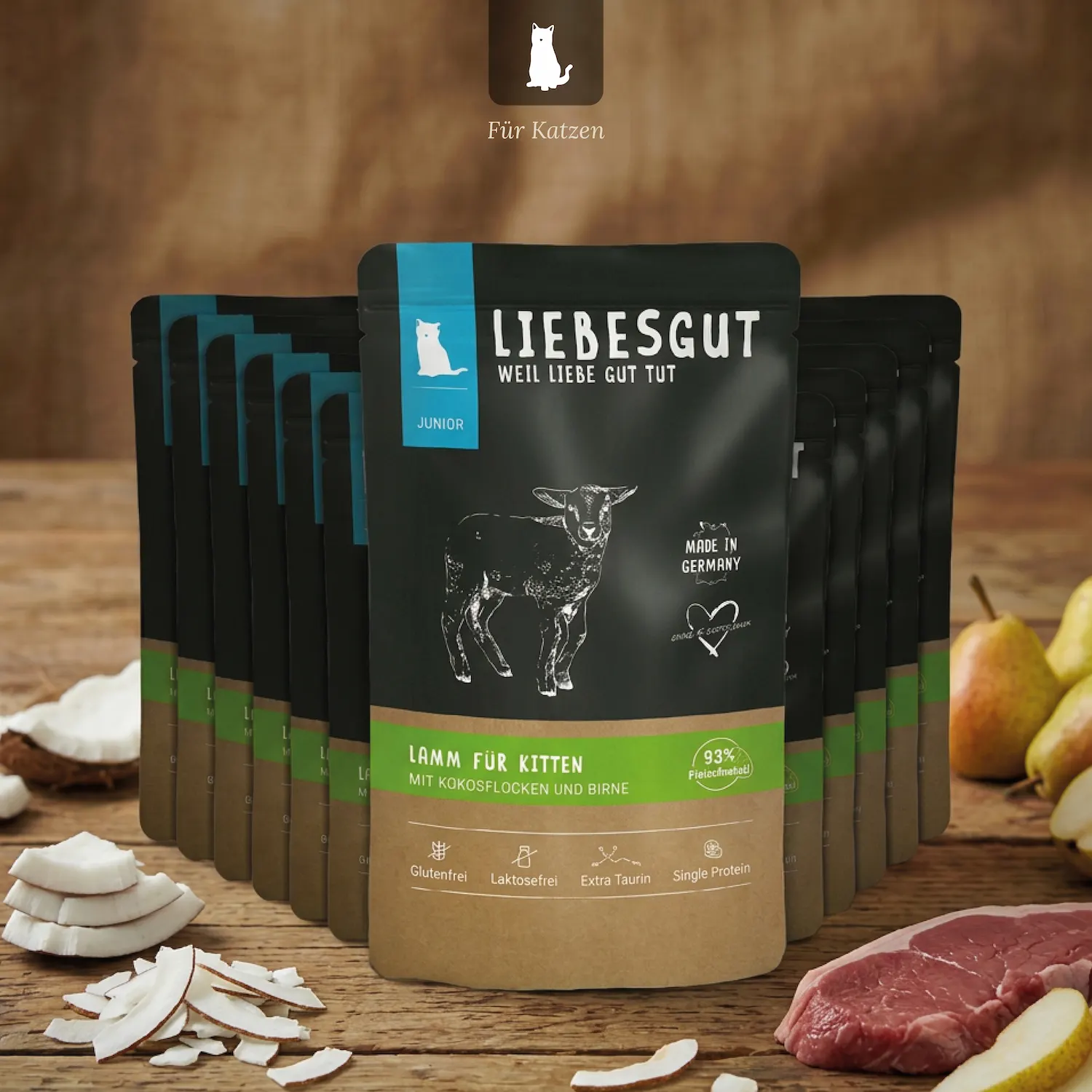
Junior cat food
Contents: 1.2 kg (€16.91* / 1 kg)

Organic cat food Adult
Contents: 2.4 kg (€12.95* / 1 kg)
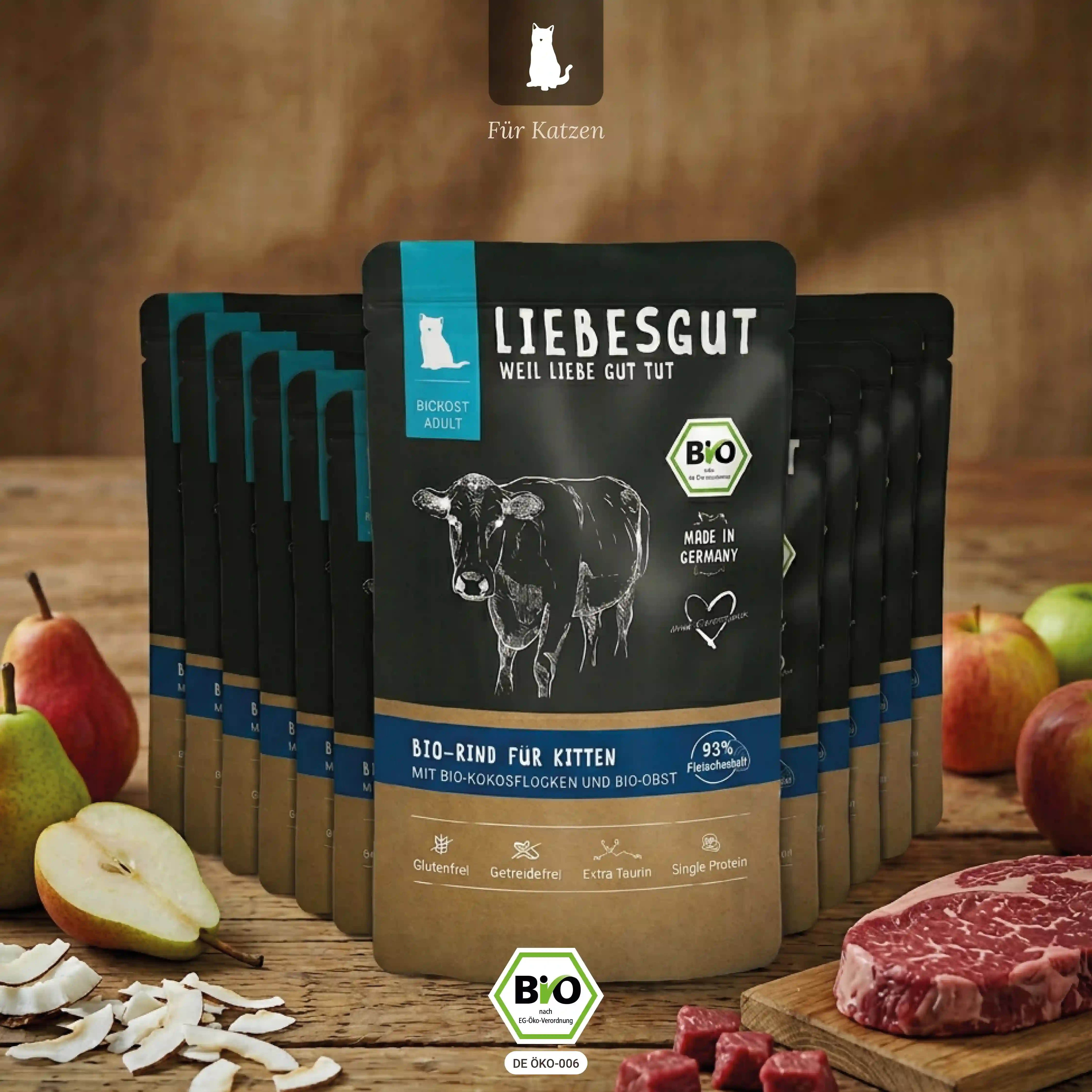
Organic cat food Junior
Contents: 1.2 kg (€16.91* / 1 kg)

Organic cat food Junior
Contents: 2.4 kg (€12.45* / 1 kg)

Organic cat food Adult
Contents: 2.4 kg (€9.23* / 1 kg)
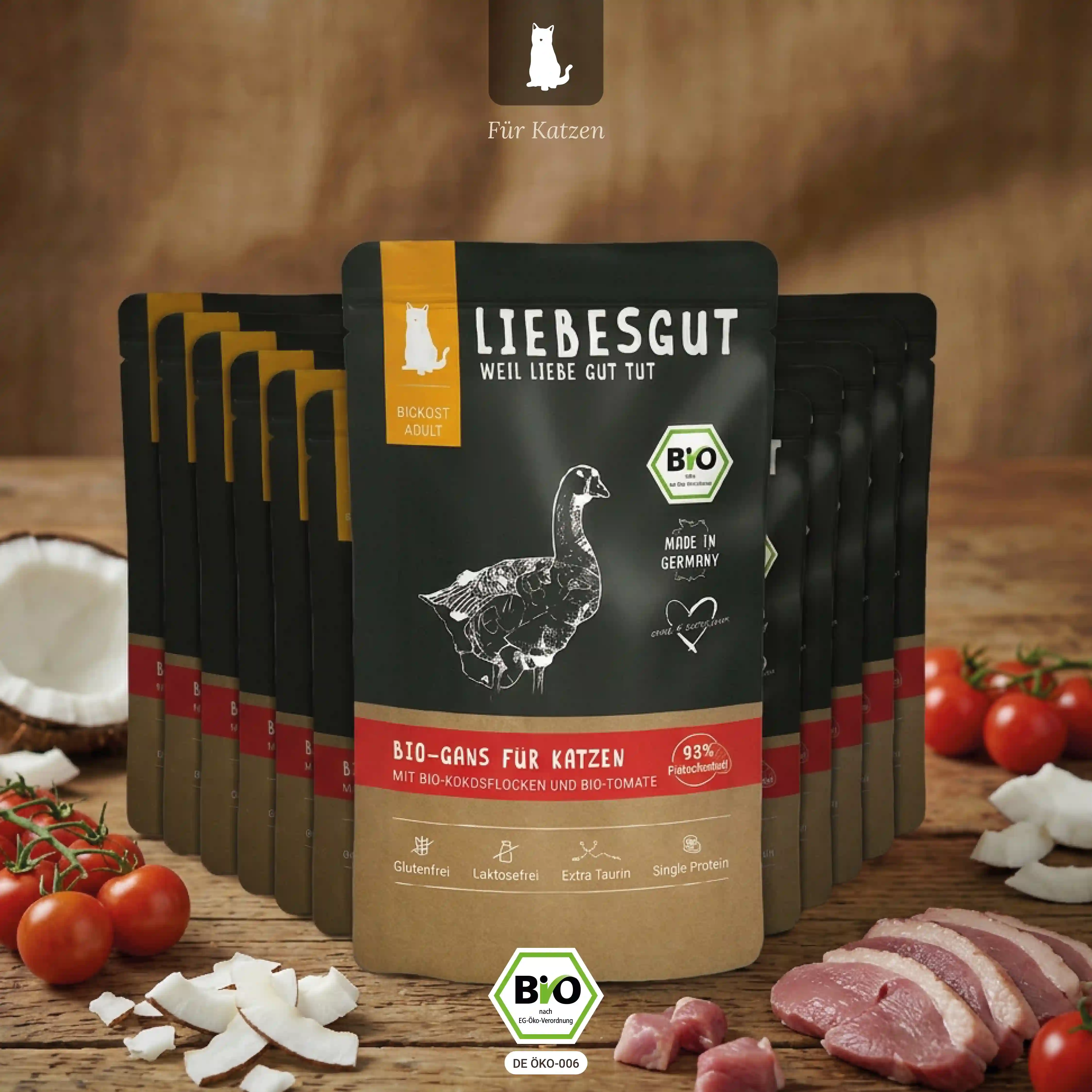
Organic cat food Adult
Contents: 1.2 kg (€15.91* / 1 kg)

Organic cat food Adult
Contents: 1.2 kg (€16.91* / 1 kg)
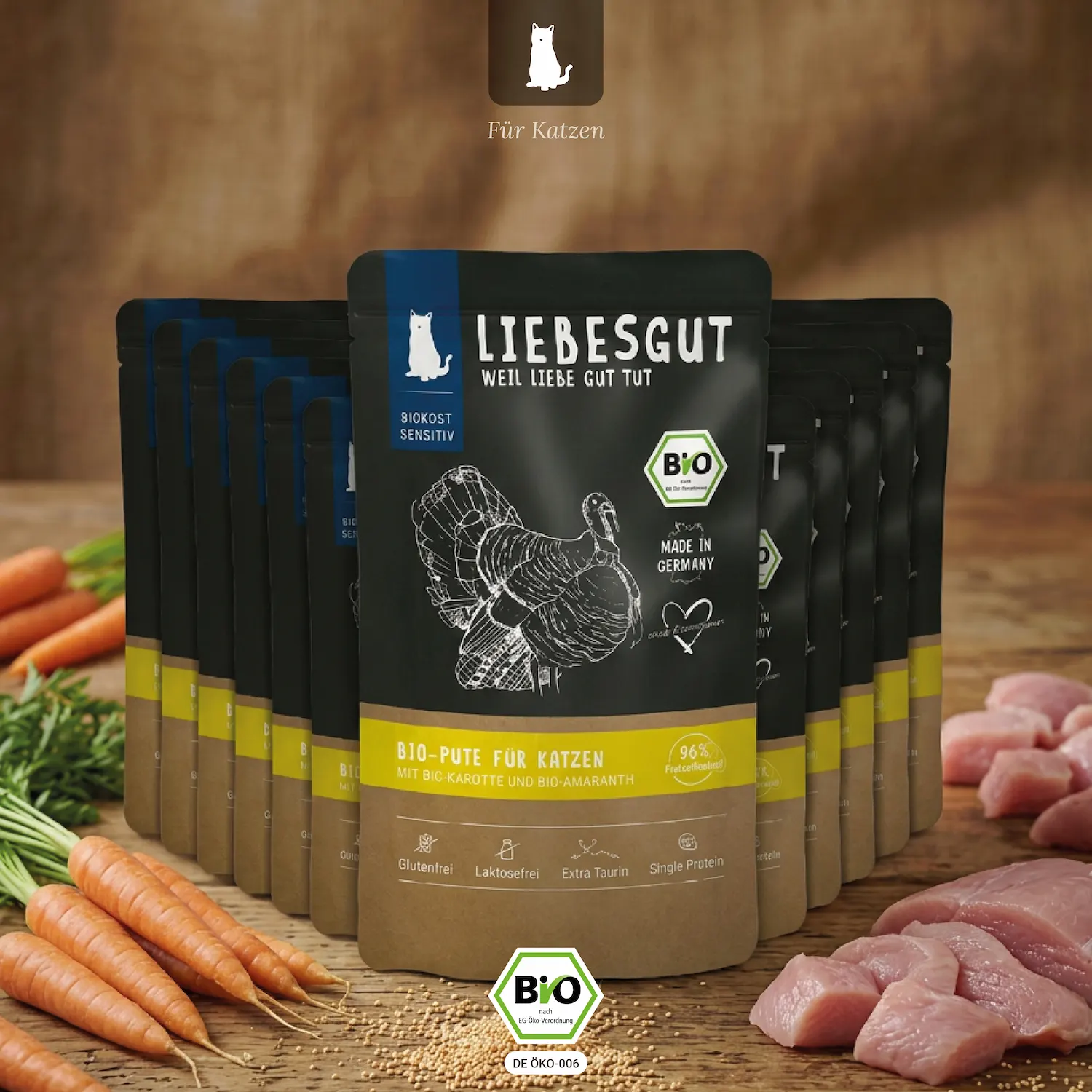
Sensitive organic cat food
Contents: 1.2 kg (€15.91* / 1 kg)

Sensitive cat food
Contents: 2.4 kg (€9.98* / 1 kg)

Adult cat food
Contents: 0.8 kg (€15.58* / 1 kg)
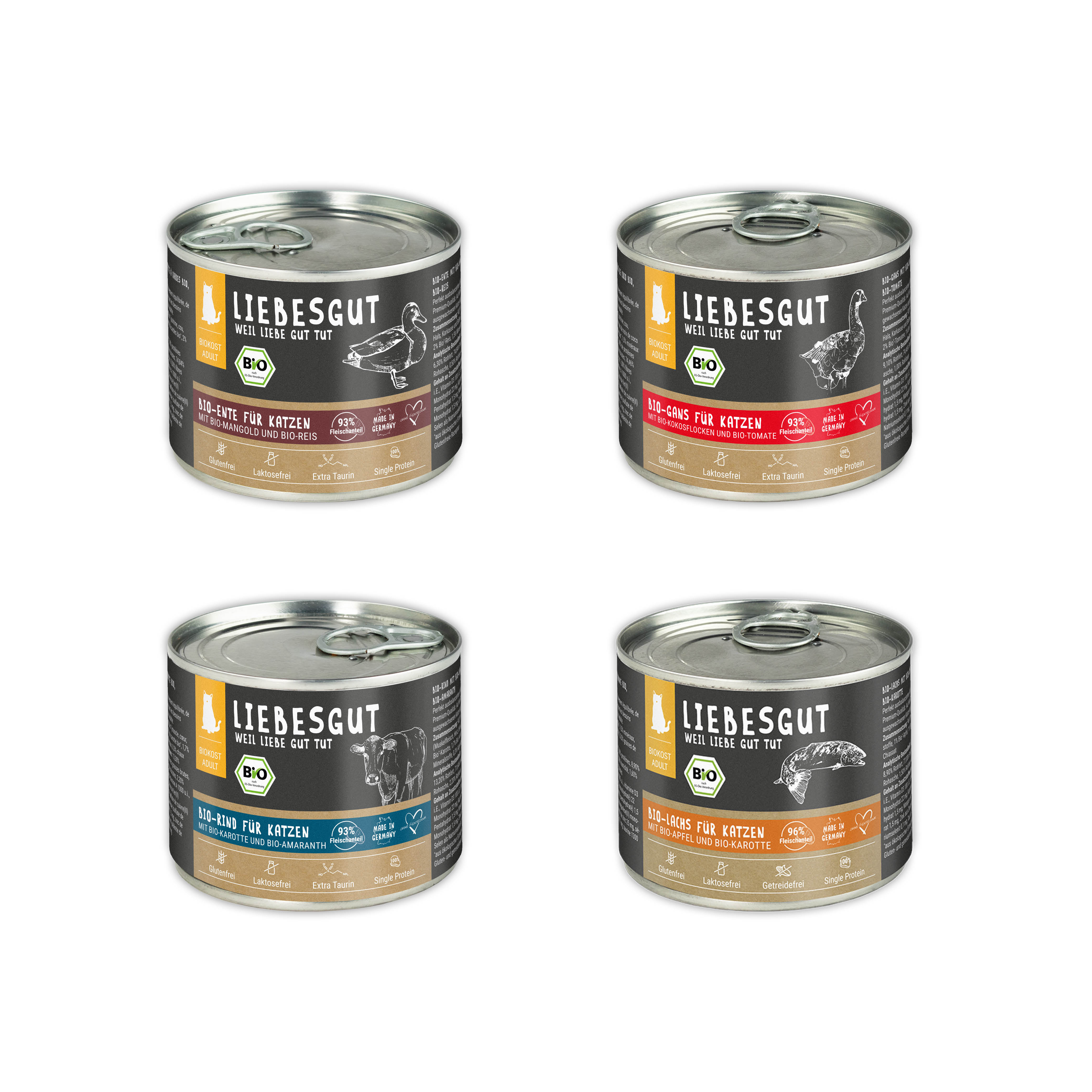
Adult cat food
Contents: 1.6 kg (€12.18* / 1 kg)
Selected for You
Adult cat food
Contents: 7.2 kg (€8.38* / 1 kg)
Junior cat food
Contents: 1.2 kg (€16.91* / 1 kg)
Organic cat food Adult
Contents: 2.4 kg (€12.95* / 1 kg)
Organic cat food Junior
Contents: 1.2 kg (€16.91* / 1 kg)
Organic cat food Junior
Contents: 2.4 kg (€12.45* / 1 kg)
Organic cat food Adult
Contents: 2.4 kg (€9.23* / 1 kg)
Organic cat food Adult
Contents: 1.2 kg (€15.91* / 1 kg)
Organic cat food Adult
Contents: 1.2 kg (€16.91* / 1 kg)
Sensitive organic cat food
Contents: 1.2 kg (€15.91* / 1 kg)
Sensitive cat food
Contents: 2.4 kg (€9.98* / 1 kg)
Adult cat food
Contents: 0.8 kg (€15.58* / 1 kg)
Adult cat food
Contents: 1.6 kg (€12.18* / 1 kg)