


A puppy moves in: Part 1 Preparations and errands
It is usually a long way from deciding to get a dog to the puppy moving in: you have to realise your own circumstances, decide on a suitable breed and think about whether it should be a puppy from a breeder or a dog from a shelter. But at some point, the big moment arrives and the puppy finally moves in. Now it is crucial to be well prepared to give the little rascal the best possible start in his new home.
To make the preparations, you need to know exactly how big and heavy the selected dog breed will be when it reaches adulthood. Ask your breeder for advice if necessary. Once you have all the information, it's time to go shopping. You shouldn't take too much time for this, as the choice is huge and you should always keep an eye on delivery times when ordering online. Don't leave your new flatmate without a food bowl or bed on the first day.
1. the basic equipment:
- Transport box: For large breeds, think about the future and size accordingly
- Collar with lead or puppy harness: a puppy harness is gentler on the dog's neck, but sooner or later he will have to get used to a collar and lead.
- Food and water bowl: think about the future here again, large breeds naturally eat larger quantities. Buy the same bowls several times in case one breaks or is in the dishwasher. It is an advantage if the dog always eats or drinks from its usual bowl.
- Dog blanket: It's also a good idea to stock up. After all, a puppy can have the odd mishap at the beginning and the blanket has to go in the wash.
- Dog bed: Again, think ahead and buy a large enough bed.
- Old towels: To wipe away "accidents", to dry off after a short walk, as toys, etc. .... Simply universally applicable.
- Hairbrush: Please seek advice from a specialised dealer. There are special brushes for long-haired breeds that are definitely worth the extra euro.
- Tick tweezers: Basically self-explanatory, but be sure to find out how to use them correctly beforehand.
- First aid kit: There are special first aid kits for dogs, but basically a disused first aid kit from the car with a few additions will do.
- Toys: Again, unlimited choice, but you should stick to robust and simple toys. It's hard to believe what a puppy with perseverance can get away with. Delicate plastic parts are out of place.
2. safety in the home:
What can break? What is dangerous for a puppy? If you have children, you have a clear advantage. More or less the same precautions apply to small children and puppies and you may already have the necessary equipment:
- Anything valuable and fragile (e.g. vases, flower pots, sculptures) should be put away or secured. A cheerfully wagging puppy tail has no regard for objects that get in its way.
- If you have carpets that are difficult to clean or valuable, you should put them to one side for the duration of the acclimatisation period. As long as the little rascal is not house-trained, it is better not to take any risks.
- Electrical cables lying on the floor should be safely stowed away. A puppy will chew on anything, and a cable can be a source of trouble. It is rather unlikely that a socket will be licked, but if you have child safety devices for sockets to hand, you should use them.
- If you have plants that are within reach of the puppy, you should find out whether they are poisonous to the animal. This also applies to the garden area!
- Always keep chemicals such as cleaning agents out of reach and well sealed.
- Always make sure that there are no small parts on the floor. A Lego brick that looks appetising can lead to choking.
- The dog should not have unhindered access to stairs. It is certainly amusing to watch him clumsily tap his way down the stairs, but this overexertion can have long-term consequences for his physique. A railing on the stairs can help here.
- If necessary, make other areas of the home inaccessible to the puppy. Hot hobs or irons are a danger that can hardly be avoided. If the puppy pulls on the cable of the iron, it can fall down and, in the worst case, cause a fire.
- If there are other animals in the household, you should create a safe space for everyone involved. Don't let territorial conflicts arise at the beginning.
3. visits to the vet and authorities
It's best to find out about vets now. If you have the choice between several vets, choose the one that suits you best. This also includes the compatibility between your working hours and the opening hours and the journey, but the human component should also be right. Make an appointment in advance and talk to the vet to get to know him or her and possibly arrange appointments for examinations and vaccinations. The first vaccinations and deworming are organised and carried out by the breeder, but you should get an overview of what is to come.
And you should find out about dog tax from the local authorities. The regulations vary from municipality to municipality. In some districts a tax stamp is issued, in others registration and payment of the dog tax is sufficient. In most cases, the information can be accessed online.
4. prepare for the first walk
Even if you think you know your neighbourhood well, consciously go for a walk from your home. To start with, you should choose short routes that won't overtax your puppy. Ten to fifteen minutes is enough for the first few walks. The tour must not pass by sources of noise that are too loud, such as express trains or main roads. This would only frighten the young dog. It is much more important that there is plenty to discover and sniff at without danger. Everyday situations such as being on a lead in front of the bakery or travelling by bus should be approached slowly. You should also pay attention to potential "places" to relieve yourself, as young puppies need to go out very often, it should not be too far away.
Our recommendations for your four-legged friend:
Selected for You

Organic dog food junior
Contents: 2.4 kg (€9.48* / 1 kg)
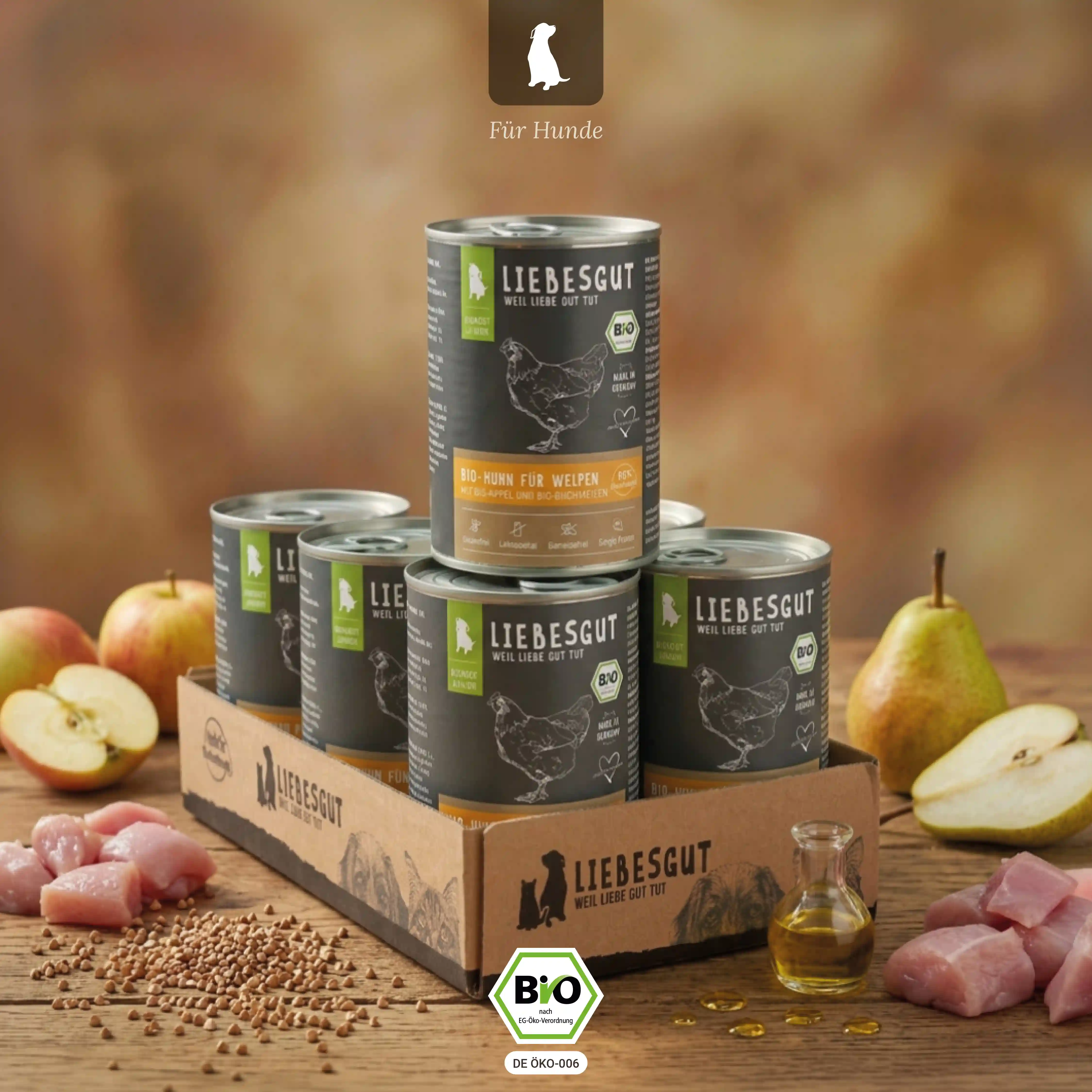
Organic dog food junior
Contents: 2.4 kg (€9.23* / 1 kg)

Organic dog food junior
Contents: 2.4 kg (€8.98* / 1 kg)
PASSENDE PRODUKTE FINDEST DU IN UNSERER KATEGORIE JUNIOR
Kategorie Junior anzeigenSelected for You
Organic dog food junior
Contents: 2.4 kg (€9.48* / 1 kg)
Organic dog food junior
Contents: 2.4 kg (€9.23* / 1 kg)
Organic dog food junior
Contents: 2.4 kg (€8.98* / 1 kg)