


Mast cell tumour in dogs
Mast cell tumour in dogs - what's behind it
Mast cell tumours in dogs are one of the most common skin tumours in dogs. Mast cell tumours are very diverse in appearance and are caused by a mutation of the mast cells. Common areas of the body that are affected: Head, trunk, perineum, genital organs, limbs. However, mast cell tumours can also occur in several parts of the dog's body or grow into organs. The most frequently affected dog breeds are boxers, dachshunds, Weimaraners, Labrador retrievers and Bernese mountain dogs.
Symptoms of a tumour disease in dogs
The symptoms and appearance of a mast cell tumour are varied. However, a lump in or under the skin is usually conspicuous. So feel your dog often for such lumps. The lump may be soft, hairless or reddened. Other symptoms of a mast cell tumour are Sometimes the skin breaks open and a non-healing ulcer develops. The growth rate of the tumour can also vary. The lumps can remain relatively small and stable over a period of several weeks or months. However, they can also grow to a considerable size within a few days. Also watch out for your dog scratching. The lumps can also be very itchy. Occasional stomach cell tumour symptoms in dogs are as follows: Vomiting, diarrhoea, regurgitation, fever, decreased appetite, ulcers, enlarged lymph nodes, dark discoloured faeces due to blood in the stool. If there are already metastases in the spleen or liver or the lumps are very large, this can even lead to a life-threatening anaphylactic shock. So if you discover a lump in your dog, the animal should be taken to the vet as soon as possible to have the necessary tests carried out. Do not wait too long, it can cost valuable time and worsen the prognosis.
Mast cell tumour dog lifetime
The lifespan of a dog with mast cell tumour disease depends on the stage of the mast cell tumour in the dog. Therefore, the earlier a mast cell tumour can be diagnosed and treated in a dog, the better the prognosis. If the tumour can be discovered and treated at an early stage, it is less likely to have already metastasised. Surgery can achieve good results for individual primary tumours, often even curing them. The prognosis is not good for systemic involvement. Around 50 % of dogs suffer a relapse, which occurs around 1 - 2 years after the last treatment. The remaining lifespan is then around four to twelve months.
Mast cell tumour in dogs - what is it?
Mast cell tumours are among the most common malignant skin tumours in dogs. The tumour is very diverse in its appearance. Theoretically, any circumferential growth in the skin can be a mast cell tumour. The circumferential growths can be soft, ulcer-like, reddened or hairless.
Do I have any other options besides surgery to help my dog?
The best option and treatment of choice is surgery. However, it depends on the grade and extent of the tumour. If you are unable to operate on your dog's mast cell tumour, chemotherapy is an option. You can differentiate between classic chemotherapy and drug treatment - Masivet and Palladia. Both are authorised medications. However, they can impair liver and kidney function. Drug treatment is relatively new; it inhibits the growth of tumour cells but can also cause side effects such as vomiting and diarrhoea. The dog's kidney values must therefore be checked regularly. If chemotherapy is not an option, treatment with prednisone is recommended. Cortisone has a growth-inhibiting effect on the mast cells. It is also possible to give the dog an antihistamine and a gastric acid blocker. This should serve to inhibit the release of the messenger substances and alleviate reactions.
What is the treatment for a mast cell tumour?
The best way to help your dog is to perform surgery and remove the tumour. To avoid side effects during the operation, it is advisable to administer antihistamines and cortisone before the operation. During the operation, the mast cell tumour is removed with a safety margin of 1 - 3 cm. Normally, no further treatment needs to be considered for a low-grade tumour after complete surgical removal. In the case of a high-grade tumour, however, you should assume that chemotherapy or radiotherapy will follow the operation. The aim of radiotherapy is to destroy the remaining tumour cells. A recurrence of the tumour should be prevented at all costs. The therapy and prognosis for mast cell tumours in dogs are strongly influenced by the grade of the tumour. The higher the grade, the more intensive the therapy must be and unfortunately the worse the prognosis. If you cannot operate on the mast cell tumour in dogs, chemotherapy and radiotherapy are possible options. A grade 1 mast cell tumour in dogs is not very aggressive, it usually grows in situ and metastases only occur in around 10% of dogs. A grade 3 mast cell tumour in dogs, on the other hand, is very aggressive and malignant, forming metastases in the liver, spleen and lymph nodes in 80% of cases. However, grade 2 mast cell tumours are most common in dogs and are difficult to assess as they can be both benign and very aggressive. So-called dendritic cell therapy can help to increase the lifespan of mast cell tumours in dogs. It is a gentle immunotherapy that also improves the quality of life of the dogs. The therapy is also characterised by only mild side effects.
Tumour diseases in dogs: What influence does the right diet have?
The right diet is closely linked to health. Especially with a disease such as mast cell tumours in dogs, correct feeding is an important aspect of treatment. Organic wet food that contains all the important nutrients and vitamins for your dog is best. As the cell structure in the animal's body is altered by the disease, it is extremely important to adapt the food to the changed conditions. When changing the diet, it should also be noted that supplementation with vitamins, amino acids and minerals is useful in the fight against the tumour. In order to achieve the best possible success, the diet plan must be individually tailored to the dog. The stage of the tumour, the location, the size and the age of the dog play an important role in this. Changing the diet is a very important component, but it should not be seen as the sole therapy.
Our recommendations for your four-legged friend:
Selected for You

Sensitive dog food
Contents: 2.4 kg (€9.48* / 1 kg)
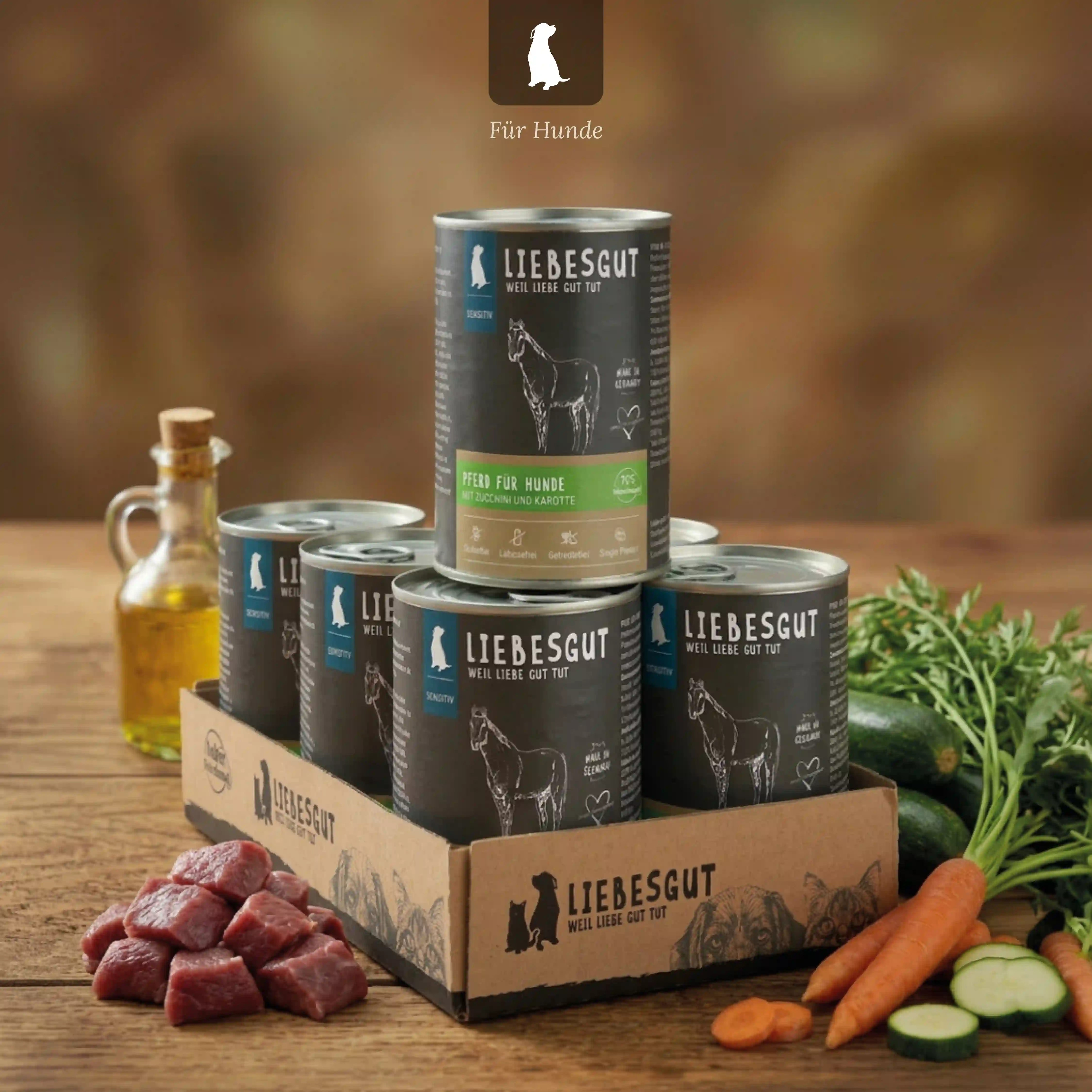
Sensitive dog food
Contents: 2.4 kg (€9.73* / 1 kg)
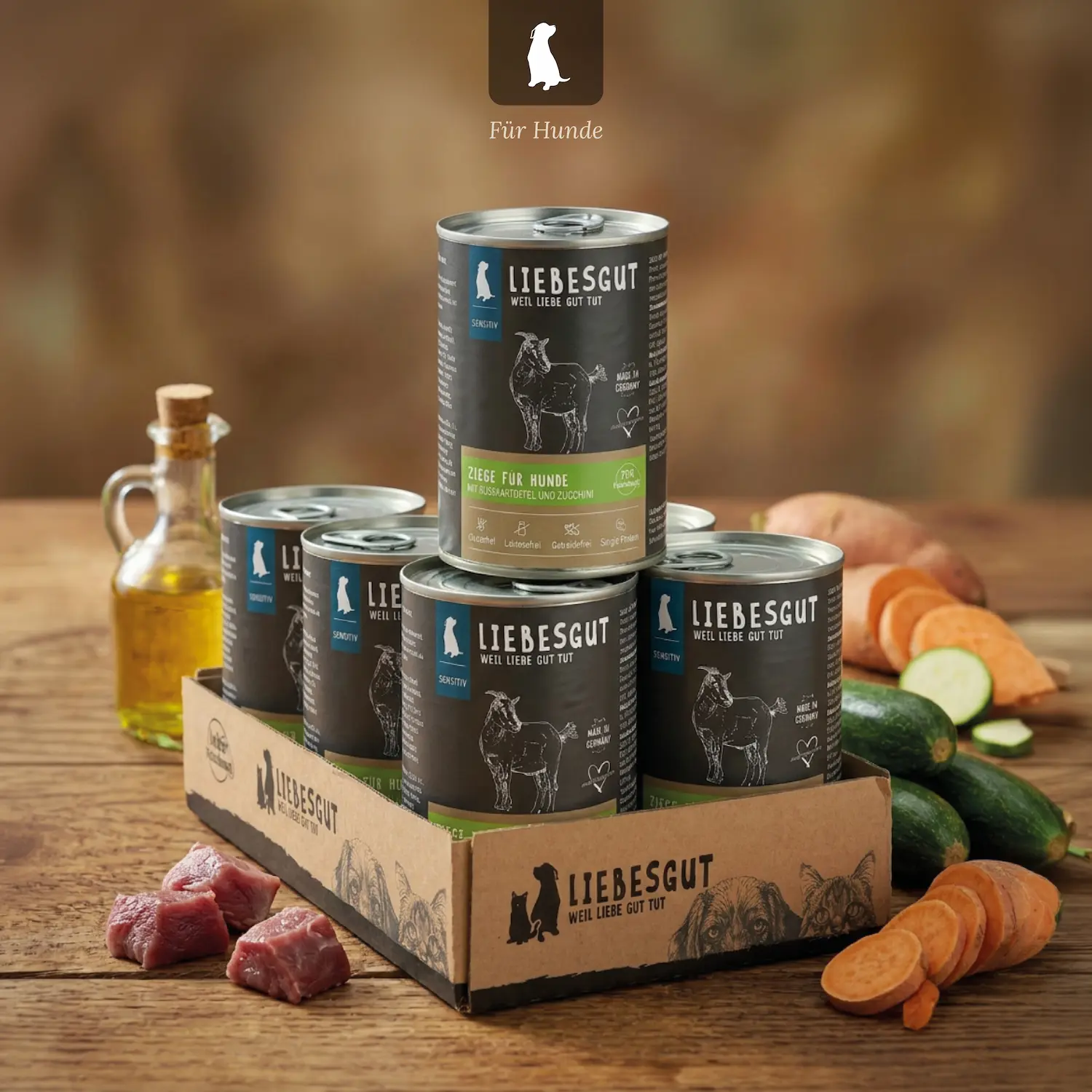
Sensitive dog food
Contents: 2.4 kg (€9.98* / 1 kg)
Selected for You
Sensitive dog food
Contents: 2.4 kg (€9.48* / 1 kg)
Sensitive dog food
Contents: 2.4 kg (€9.73* / 1 kg)
Sensitive dog food
Contents: 2.4 kg (€9.98* / 1 kg)