


Frequently asked questions about food and our answers
Are the menus a complete feed?
Yes, the menus contain only one source of protein as well as healthy vegetables or fruit, fats and some carbohydrates in the form of cereals or potatoes. The range includes a large selection of menus, so there is the opportunity for variety and therefore balance. Each menu offers different nutrients, depending on the different and carefully selected ingredients. We therefore recommend feeding a varied diet.
What is different about the puppy menus?
Puppies need a higher proportion of meat as they are still "growing". It should be highly digestible or highly utilisable meat, predominantly muscle meat. It should also contain healthy fruit and vegetables, oils and some carbohydrates. For this reason, our puppy menus contain a higher proportion of meat.
What is the shelf life of the food once opened?
Once opened, the food can be kept in the fridge for approx. 3 to 4 days. The food should be fed at room temperature. It is also possible to freeze the food in portions.
How often should I feed per day?
For large dogs in particular, we recommend dividing the food ration into two portions per day. This also varies for cats, many like to eat more than once a day. Puppies and kittens need several small meals a day in the first few months. Fresh water should always be available.
Why are spleen/kidneys not used?
Especially when feeding raw meat, spleen and kidneys are often recommended from time to time. From our point of view, spleen provides a lot of iron, but due to the high proportion of connective tissue it has a rather poor protein quality and is more difficult to digest. Kidneys are considered a detoxification organ and should only be fed occasionally. They are also often rather reluctant to eat. As our pure meat varieties or menus are to be fed daily, we therefore do not want to use spleen and kidneys.
What source of calcium is used?
Minerals in food are very important nutrients, especially calcium and phosphorus. As bones contain a lot of calcium, necks and carcasses or bones are also utilised and finely minced in poultry varieties as part of the usual feeding recommendations (approx. 10 %).
In the case of menus with meat varieties where it is not possible to mince bones, the calcium-phosphorus ratio is balanced by adding e.g. organic eggshell powder and declared as an ingredient.
Are preservatives added?
No, we do NOT use any preservatives. Our food is prepared by cold filling, then sealed and gently heated. This enables us to guarantee a shelf life of several years in a natural way.
Is thyroid gland used?
Thyroid gland is not an ingredient in our feed. However, we use necks as a source of calcium in our poultry varieties, and residual thyroid components cannot be completely ruled out during the slaughter process. However, these do not pose a risk in healthy animals.
What causes variations in the colour and consistency of the feed?
Our raw materials are subject to raw material fluctuations, not every animal is the same. The consistency of the feed can therefore also vary depending on which meat and which menus are produced. As no binding agents or fillers are used, different amounts of liquid can be produced during heating. The water content of the vegetables used also plays a major role here.
So, we hope that a few questions have been answered. If you have any further questions, please send an email to: beratung@liebesgut-tiernahrung.de
Our recommendations for your four-legged friend:
Selected for You
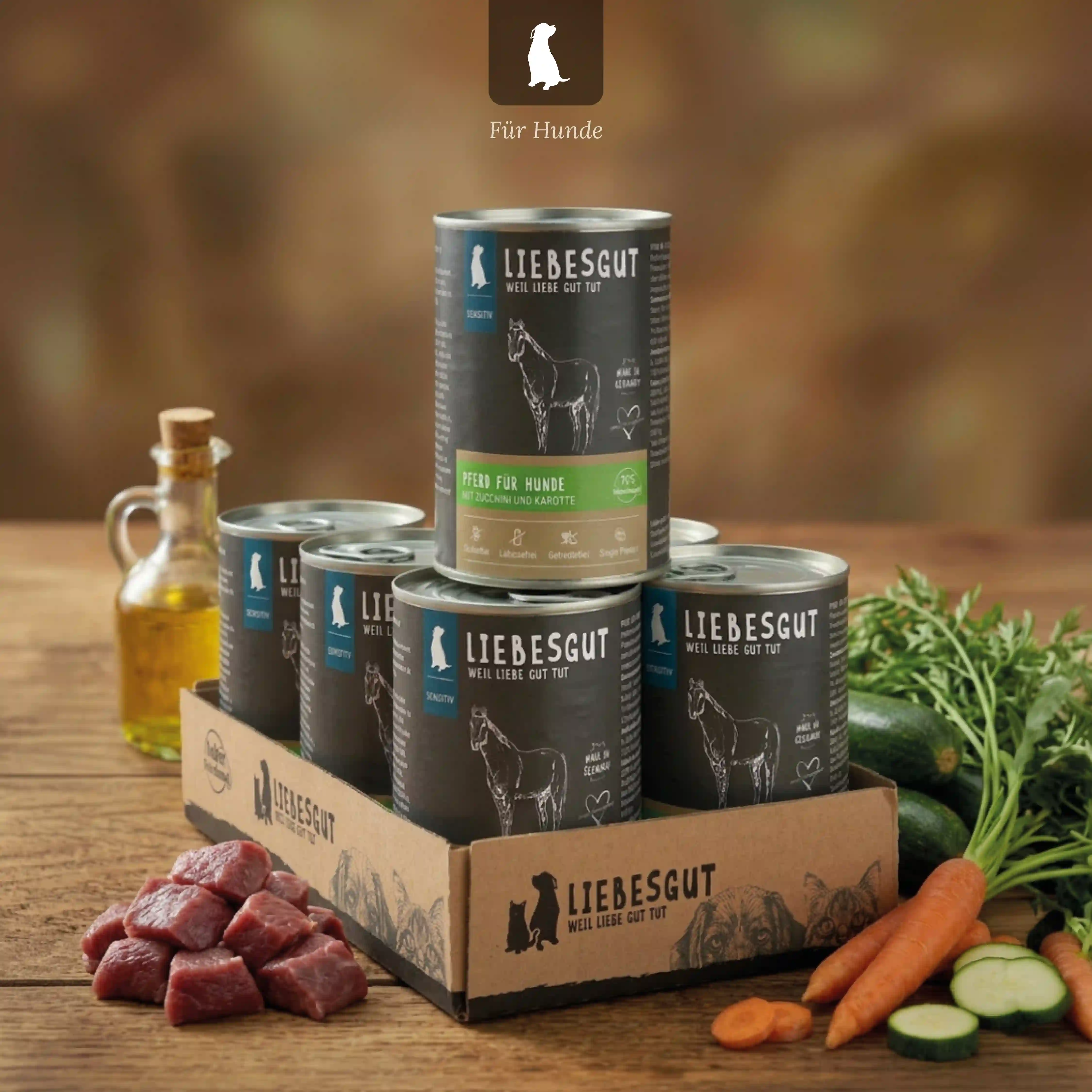
Sensitive dog food
Contents: 2.4 kg (€9.73* / 1 kg)
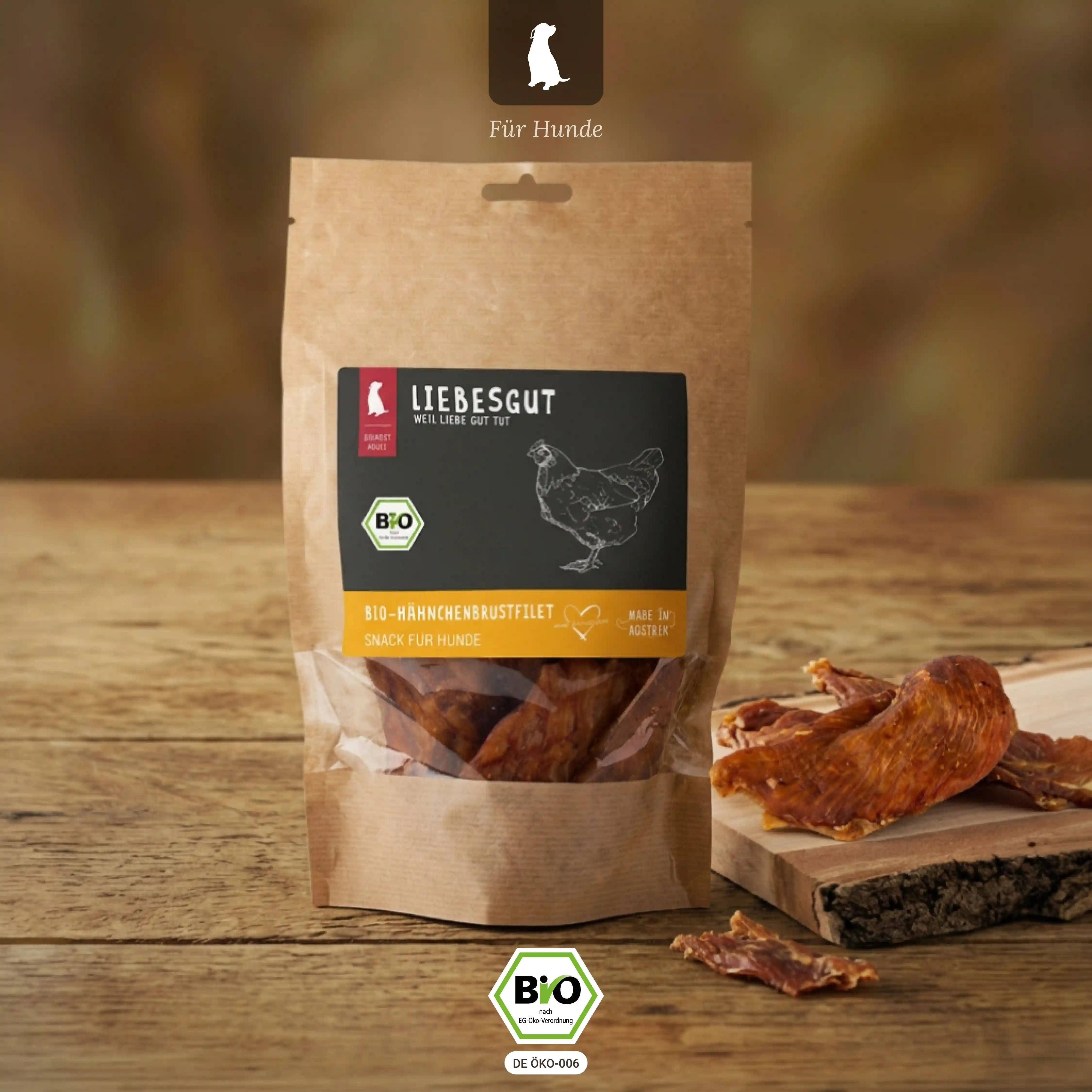
Snack for dogs
Contents: 0.1 kg (€39.90* / 1 kg)

Organic cat food Adult
Contents: 1.2 kg (€12.46* / 1 kg)
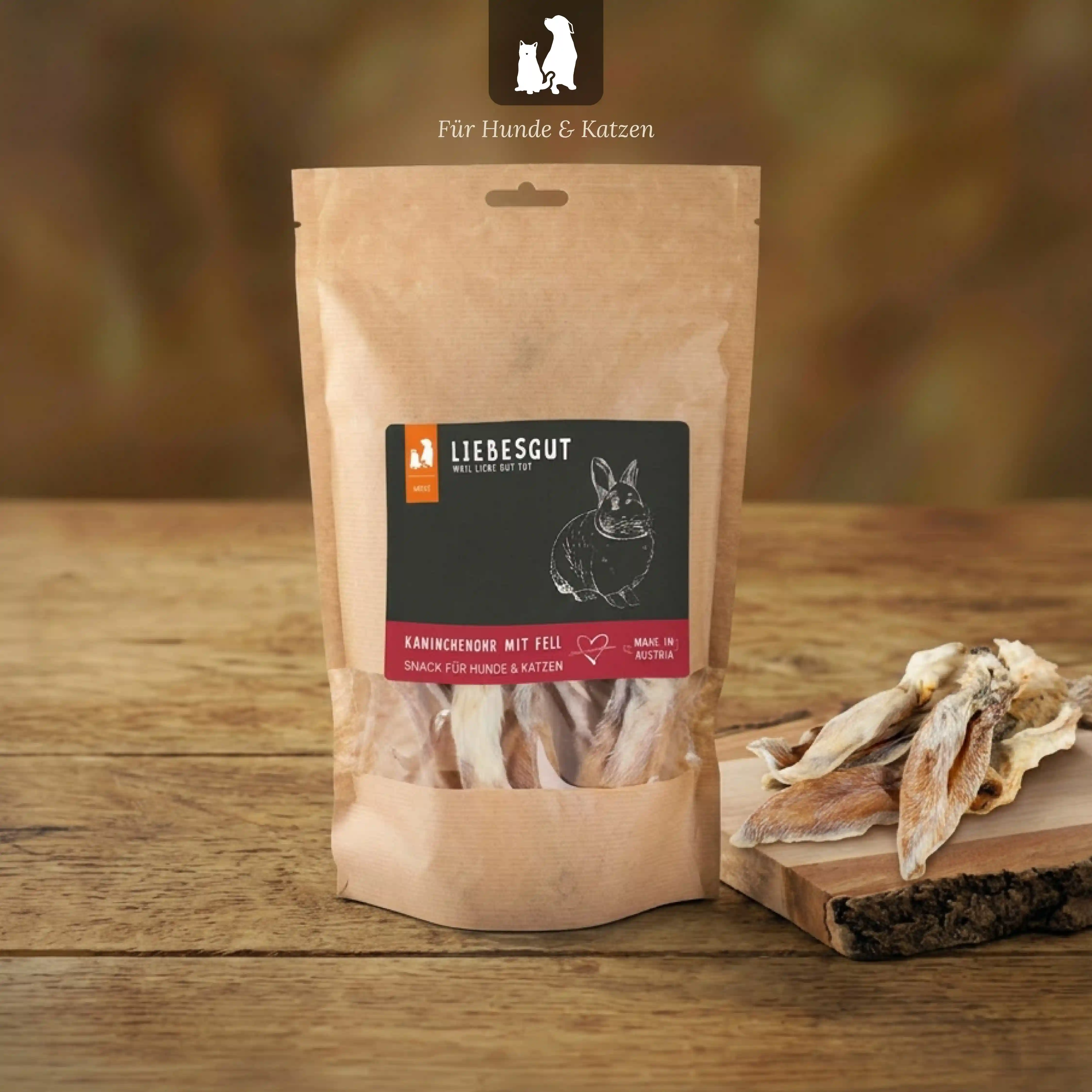
Snack for dogs & cats
Contents: 0.1 kg (€40.90* / 1 kg)

Adult dog food
Contents: 4.8 kg (€7.59* / 1 kg)
Selected for You
Sensitive dog food
Contents: 2.4 kg (€9.73* / 1 kg)
Snack for dogs
Contents: 0.1 kg (€39.90* / 1 kg)
Organic cat food Adult
Contents: 1.2 kg (€12.46* / 1 kg)
Snack for dogs & cats
Contents: 0.1 kg (€40.90* / 1 kg)
Adult dog food
Contents: 4.8 kg (€7.59* / 1 kg)