


Nutrition tips for dogs and cats - how to feed your pets properly
Cats and dogs differ in their food requirements. The cat is a pure carnivore (obligate carnivore). In addition to meat, dogs also eat herbs, berries, grasses, fruit and vegetables (facultative carnivore). Nutrients such as fats, proteins, minerals, vitamins and trace elements are also distributed differently in cat food than in dog food.
However, one thing applies to both: the food should be species-appropriate, nutritious and easily digestible. This means that the meat content should be high and the processed meat should consist of easily digestible muscle meat and some offal.
Our high-quality organic food for dogs and cats contains a high proportion of meat with lots of high-quality protein from easily digestible muscle meat and valuable offal such as heart, lungs or liver. All of this is supplemented with certified organic vegetables, fruit, herbs and oils. They ensure good digestion and provide important vitamins, minerals and nutrients. It goes without saying that our organic food is free from synthetic preservatives such as sugar, soya, wheat, gluten, lactose and attractants and colourings.
How to feed your dog
Puppies can usually be fed leg food from the 4th week of life. As they are very active and still growing, they are quite hungry. You can therefore offer several portions (4 to 6) throughout the day.
With our organic wet food junior line, your little darling gets everything it needs during this time. Our junior food has been developed by vets and nutritionists and contains a lot of protein, which is important for muscle development and many bodily functions, thanks to the significantly higher meat content. The carbohydrates used are particularly digestible and easy to digest. Fruit and vegetables provide valuable vitamins.
Tailor the amount of food to your young dog and its needs. Factors that you need to take into account:
- The breed: Will it be a large, medium or small dog?
- The expected weight: What is the normal weight for an adult dog of this breed and size?
- Individual development: Some animals grow faster than others, and not all young dogs have the same level of fitness.
- Note: Your dog should not gain weight and size too quickly. This puts a strain on joints and metabolism. Weight charts and growth curves, which are best discussed with your vet, can help you keep track.
Our junior varieties organic turkey with chard and potato and organic chicken with apple and buckwheat are particularly suitable for small and medium-sized puppies of normal weight. The organic beef with millet and pumpkin junior food, on the other hand, is particularly suitable for puppies of large and very large breeds or for young dogs that still need to put on weight.
Adult dogs can be fed once or twice a day. Small dogs consume more energy for their size, so two meals a day is often better for them. Very large dogs should even be fed several small meals, as their digestive tract is relatively short and sensitive, thus preventing a dangerous stomach torsion.
Our balanced Liebesgut organic wet food from the adult line is perfect for all adult and normal-weight dogs. A high meat content, which is made up of muscle meat combined with healthy offal such as heart or liver, is complemented by a selection of fruit, vegetables, cereals and oils that provide important nutrients.
Tip
To prevent your dog's stomach from twisting, it should not be allowed to romp around, roll around or be exposed to a lot of stress immediately after a meal. If you have a very playful and active dog, give him plenty of exercise before eating. If your dog is generally prone to indigestion, give him two or more small portions throughout the day. The last feeding should not take place too late so that a stomach torsion does not occur unnoticed at night.
If you have a very active dog that is mainly out and about or your dog even has a "job", for example a sniffer, herding or sled dog, the energy requirement will be higher. In this case, several meals a day are also advisable.
For sports and working dogs with higher energy requirements, we recommend our Liebesgut organic beef with courgette and rice flakes.
Try to always offer the meals at approximately the same time. This will help your dog get used to a fixed rhythm.
Old dogs are no longer quite as active. You should therefore reduce the amount of food given to your senior dog. To relieve your dog's digestive tract, give him several small portions a day instead of one or two large meals.
Due to their moderate energy content, organic chicken with root vegetables and sheep with celery and potato are suitable for sprightly senior dogs. Sheep is also suitable as a diet food for overweight dogs and can be fed to dogs with kidney disease. We have our own Bio-Sensitive line for dogs with sensitive diets and allergies.
How much you feed always depends on the size and weight of your dog and its activity level. Take a look at our feeding recommendations for dogs.
How to feed your cat
Small kittens can be fed from around the 4th week. Kittens are very active and consume a lot of energy. They also multiply in weight and size in a short space of time. They now need a lot of easily utilisable animal proteins so that their body and bone structure develop properly. Feed your kitten several small portions a day or whenever it is hungry.
Liebsgut's organic Junior line has been developed by vets and nutritional specialists and gives your growing kitten everything it needs in its first weeks and months. The very high meat content in particular provides the important proteins that the body needs at this time. The organic chicken with coconut flakes and courgette variety is particularly suitable for strengthening muscles and bones. Organic beef with coconut flakes and fruit is for very active kittens. Organic lamb is suitable for all kittens and also nutritionally sensitive animals.
You can feed your adult cat a particularly species-appropriate diet if you offer it 3 to 5 small portions a day, as its digestive system is designed for several small mouse meals a day. Depending on how many she catches. For example, you can divide a 200 gram tin into four portions of 50 grams each.
Our Biokost-Adult line is characterised by a high meat content with lots of high-quality protein from fresh muscle meat. Due to its low energy content, organic goose with coconut flakes and tomato is suitable for indoor cats. Very active cats are given organic beef with carrot and amaranth, which is characterised by a higher energy content.
Try to always offer the meals at the same time. Cats love routines and regularity. Especially when it comes to food. At night or when you are not at home, simply use an automatic feeder.
Tip:
If you want your cat to lose weight , lots of small portions of high-quality wet food combined with play and exercise will help to reduce the weight in a healthy way. Caution: Never starve your cat. If cats do not eat for more than 48 hours, this can lead to dangerous liver poisoning.
Old cats become calmer and their energy requirements decrease. Don't put quite as much food in your senior cat's bowl now, but make sure it is highly digestible.
The amount of food depends on the breed, age and activity level of your cat. It's best to take a look at our feeding recommendations for cats
You can download your own nutrition plan here:
Our recommendations for your four-legged friend:
Selected for You
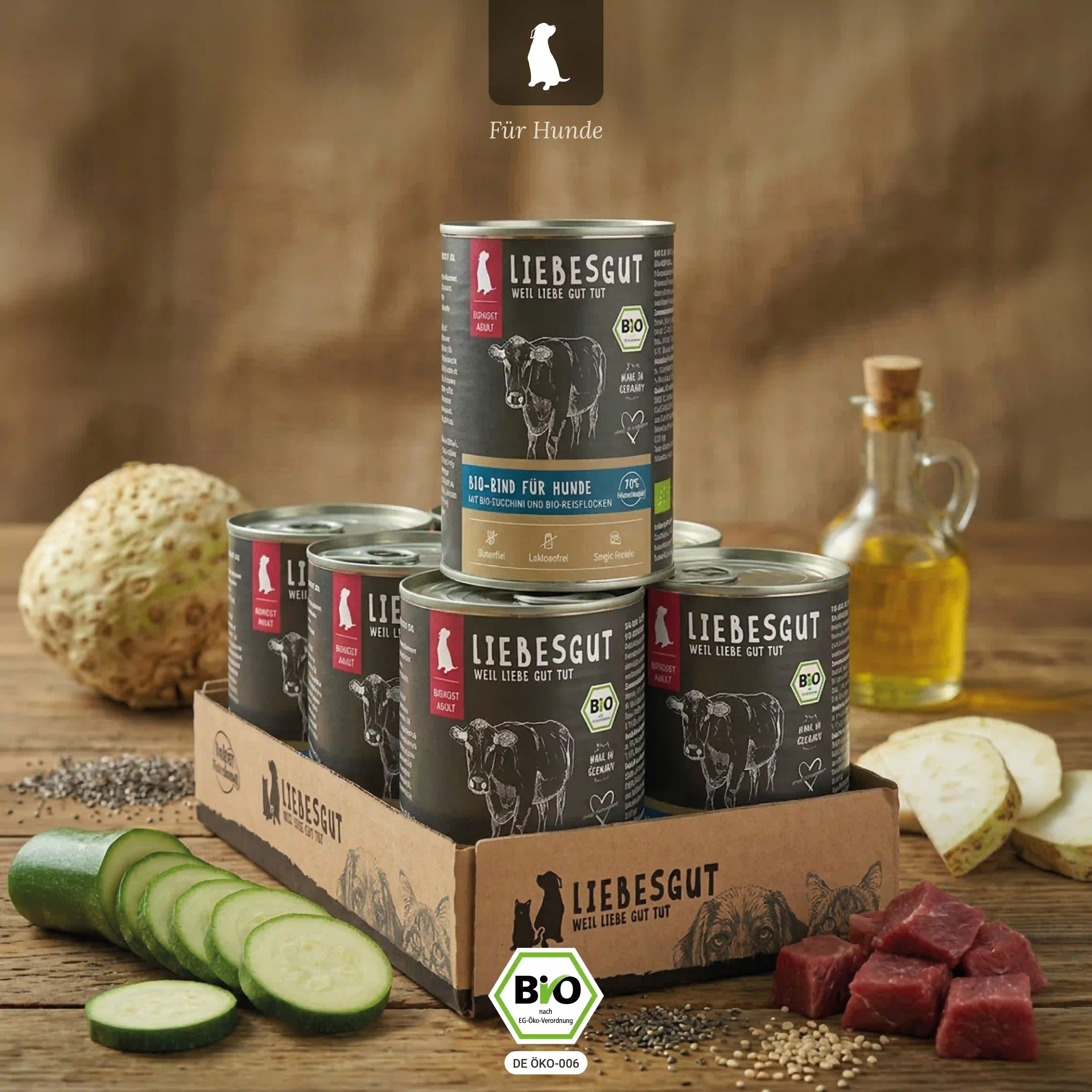
Organic dog food Adult
Contents: 2.4 kg (€9.48* / 1 kg)

Adult dog food
Contents: 2.4 kg (€9.98* / 1 kg)
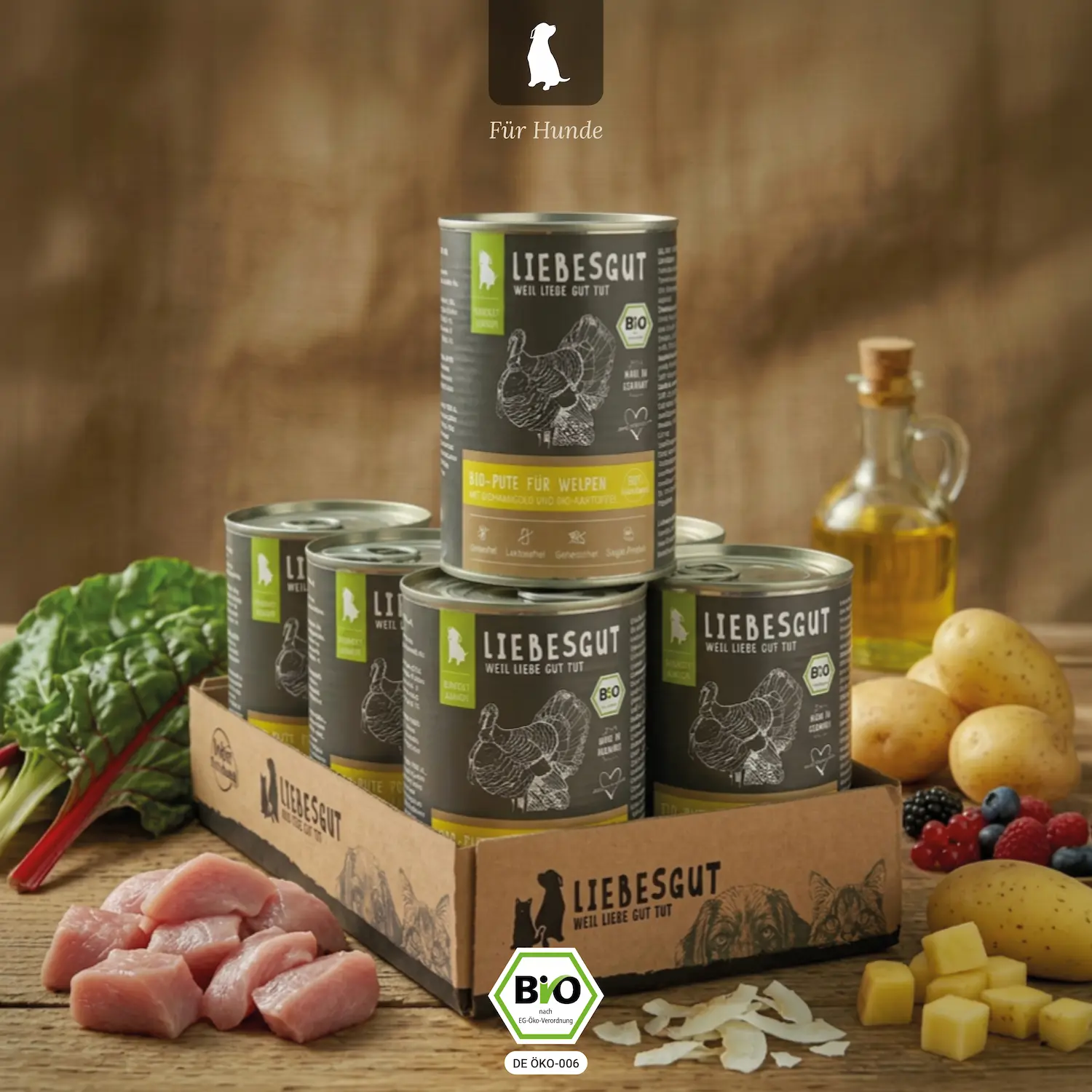
Organic dog food junior
Contents: 2.4 kg (€8.98* / 1 kg)
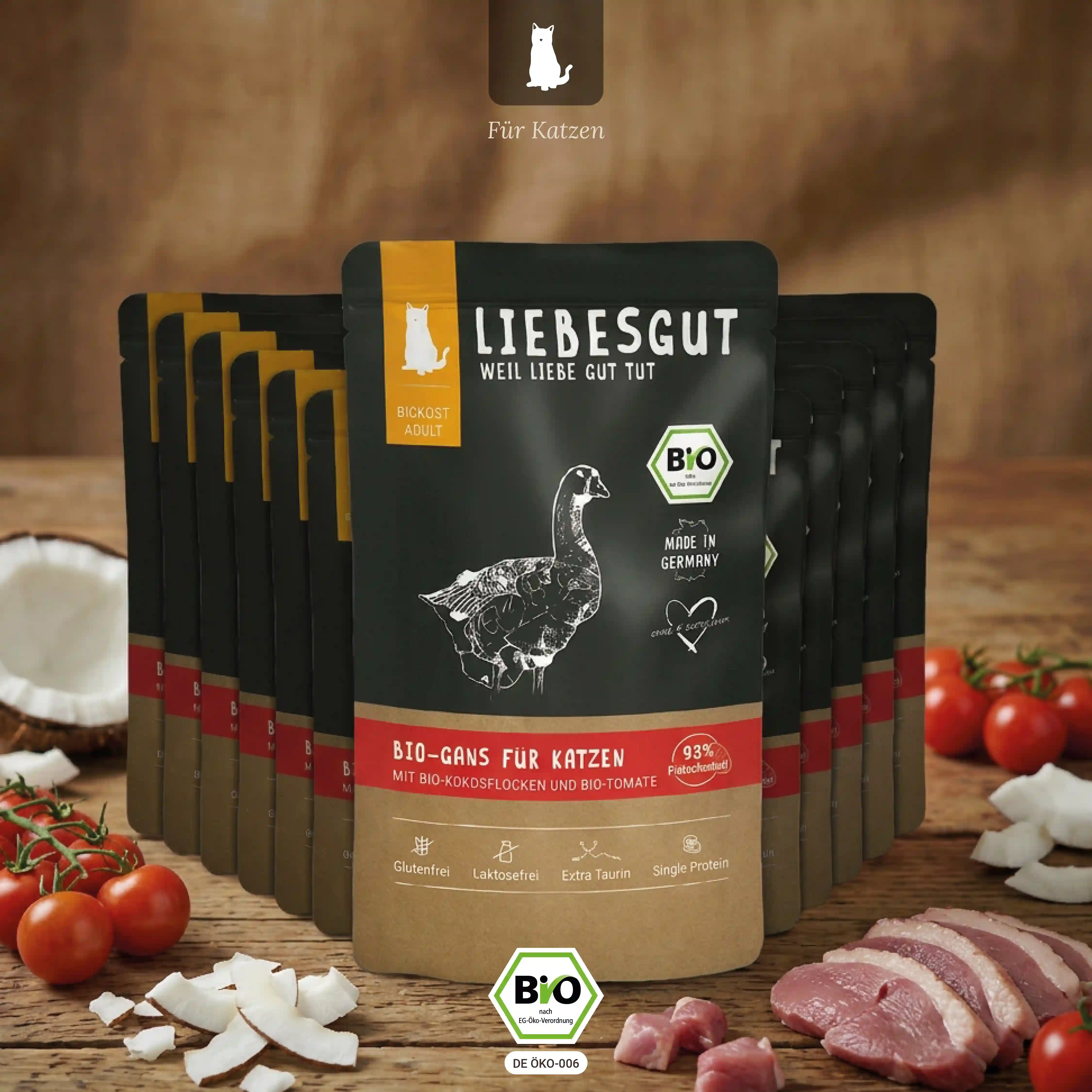
Organic cat food Adult
Contents: 1.2 kg (€15.91* / 1 kg)
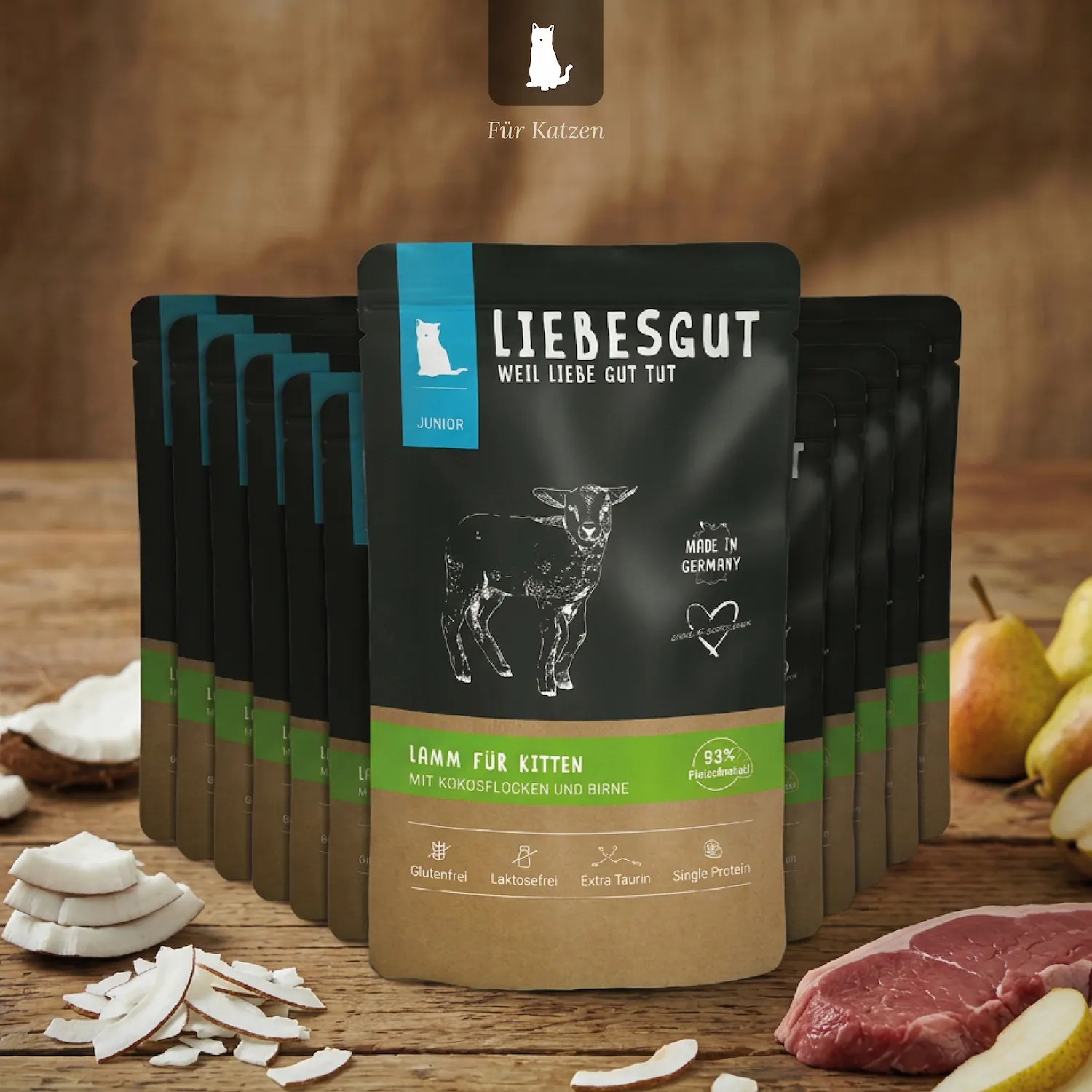
Junior cat food
Contents: 1.2 kg (€16.91* / 1 kg)
Selected for You
Organic dog food Adult
Contents: 2.4 kg (€9.48* / 1 kg)
Adult dog food
Contents: 2.4 kg (€9.98* / 1 kg)
Organic dog food junior
Contents: 2.4 kg (€8.98* / 1 kg)
Organic cat food Adult
Contents: 1.2 kg (€15.91* / 1 kg)
Junior cat food
Contents: 1.2 kg (€16.91* / 1 kg)