


Food bowl instead of question mark: What can puppies eat?
Every puppy owner asks themselves this question: What is the best diet for my puppy and what are puppies allowed to eat? The following guide will tell you everything you need to know about feeding your new family member.
Your puppy's diet plays a crucial role in its development and health. You should know exactly which foods are suitable and which you should avoid. The right diet is particularly important in the first few weeks of life. It influences the puppy's growth, bone development and immune system. A balanced diet that contains all the necessary nutrients is essential for your puppy's well-being. While some foods promote development, others can be harmful. You should avoid these to prevent potential health problems.
What puppies should eat
What can puppies eat? A balanced diet is crucial for their healthy development. In the first few weeks of life, puppies mainly need their mother's milk. This provides them with all the necessary nutrients. In medium-sized breeds, healthy puppies double their birth weight within ten days and weigh six to ten times as much after six weeks. You can monitor their growth by weighing them daily.
Our tip: If a puppy is not gaining enough weight or is losing weight, this could be due to insufficient milk production on the part of the mother. In such cases, it is better to consult a vet!
You should feed puppies special puppy milk about eight times a day for the first four weeks. From the sixth week onwards, you can reduce the feedings to up to six times a day.
Caution: Avoid homemade puppy milk from internet recipes, as they often do not mimic the complex composition of mother's milk and can cause digestive problems. Instead, please buy special puppy milk in specialised shops or ask your vet for it. This milk contains all the important nutrients and is usually well tolerated.
From the first month of life, you can give your puppy puppy food or special puppy mash in addition to mother's milk to cover its growing nutritional requirements.
Between the fifth and sixth week, you gradually acclimatise him to the changeover from mother's milk to puppy food. Responsible breeders only give the puppies away after this weaning phase and ensure that you, as the new owner, receive an initial amount of the puppy food they are used to for the transition period.
What puppies are not allowed to eat
As with babies and toddlers, it is important to keep a close eye on your puppy at the beginning. Many are curious about their surroundings and will eat almost anything they come across. Here you can find out what your puppy must not eat under any circumstances.
It is generally advisable to give your puppy only a small amount of additional food outside of the set meal times. A limited amount of reward treats during joint training sessions can be okay, but it is better to use puppy snacks rather rarely in the first few months! Your puppy must not get anything from the table. His stomach is still very sensitive and certain foods that are harmless to humans can be dangerous for dogs:
-
Chocolate
-
Cocoa
-
raw pulses
-
Avocados
-
raw pork
-
Walnuts
-
Grapes
-
raw potatoes
-
Aubergines
-
Tomatoes
-
Onions
-
Garlic
Please note: Some of these foods can be life-threatening for your dog!
How often should puppies be fed?
Did you know that puppies need age-appropriate feeding schedules?
When they are up to six months old, feed them up to four times a day. After that, you can reduce the number of meals to two or three a day. From one year of age, one meal a day is often enough. Note, however, that large breeds up to two years of age still need two meals to avoid stomach problems. It is important that you initially stick to the feeding times set by the breeder or animal shelter.
Good to know: Your dog should rest after eating to minimise the risk of a life-threatening stomach torsion.
What can puppies eat? Feed puppies according to their needs
A dog's growth phase varies depending on its size, with larger dogs growing for longer. However, regardless of their size, puppies need sufficient energy and specific nutrients for healthy development. It is advisable to feed puppies special puppy food that is tailored to their needs. There are various types of puppy food to choose from:
1. Wet food
With the right wet puppy food, you cover all of your puppy's nutritional needs at best. It is made up of offal and muscle meat, but also contains carbohydrates such as maize, rice or wheat. Vitamins and minerals complete this mixture. An important aspect when choosing wet food for puppies is to carefully check the ingredients on the packaging. Make sure that high-quality proteins from meat sources such as chicken, beef or fish form the main ingredient. Avoid additives, artificial preservatives and excessive amounts of grains, as puppies need a balanced diet that meets their specific needs.
Dogs often particularly like wet food because of its intense odour and taste. It contains a lot of water, is easy to chew and is good for hiding medication. You can also combine wet food with dry food. For young puppies, it is advisable to initially stick with the food they are used to from the breeder to avoid digestive problems.
If you are unsure about how to feed your puppy according to its needs, it is advisable to speak to your vet to discuss the best diet for your puppy. This will allow you to take into account any special requirements, such as allergies or sensitive stomachs.
Our tip: Remember that the change in diet should be made slowly. This will help you avoid potential gastrointestinal problems. Monitor your puppy's reaction to the new food carefully.
2. Dry food
Dry dog food is mainly made up of animal and vegetable protein sources, carbohydrates (from grains such as corn, millet and rice, as well as potatoes and tapioca) and other nutrients such as minerals and vitamins. Its benefits include easy dosing and long shelf life. Remember to provide your puppy with plenty of water, as your puppy will have an increased fluid requirement when fed dry food.
Avoid overfeeding your puppy at all costs!
Puppies need about a year (- larger dog breeds even longer) to fully mature. By the age of four months, most dogs have already reached half their final weight. During this intensive growth phase, it is crucial that you provide your puppy with a balanced diet that is rich in energy, minerals and protein.
Our recommendation: Monitor your puppy's diet carefully and ensure that it is appropriate for the individual needs and growth rate of your dog and its breed. Excessive feeding can lead to too rapid growth, which can affect the development of bones and joints. Please follow the feeding recommendations on the puppy food packaging. If you are unsure, you can always ask your vet.
Important: High-quality puppy food usually contains all the necessary nutrients, so additional vitamins and supplements are usually not necessary!
Our recommendations for your four-legged friend:
Selected for You

Bio Snack für Hunde
Contents: 0.15 kg (€40.60* / 1 kg)

Organic snack for dogs & cats
Contents: 0.9 kg (€37.94* / 1 kg)

Organic dog treats
Contents: 0.9 kg (€48.70* / 1 kg)

Organic snack for dogs
Contents: 0.9 kg (€34.78* / 1 kg)

Organic snack for dogs
Contents: 0.9 kg (€31.61* / 1 kg)

Organic snack for dogs
Contents: 0.9 kg (€34.78* / 1 kg)

Snack for dogs
Contents: 0.6 kg (€37.92* / 1 kg)
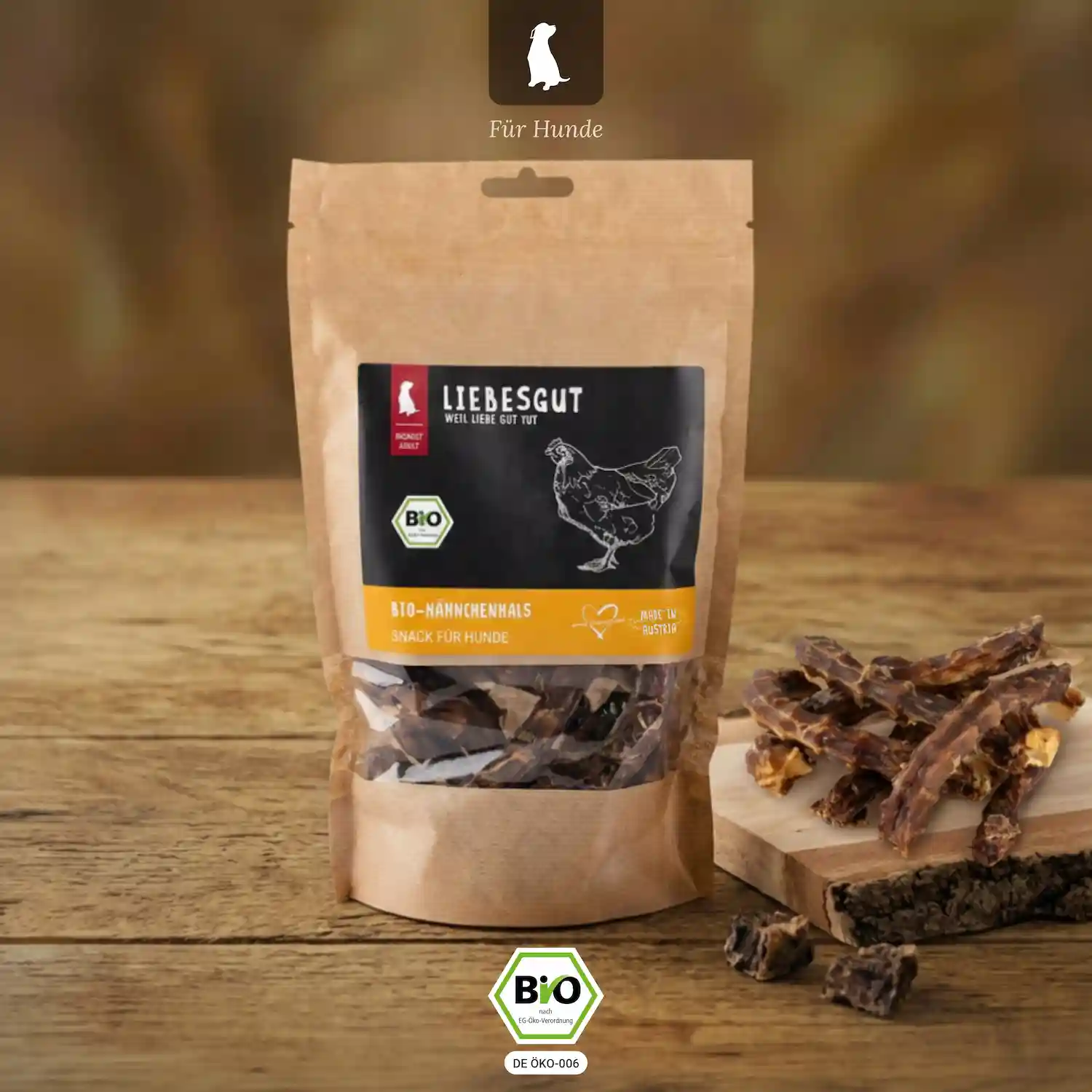
Organic snack for dogs
Contents: 0.1 kg (€39.90* / 1 kg)

Organic dog treats
Contents: 0.9 kg (€47.43* / 1 kg)

Snack for dogs & cats
Contents: 0.6 kg (€38.87* / 1 kg)
Frequently asked questions about puppy food
Which food is best for puppies?
High-quality puppy food that contains balanced amounts of protein, fat, carbohydrates, vitamins and minerals is ideal. It should be specially tailored to the needs of puppies.
Can I give my puppy human food?
It is important to use specialised puppy food, as human food does not always contain the necessary nutrients in the right amounts. Some foods can even be harmful or life-threatening for dogs!
When can my puppy start eating solid food?
Most puppies can start eating solid food at around four weeks of age. However, the transition should be made gradually by first mixing the puppy food with water and then gradually increasing the amount.
How often should I feed my puppy?
Puppies aged 8 weeks to 6 months should normally be fed around 3-4 meals a day. After that, the number of meals can be reduced to 1-3 per day, depending on the breed and size of the dog.
Can I combine dry and wet food for my puppy?
Yes, it is possible to combine dry and wet food. However, high-quality wet food is usually sufficient for a balanced diet. Take your puppy's individual preferences into account.
Should I give my puppy treats?
Treats can be used as a reward and training tool, but should be given in moderation. It is advisable to choose healthy treats and adjust the total amount of food accordingly to avoid overfeeding.
Selected for You
Bio Snack für Hunde
Contents: 0.15 kg (€40.60* / 1 kg)
Organic snack for dogs & cats
Contents: 0.9 kg (€37.94* / 1 kg)
Organic dog treats
Contents: 0.9 kg (€48.70* / 1 kg)
Organic snack for dogs
Contents: 0.9 kg (€34.78* / 1 kg)
Organic snack for dogs
Contents: 0.9 kg (€31.61* / 1 kg)
Organic snack for dogs
Contents: 0.9 kg (€34.78* / 1 kg)
Snack for dogs
Contents: 0.6 kg (€37.92* / 1 kg)
Organic snack for dogs
Contents: 0.1 kg (€39.90* / 1 kg)
Organic dog treats
Contents: 0.9 kg (€47.43* / 1 kg)
Snack for dogs & cats
Contents: 0.6 kg (€38.87* / 1 kg)