


Indulgence for those with a sweet tooth
We love her because of her elegance, her beauty and her headstrong character. The cat is a cuddly tiger, but has always kept her freedom and her own head. She is an extremely skilful hunter. Its anatomy is perfectly designed to catch prey.
It roams around as a silent lone hunter of small prey such as mice and birds. Its ancestor, the Libyan hawkcat, lived in the hot, dry regions of Africa and Arabia.
Nutritionally, it is characterised by the fact that it needs frequent meals, eats its food slowly and selectively and drinks only small amounts of water.
Due to its enzyme equipment, the cat is strictly adapted to the prey animal as a food source. It is a carnivore, a meat-eater. It is strongly influenced by its food, which is why it is difficult to change to a specific complete food once it has become accustomed to it.
General information on the cat's metabolism
Due to their strong protein catabolism, cats have a high protein requirement, especially for the amino acid methionine.
There is no reduction in the productivity of transaminases even when cats are starving.
They have a high demand for amino nitrogen. If the protein concentration is too low, the cat refuses the food or shows low acceptance. The diet should contain at least 12 g vRP (digestible crude protein) per MJ/ME (megajoule/convertible energy).
Cats have a low tolerance for carbohydrates. The intake of starch should not exceed 5g / kg BM (body mass), depending on the degree of digestion, otherwise diarrhoea may occur as a result of microbial starch fermentation in the large intestine.
Essential nutrients for the cat
Arachidonic acid, taurine, B vitamins, vitamin A, linolenic acid, proteins and arginine are essential.
Amino acids: arginine, taurine
Arginine is an essential amino acid, as citrulline and ornithine are not synthesised in the intestinal mucosa due to the lack of pyroline-5-carboxylate synthetase. The cat requires 8 g/kg dry matter. For maintenance, growth or reproduction it is 15g/kg dry matter. A lack of arginine leads to hyperammonaemia, i.e. an abnormally high ammonium content in the blood.
Taurine is essential due to the low activity of cysteic acid decarboxylase. This amino acid is only present in animal tissue. The requirement in wet feed is 2g / kg DM (dry matter). In dry feed it is 1g / kg dry matter. A taurine deficiency leads to retinal atrophy (progressive, degenerative change in the retina), dilated cardiomyopathy (pathological enlargement of the heart muscle) and fertility disorders.
Fatty acids
Arachidonic acid is essential for cats during reproduction.
The requirement is 0.2 g/kg feed TS. This fatty acid is only found in animal tissue.
Recommendations for linoleic acid, alpha-linolenic acid and eicosapentaenoic acid are 5.5, 0.2 and 0.1 g/kg DM (dry matter) respectively. The content of linoleic acid should be 100 mg/kg DM (body mass).
Vitamins: Vitamin A
Vitamin A is only found in animal tissue. The cat has a deficiency of carotene dioxygenase, which is why the conversion of β-carotene into vitamin A is not possible.
Vitamin A content of some organs:
Heart, chicken 1,128 IU/kg DM (international unit/kg dry matter)
Liver, chicken 1,380,000 IU/kg dry matter
Vitamins: Niacin (from B-complex)
Although the enzymes for niacin synthesis from tryptophan are present, this metabolic pathway is not utilised, as tryptophan is primarily used for energy production due to the high activity of picolinate carboxylase.
The most important component of food is water. Cats drink little, so water should always be offered. The less water is contained in the food, the higher the drinking water intake must be. The minimum amount of liquid is 40 - 60 ml/kg KM.
Product description Organic Salmon:
Analytical constituents: 11 % crude protein, 8.9 % crude fat, 77 % moisture, 1.6 % crude ash, 1.5 % crude fibre
For comparison, the nutrients in the prey animal (mouse): 70- 80 % water, 12- 15 % protein, 7- 12 % fat, 2 % carbohydrates, 1% minerals (crude ash)
Composition and functions:
96 % salmon
Salmon is very rich in protein and contains a high proportion of polyunsaturated omega-3 fatty acids.
1 % carrot
Carrots have a high content of carotene, vitamin C, potassium and iron.
1% apple
Apples contain phytochemicals (secondary plant substances) such as polyphenols, flavonoids and carotenoids. From these groups, apples contain quercetin, catechin, kaempferol, hesperetin, myricetin and phloridzin. These are all powerful antioxidants with an anti-inflammatory effect.
0.5 % chia seeds
Chia seeds are high in protein and have a variable fat content depending on how they are processed. They tend to be low in calcium.
1.5 % Minerals (bulk elements)
Calcium is found in small amounts in soft tissue and controls various metabolic processes such as blood clotting and muscle contraction. It is also important for the permeability of blood capillaries.
Phosphorus is a component of nucleic acids, nucleotides, phospholipids (e.g. lecithin) and many proteins. It has a central function in the activation of various substrates in metabolism (phosphorylation) and for cellular energy metabolism (formation of energy-rich phosphates, e.g. adenosine triphosphate (ATP) or creatine phosphate)
The calcium-phosphorus ratio should be between 2:1 and 1:1.
Magnesium is distributed 50% to soft tissue and 50% to the skeleton. As a component of numerous enzymes, especially phosphatases, it is indispensable in carbohydrate, fat and protein metabolism. After absorption, which averages around 40 %, magnesium is distributed to the body tissues.
In contrast to potassium,sodium and chloride are mainly localised extracellularly, particularly in the blood. In addition, not inconsiderable amounts of Na (almost 50% of the body's total) are found in the skeleton, while chloride is found in higher concentrations in the skin and stomach.
Potassium
The majority is found intracellularly. Potassium is essential for the regulation of osmotic pressure in the cells, but also for the activity of numerous enzymes involved in glycolysis and oxidative phosphorylation.
Additive content per kg
Vitamin A, 1000 IU (international unit)
Vitamin A is a fat-soluble protein. It acts on the epithelia (protection), influences the expression of numerous genes and thus protein synthesis (growth hormone), bone growth, the visual process and is important for the defence against infections of the outer skin and mucous membranes.
Vitamin D3 (cholecalciferol), 100 IU
Vitamin D3 is fat-soluble and promotes the absorption of calcium and phosphorus in the intestine. In combination with parathyroid hormone, renal phosphorus excretion is reduced.
Conversion of 7-dehydrocholesterol to cholecalciferol in the skin by UV radiation does not take place in cats and dogs.
Iron from Fe-(II)-sulphate monohydrate, 22mg
Iron is a central component of oxygen-transferring compounds (haemoglobin, myoglobin), as well as of enzymes that regulate oxygen transfer in the cells (peroxidases, catalases, cytochromes).
Copper as CU-(II)-sulphate pentahydrate, 1.5 mg
Copper is only present in small quantities in the organism. Copper is important as a component of specific enzyme systems, e.g. phenyl oxidases (pigment formation), ferric oxidases (Fe transport and haematopoiesis), cytochrome oxidases (cellular energy metabolism) or lysyl oxidases (structural integrity of the connective tissue components elastin and collagen).
Manganese from Mn-(II)-sulphate monohydrate, 1.5 mg
The manganese content in the organism is rather low. However, this trace element is essential for the function of various enzymes, e.g. those involved in mucopolysaccharide synthesis or phosphorylation.
Zinc from zinc oxide, 25 mg
Zinc is mainly found in the skeleton and is a component of numerous metalloenzymes that are essential for the stability of quaternary protein structures and biomembranes. It is also found in many other enzyme systems of carbohydrate, fat and nucleic acid metabolism. Signs of skin loss (parakeratosis), but also disorders of spermatogenesis and collagen synthesis, as well as the desaturation of essential fatty acids and antibody formation in the event of a deficiency, indicate the diverse functions of this element. Pigment granules from zinc-protein complexes in the tapetum lucidum of the retina reflect light and improve twilight vision. Cell growth and proliferation are not possible without zinc, so it is also important for wound healing.
Selenium as sodium selenite, 0.1 mg
Selenium is a component of glutathione peroxidase, which inactivates harmful free radicals (peroxides). Together with vitamin E, which inhibits the formation of such radicals, it is essential for the integrity of cell membranes.
Taurine, 1300 mg/kg
Taurine is essential due to the low activity of cysteic acid decarboxylase. This amino acid is only present in animal tissue. The requirement in wet feed is 2g / kg DM (dry matter). In dry feed it is 1g / kg dry matter. A taurine deficiency leads to retinal atrophy (progressive, degenerative change in the retina), dilated cardiomyopathy (abnormal enlargement of the heart muscle) and fertility disorders.
Salmon with apple and carrot is an optimally balanced complete food in the best organic quality. It contains all the important nutrients your velvet paw needs. It is gluten-free, lactose-free, grain-free and is characterised by a high fish meat content from just one protein source.
The raw materials used for this organic wet food come from organic farms in Austria and Germany, where great importance is attached to the species-appropriate rearing and husbandry of farm animals. We strictly reject factory farming and animal testing. The food is free from antibiotics, synthetic attractants, colourings and preservatives.
Our most important addition, which we never skimp on, is a huge portion of love, which you give your cat every day by giving it high-quality food.
Bibliography:
Kamphues, Josef, Supplements for animal nutrition, 12th edition, M. & H. Schaper, Hanover, 2014
Zentek, Jürgen, Nutrition of the dog, 8th edition, Enke, Stuttgart, 2016
Our recommendations for your four-legged friend:
Related products
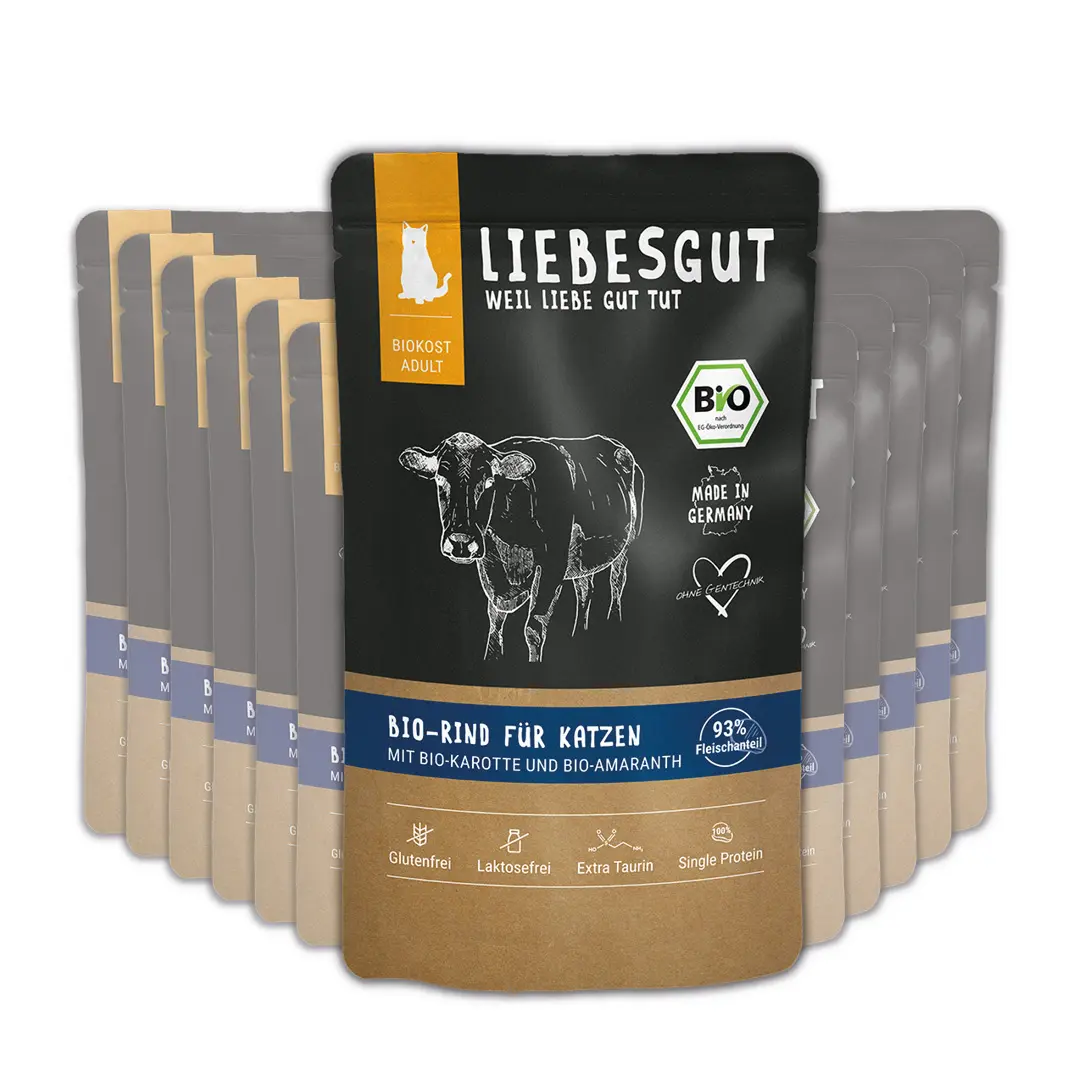
Bio Katzenfutter Adult
Contents: 1.2 kg (€16.91* / 1 kg)
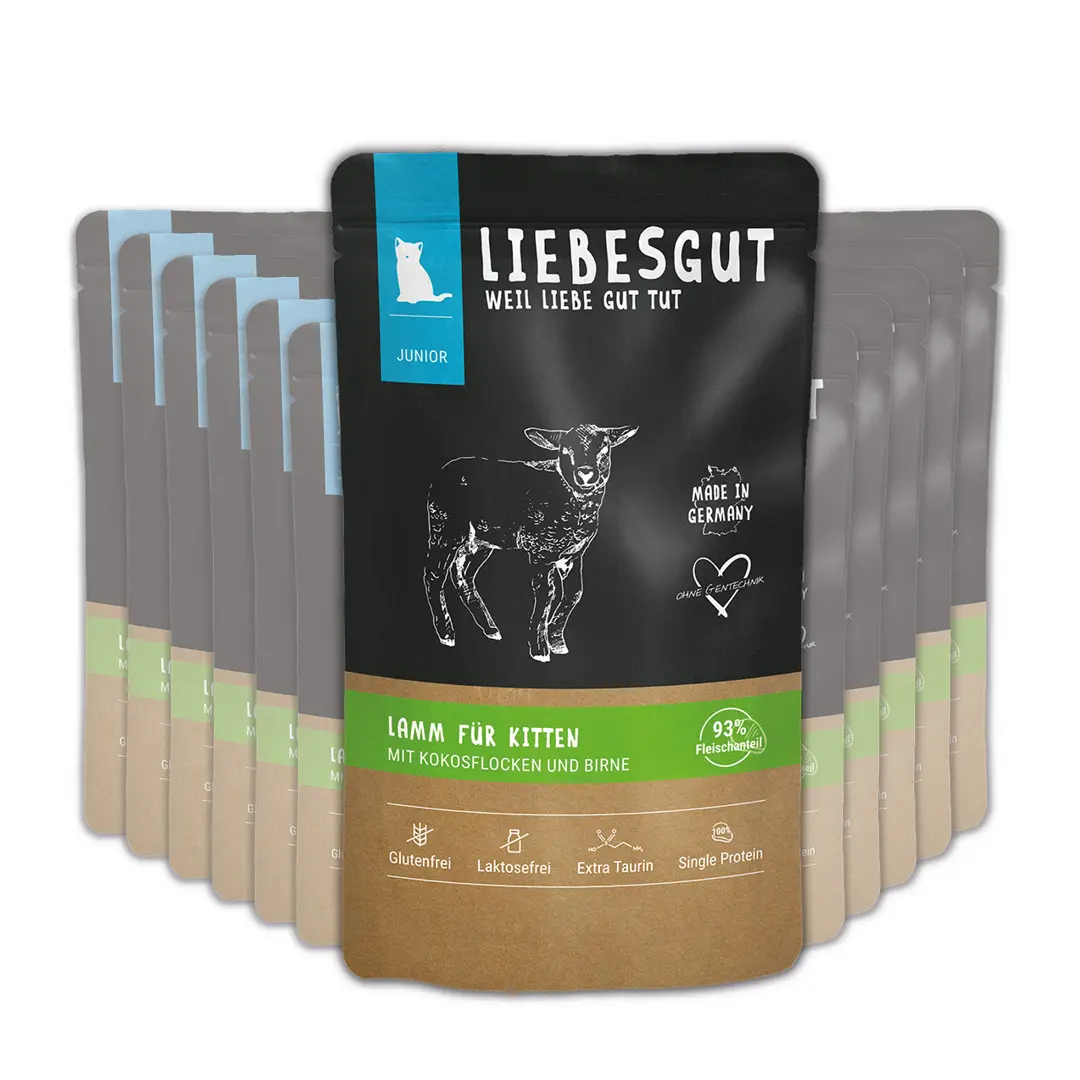
Katzenfutter Junior
Contents: 1.2 kg (€10.14* / 1 kg)
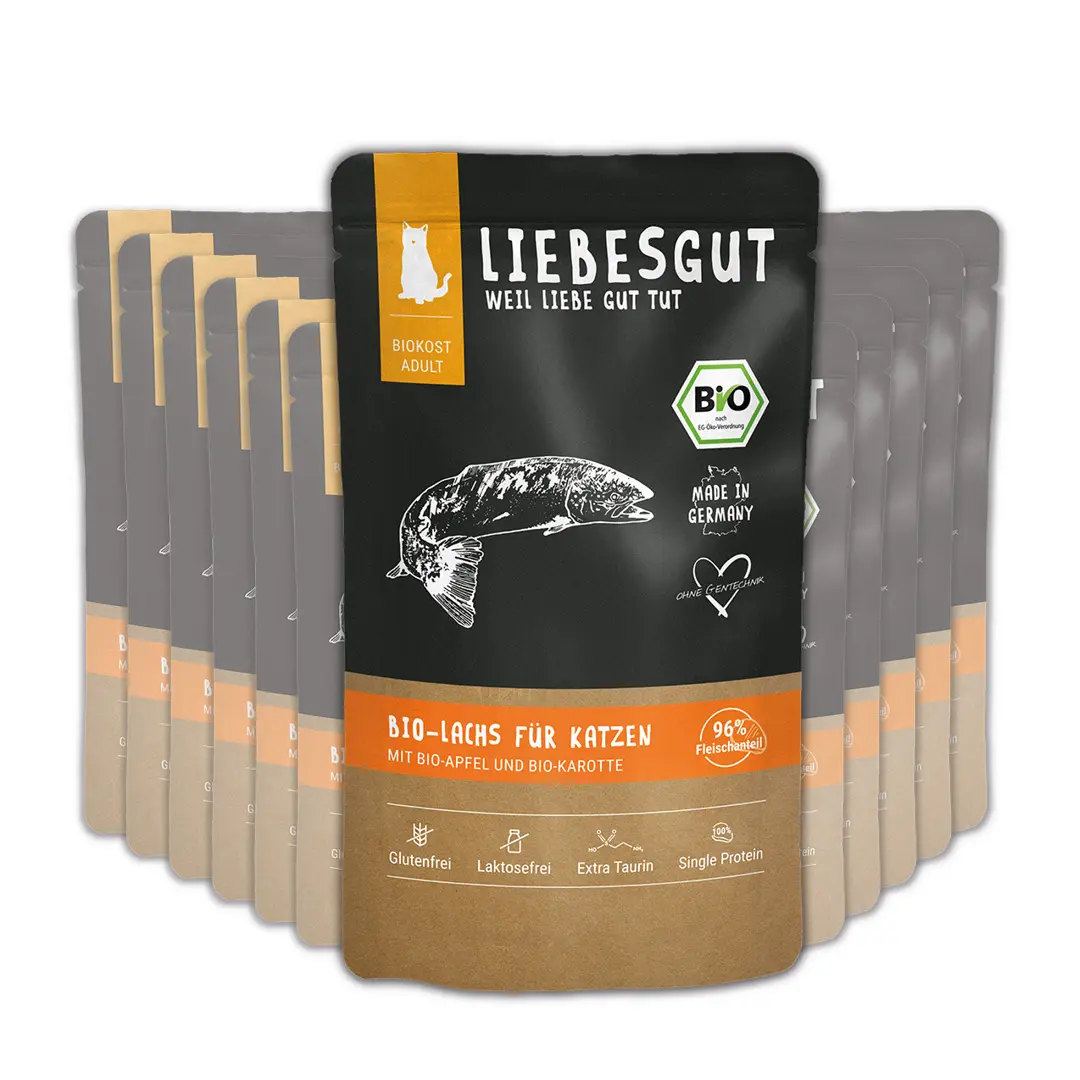
Bio Katzenfutter Adult
Contents: 1.2 kg (€16.91* / 1 kg)