


Convert dog years to human years
Every dog owner wants to know how old their young dog would be in human years. But does this always make sense and is it possible to compare the development of a dog with that of a human?The following article looks at the question of how to convert dog years into human years. Most dog owners are familiar with the well-known rule of thumb, but it's not quite that simple! Several factors need to be taken into account. To understand how old your dog currently is in human years, it helps to take a closer look at your dog's development.
How to convert dog years to human years
The simplest formula is: dog years times seven equals human years. However, this is too superficial, as dogs develop differently to humans. Logically, a one-year-old dog is already fully grown, whereas a seven-year-old child is just starting school.
Now it's getting mathematical!
A formula that establishes a linear relationship is therefore unsuitable for an exact determination. A so-called logarithm function is better. You don't need to dig out your school knowledge for this, just a scientific calculator with a corresponding button that can calculate the natural logarithm (ln).
You simply take the natural logarithm (ln) of your dog's age, multiply it by 16 and add 31, so: age in human years = lnx* 16 + 31, where x is the dog's age.
A one-year-old dog is therefore not seven, but 31 years old and therefore fully grown, which is closer to reality. Later on, the dog does not "age" as quickly, so a nine-year-old Labrador would be 66 years old. If this formula is too complicated for you, you can also find tables online that refer to this formula.
Please note: If you want to convert dog years into human years, you should also take the breed into account, as large dogs in particular often live significantly shorter lives, while smaller dog breeds can live to be 15 years or older.
The 6 stages of your dog's development
Vets divide the development of dogs into six phases:
-
The first phase is called the neonatal phase and lasts about two weeks. At the beginning, puppies are deaf and blind. They sleep most of the time and mainly seek contact with their mother. The mother provides them with food and warmth.
-
From the third week, the eyes open and the first milk teeth appear. You will notice the new phase by the way the puppy reacts to its mother and to you. The puppy still sleeps a lot, but its activities increase. He makes his first social contacts with his siblings.
-
The so-called socialisation phase lasts from the fourth to the twelfth week. This is important because it determines the kind of relationship the dog will develop with you. As a rule, you will have your dog when it is eight weeks old. Now it's up to you to show him his new surroundings and he gets to know the new family members. In this phase, he accepts you and your family. He finds his place in his "pack".
-
The juvenile phase begins from the fourth month. During this time, the dog should understand its place in the family. He should learn the basic commands. He will repeatedly try to test boundaries. Show him gently but consistently where his boundaries are.
-
Depending on the breed, your dog will reach sexual maturity between six and twelve months. This period can be compared to human puberty. Dogs often even react in a similar way. Suddenly they no longer obey the simplest commands. If you were to convert dog years into human years, your dog would be around 20 years old after six months.
-
From around two years of age, the dog becomes more mature and the typical character traits of the breed begin to consolidate. From the age of four, development is finally complete.
Why convert dog years into human years?
For many people, a dog is more than just a pet, it is a friend and sometimes the only companion. The desire to know approximately how old the dog will be may stem from the need to treat the animal as an equal partner and to care for it appropriately for its age. This is right and sensible. If you were to equate the age of a dog with the age of a person, you would have to treat a seven-year-old dog like a child, even though he is almost an old man.
Informed dog owners make their pet happy!
If you are a dog owner or would like to get a dog, you should familiarise yourself with the dog's development. Only if you know the individual phases in detail can you cater to your friend's needs. This is particularly important when it comes to the right diet, as a puppy needs different food to an adult dog.
Our recommendation for your four-legged friend:
Selected for You
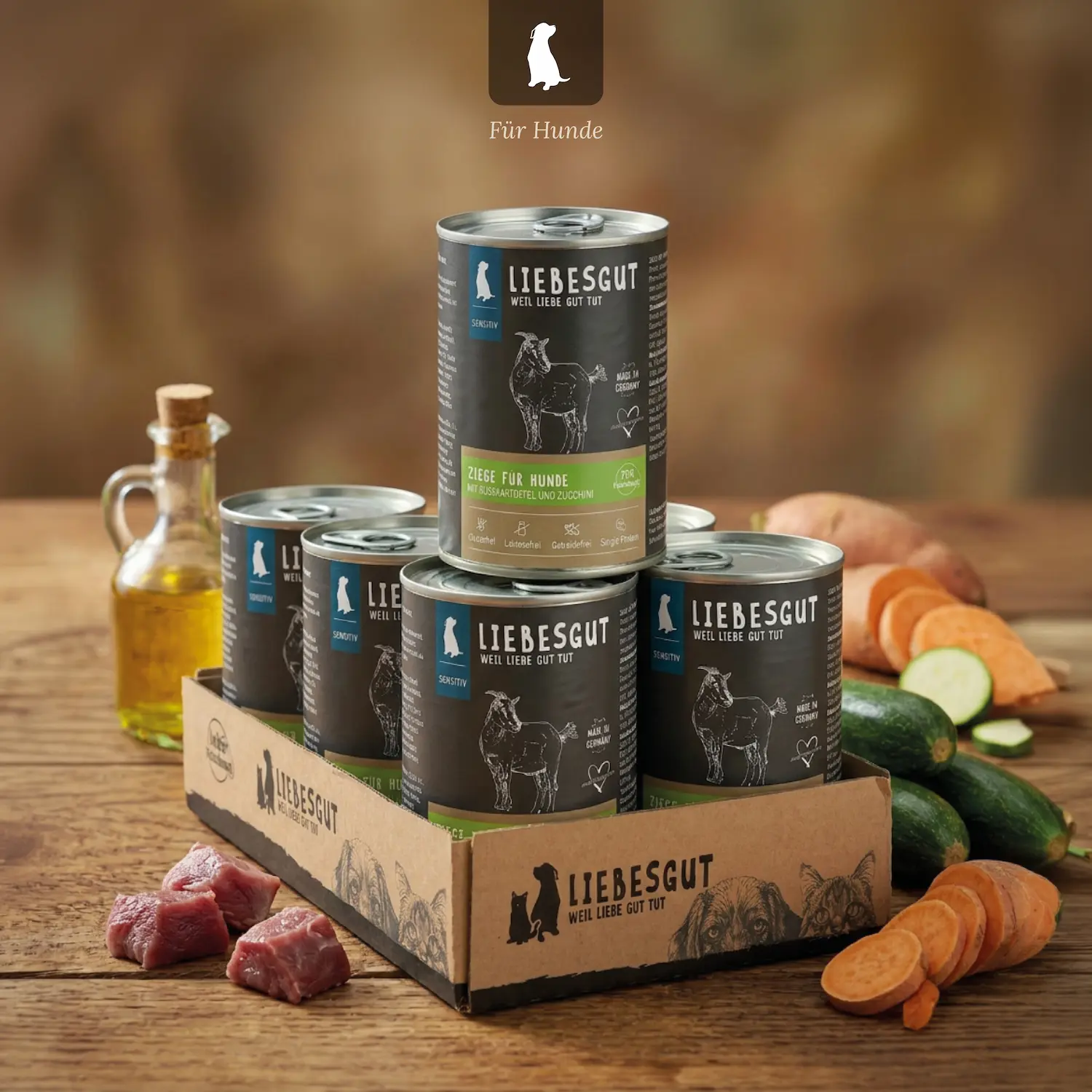
Sensitive dog food
Contents: 2.4 kg (€9.98* / 1 kg)
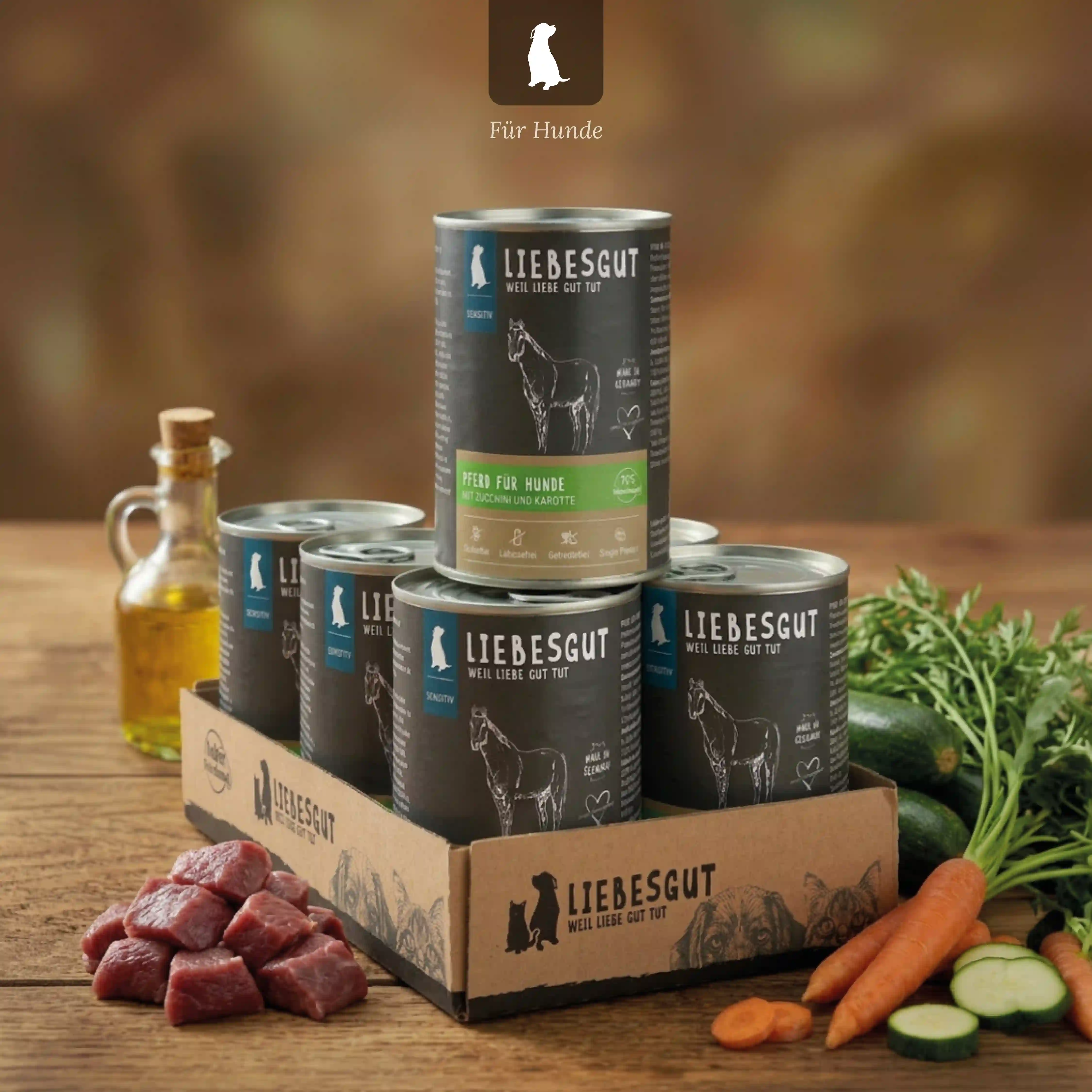
Sensitive dog food
Contents: 2.4 kg (€9.73* / 1 kg)
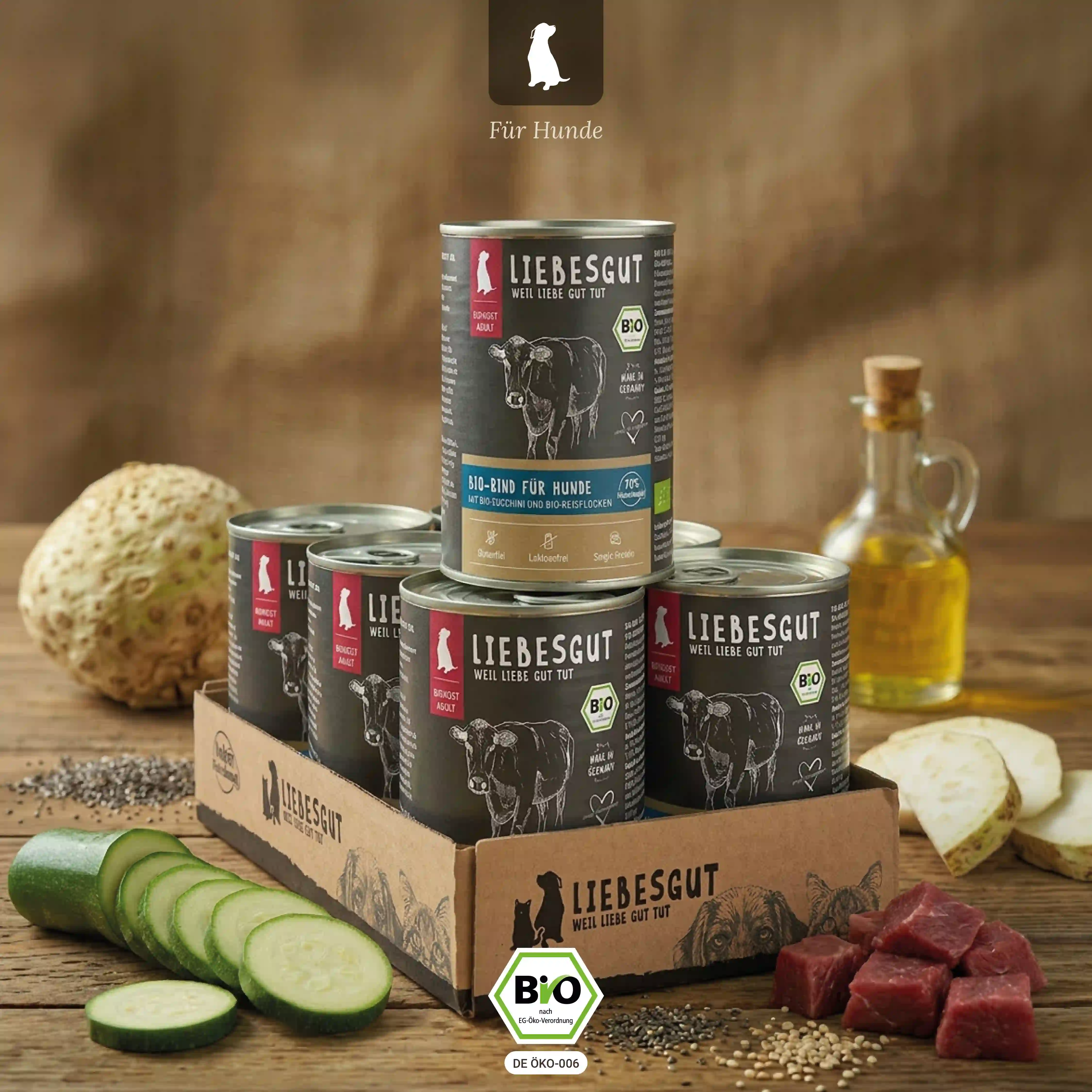
Organic dog food Adult
Contents: 2.4 kg (€9.48* / 1 kg)
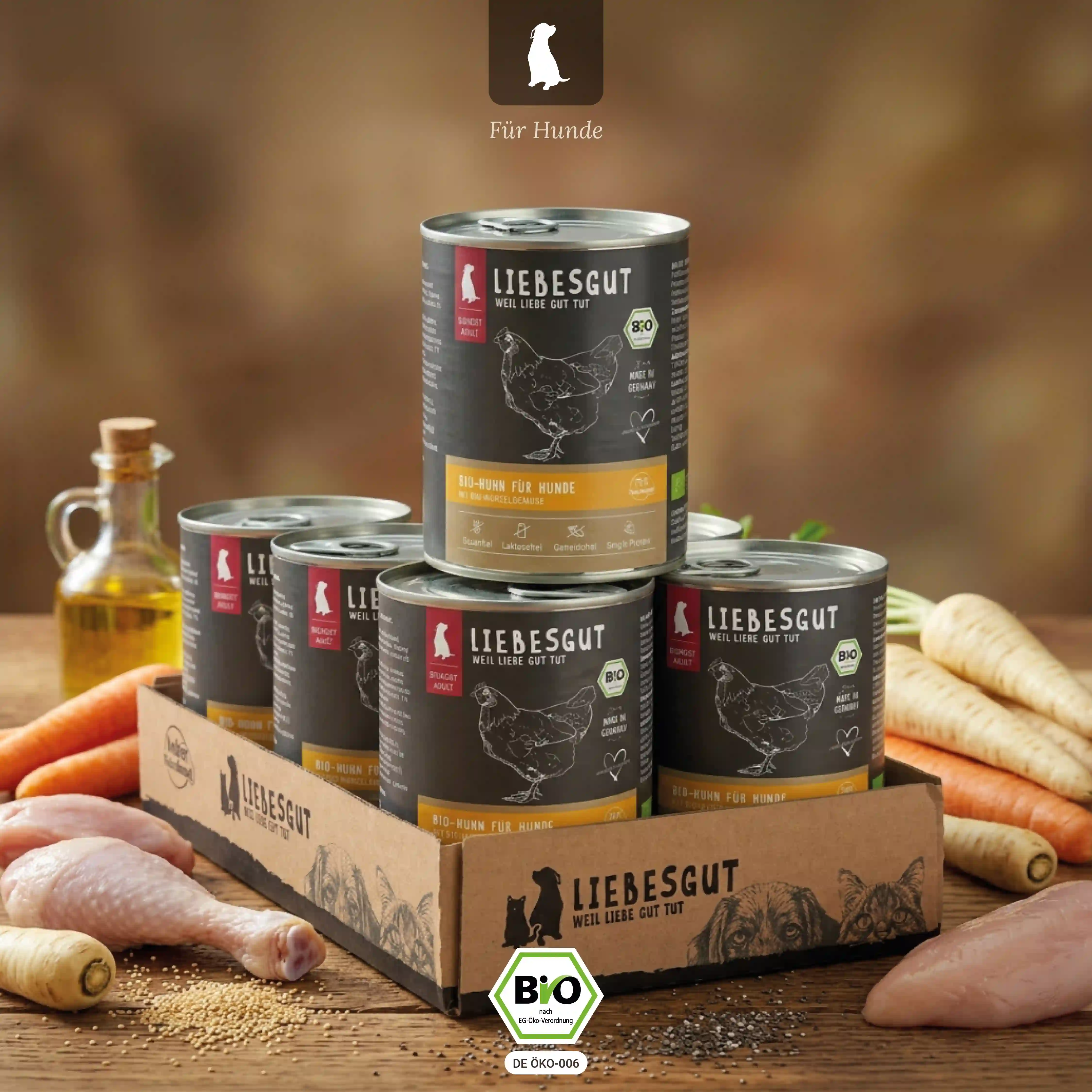
Organic dog food Adult
Contents: 4.8 kg (€7.61* / 1 kg)
Frequently asked questions about "Converting dog years to human years"
Is the conversion of dog and cat years to human years the same?
The conversion from cat years to human years works slightly differently. A cat also develops faster than a human. The first two years of a cat's life correspond to about 25 years. For each additional year, four human years must be added.
Can you compare dog years with human years?
If you want to convert dog years into human years, don't make the mistake of equating them, because humans develop much more slowly. A seven-year-old dog is a fully-grown animal, almost a senior citizen, whereas a human is just in the first year of primary school.
Does a dog year always correspond to seven human years?
No, this is not true, especially in the first year of life, because a dog is fully grown and sexually mature after one year at the latest.
How old do dogs actually get?
Dogs live to be 10-15 years old on average. This depends on the size and breed. Dachshunds and miniature poodles live particularly long. They can live up to 18 years. If you feed your dog well, give it plenty of exercise and treat it with love, you can extend its life expectancy.
Selected for You
Sensitive dog food
Contents: 2.4 kg (€9.98* / 1 kg)
Sensitive dog food
Contents: 2.4 kg (€9.73* / 1 kg)
Organic dog food Adult
Contents: 2.4 kg (€9.48* / 1 kg)
Organic dog food Adult
Contents: 4.8 kg (€7.61* / 1 kg)