


All about cat health
Nutrition tips for your senior cat
Cats may have seven lives, but they are no more protected from ageing than we humans are. Senior cats have different nutritional requirements than, for example, kittens or adult animals. The food should provide the cat with optimal nutrition and prevent age-related diseases as far as possible so that your cuddly tiger can run around the house as fit and agile as possible for as long as possible. In this article, you'll find out what you should bear in mind to ensure your cat is well looked after in old age.
Avoid being overweight
Cats are considered older animals from the age of seven to eight and old from the age of ten to twelve. The extent to which the nutritional requirements of old cats differ from those of adult animals has not yet been well researched. It is assumed that the respective requirements are not too far apart. If you have a cat topi or a cat lomi at home, you will know that older cats are no longer as active as kittens and would prefer a warm basket to an exciting ball game any day. The energy requirement therefore decreases, the muscle mass decreases and the fat mass increases. Food for old cats should have a high nutrient density, i.e. contain many vitamins and minerals per portion of food. A lower energy content can prevent cats from putting on extra pounds and prevent associated illnesses.
The hormonal balance changes in older cats, which affects nutrient absorption. The pancreas produces fewer hormones that regulate blood sugar levels. As a result, diabetes mellitus occurs more frequently in older cats. In such cases, a special diet is necessary that contains less simple sugars and more complex carbohydrates and fibre as well as high-quality protein. The risk of old cats developing diabetes mellitus increases if they are overweight. It is therefore important to ensure that senior cats maintain a healthy normal weight.
Pay attention to potential underweight
In addition to the overweight mentioned above, underweight can also be a problem in older cats. Cats over the age of eleven are particularly often affected. As with old people, the sense of smell and touch, among other things, diminish with age. If the food no longer smells as delicious as it used to, the senior cat no longer wants to eat as often and loses weight as a result. A lot of tartar and tooth loss can also cause older animals to eat less and lose weight. Added to this are changes in the gastrointestinal tract, which mean that older cats are less able to utilise the nutrients in their food. This means that less usable energy reaches the cat than was the case at a younger age. This can result in deficiency symptoms and underweight. If your cat tends to be underweight, it may be advisable to feed a particularly high-energy food. Your vet can advise you as to whether additional food supplements are necessary. Very old cats in particular need a high energy density as they tend to be particularly underweight.
Old cats need just as much water as younger animals. Compared to other animal species, cats are not heavy water drinkers as they come from arid regions. In older animals, the feeling of thirst decreases even further. The cat can quickly become dehydrated as a result. Make sure that your velvet paw has access to fresh drinking water at all times. Healthy cats consume around 200 to 250 ml of liquid per day. The advantage of wet food is the moisture it contains, which provides old cats with a good supply of water.
Ensure sufficient fibre
Fibre also plays an important role in the diet of old cats. Various factors mean that older cats often suffer from constipation. This can be due to reduced water intake and a lack of physical activity in older cats. Fibre promotes digestion and prevents constipation. A high fibre content in food for older cats also has a positive effect on various diseases that occur more frequently with increasing age, such as obesity and high blood lipid levels.
We offer you our organic complete food in harmony with nature for senior cats. All our menus have been developed by vets and nutritional specialists. The all-natural, organic recipes combine all the essential nutrients for old cats. In addition to fresh muscle meat, animal-friendly offal and fresh vegetables and herbs provide important nutrients for your senior cat. High-quality oils provide a special balance of fatty acids. For nutritionally sensitive cats, we offer the Sensitive line, which is particularly well tolerated.
The raw materials used for this organic wet food come from organic farms in the Upper Bavaria region, where great importance is attached to the species-appropriate rearing and husbandry of farm animals. We strictly reject factory farming and animal testing. Our feed is completely free from additives. What we never skimp on, however, is a large portion of love, because it simply does you good!
Our recommendations for your four-legged friend:
Selected for You
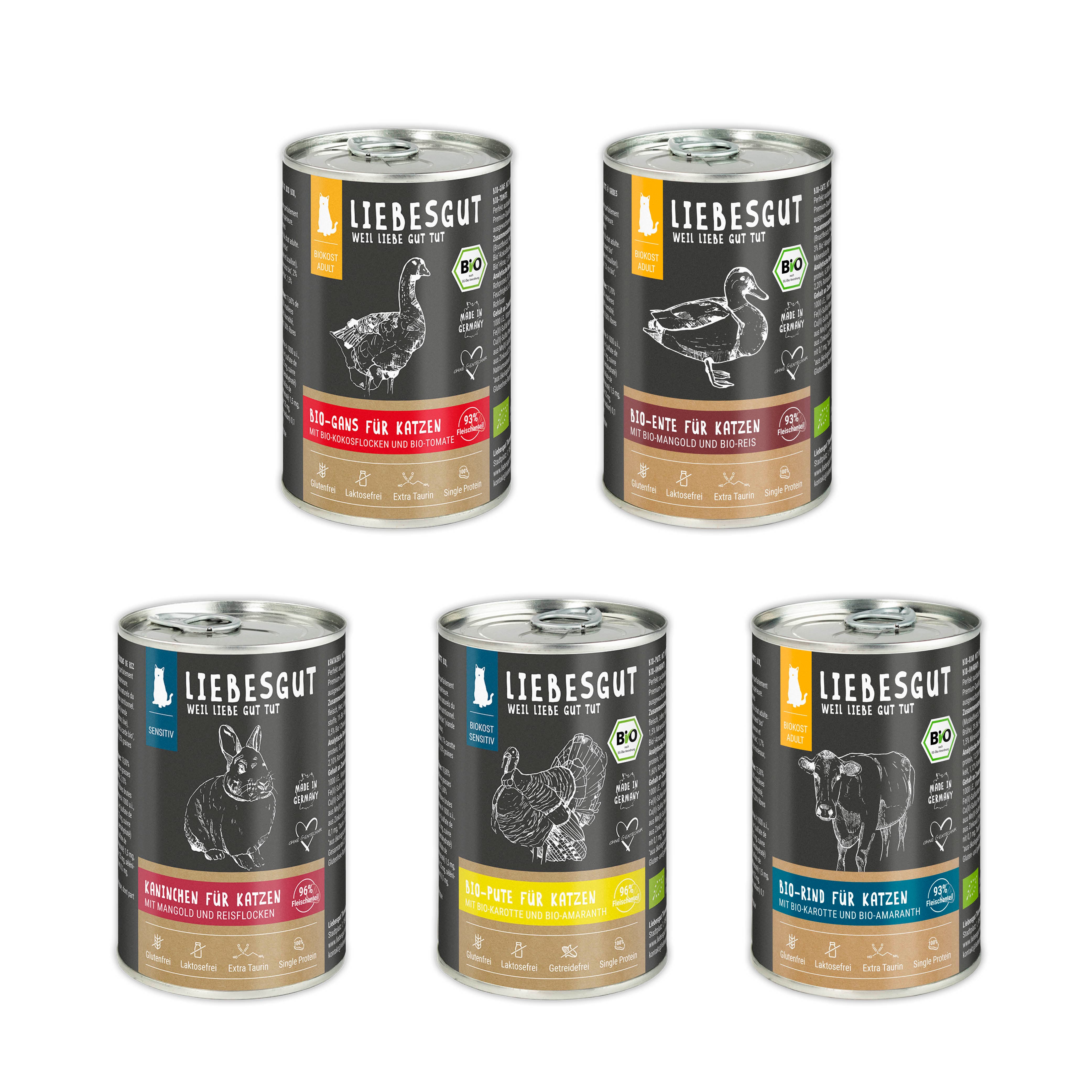
Organic cat food Adult
Contents: 4 kg (€8.95* / 1 kg)

Adult & Sensitive cat food
Contents: 1.2 kg (€15.74* / 1 kg)

Adult & Sensitive cat food
Contents: 2.4 kg (€12.46* / 1 kg)

Adult cat food
Contents: 0.8 kg (€15.58* / 1 kg)
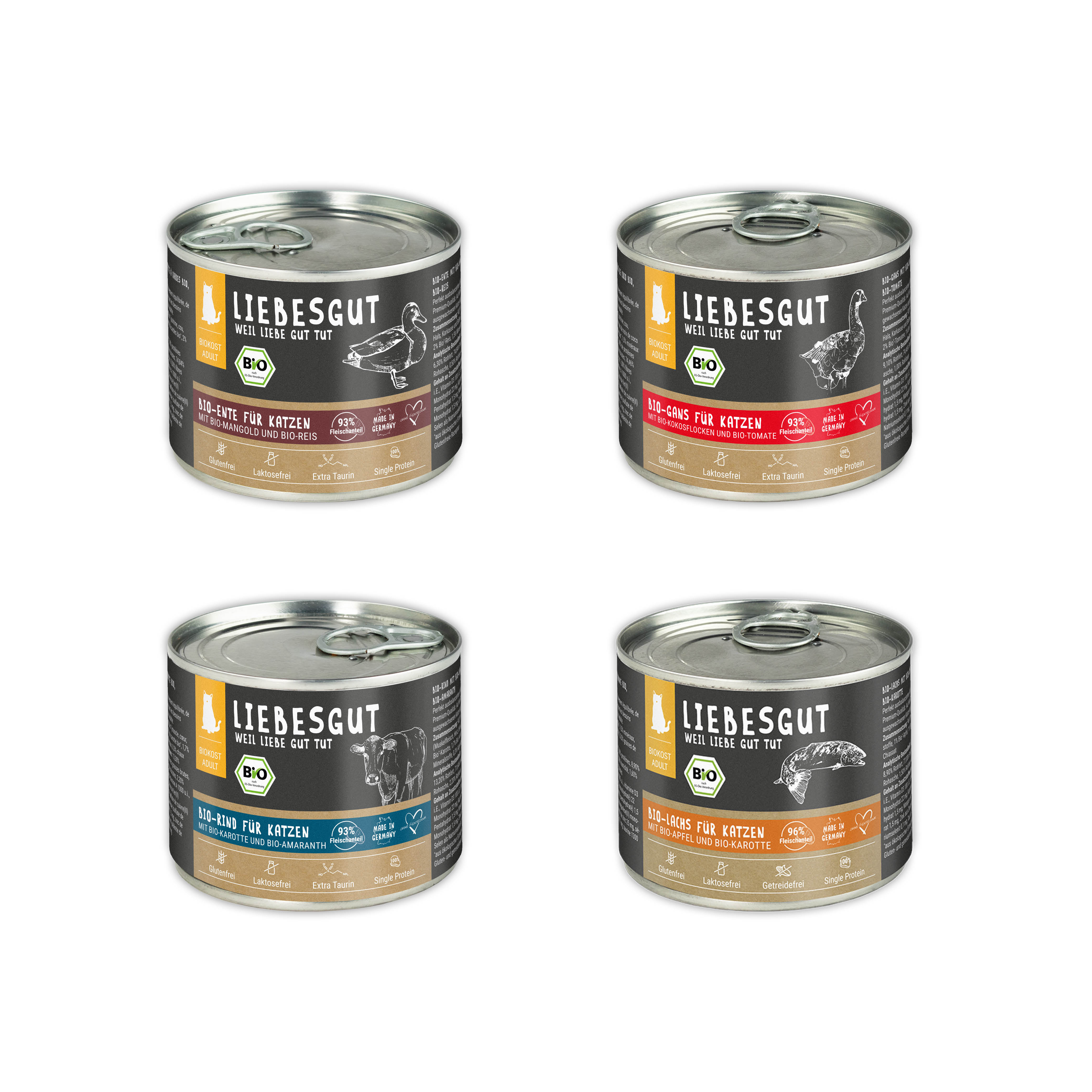
Adult cat food
Contents: 1.6 kg (€12.18* / 1 kg)

Junior cat food
Contents: 0.6 kg (€15.73* / 1 kg)
Adult & Sensitive cat food
Contents: 0.6 kg (€15.73* / 1 kg)

Sensitive cat food
Contents: 0.4 kg (€16.05* / 1 kg)

Sensitive cat food
Contents: 0.8 kg (€13.01* / 1 kg)
Selected for You
Organic cat food Adult
Contents: 4 kg (€8.95* / 1 kg)
Adult & Sensitive cat food
Contents: 1.2 kg (€15.74* / 1 kg)
Adult & Sensitive cat food
Contents: 2.4 kg (€12.46* / 1 kg)
Adult cat food
Contents: 0.8 kg (€15.58* / 1 kg)
Adult cat food
Contents: 1.6 kg (€12.18* / 1 kg)
Junior cat food
Contents: 0.6 kg (€15.73* / 1 kg)
Adult & Sensitive cat food
Contents: 0.6 kg (€15.73* / 1 kg)
Sensitive cat food
Contents: 0.4 kg (€16.05* / 1 kg)
Sensitive cat food
Contents: 0.8 kg (€13.01* / 1 kg)