


A new family member: Better from the animal shelter or directly from the breeder?
Animal shelter or breeder? We shed light on the pros and cons that mums and dads should be aware of when deciding to add a pet to the family. But be careful: buying a pet should always be a well-considered decision - Christmas or not!
The breeder:
One of the main advantages of buying from a breeder is that you can search for a specific breed, especially for dogs and cats. If you want to buy a particular breed, you can use a variety of methods, such as the Internet or enquiries to breeders' associations, to find suitable dealers. This also has the advantage that the breeders are usually very familiar with the breed, possible health problems and the like. Finally, you will probably be given tips on nutrition, play and exercise, which is also very helpful when starting out. You also have a contact point should any questions or problems arise in the future.
Once a breeder has been found, you will receive your chosen dog chipped, vaccinated including vaccination certificate and wormed. With reputable breeders, new owners can be sure that all the medical steps required for a puppy have been taken. This saves the new pet parents a few visits to the vet, which can sometimes be very time-consuming.
In addition to the medical certificates, the new owner will also receive documents relating to the animal's pedigree. The pedigree up to the grandparents or beyond is entered on the identification papers and the dog's specific characteristics (character, physical features, colour, breed, sex, date of birth) can be found on them. For many future pet owners, these papers, which provide proof of origin and breed purity, are the deciding factor in favour of buying from a breeder.
The high price can be seen as a disadvantage when buying from a breeder. Prices can range from at least €800 to €3000, and rare breeds can cost even more. However, the costs are understandable and generally fair, as the breeder has to pay for veterinary costs, feed costs, membership of breeding clubs and, of course, advertising for the industry.
If you want to buy a particular breed, it may be that a reputable dealer specialising in it is very far away, even several hundred kilometres. And a long car journey, which is usually unfamiliar to young animals, can lead to a breakdown in trust if the relationship between humans and animals is not yet established.
And unfortunately, not every breeder in or around Germany is reputable. There have already been cases where the pedigree papers are forged and the puppies are not bred in so-called "puppy mills" out of sheer greed for money, but rather produced. There, the dams go into pregnancy as often as possible without the opportunity to recover sufficiently between the individual litters. The puppies are separated from their mothers too early and crammed into kennels that are far too small. This approach can lead to the development of psychological and physical deformities, so that the supposed pedigree dog becomes a problem case. In particular, you should avoid buying breeds that are "in fashion" at the moment. This encourages the mass production of breeds that are popular for a short time, because where there is a high demand, there is also a supply - at the expense of the welfare of the animals.
A trustworthy dealer should be organised in an association or club and be able to prove this. He should not be afraid to let you inspect the keeping conditions and at least show you the dam, ideally also the sire, and compare them with the pedigrees. Then you can be sure that the puppies have not been bought in from breeding factories and are being sold on via a supposed showcase breed.
So if you are looking for a specific animal, a breeder is a good choice, but you should always find out about the breeder and the breeding conditions.
The animal shelter:
First of all, we want to dispel the rumour that all animals from the shelter are maladjusted. Many people think that most of the animals were picked up off the street and have had a disastrous past. There can be many reasons why an animal has ended up in a shelter, but usually the owner's circumstances have changed: Moving into a rented flat where pets are not allowed, the dog or cat cannot accept a newborn baby, divorce or developing an allergy to name but a few. Unfortunately, it still happens too often that an owner underestimates the care of a dog or cat and therefore gives the animal away to a shelter. This is particularly the case in the months after Christmas, when the supposedly perfect gift gets bigger and bigger and turns out to be less easy to care for than expected.
If you are looking for a special kitten, it is of course more difficult to find one in a home than at a breeder. However, there are also internet portals that link several homes with each other, so that you can relatively easily extend your search for the desired animal to several shelters. The advantage of an adult animal is that they are usually already house-trained and have mastered basic commands. This is often specifically trained for better placement in the centres.
You can usually ask the carers about an animal's preferences and character traits. They work with the animals almost every day, so it is easy to assess which animal suits whom. It is best to make an appointment at the home and describe your living conditions and wishes as precisely as possible in order to find the perfect animal for you.
If you are keen to find out the background story of the potential pet, you will often lose out. The exact age of abandoned animals is unknown, and even with surrendered pets it always depends on how much information the previous owner has provided. But you shouldn't let this put you off, because you now have time to get to know your new pet better without any major obligations. In almost all centres, you will have the chance to walk your chosen dog or play with your chosen cat a few times. In this way, you can quickly establish whether the person suits the animal. It also takes some of the pressure off the carers. Many dog lovers who cannot afford their own dog or whose housing situation does not allow it, regularly come to animal shelters to walk the dogs. A win-win situation for people and animals. All you have to do is observe minor formalities and the official walk times of the centres.
Once you have found the perfect animal for you, you cannot simply take it home with you, depending on the type of animal. This is because the animal shelters do not focus on placing the right animal with the new owner, but rather on placing the right owner with the animal. To ensure that a future proud pet owner is also prepared for the animal flatmate, the following information is requested, depending on the facility:
- Written self-disclosure: information on the housing situation, declaration from the landlord as to whether pets are permitted, etc.
- Pre-inspection: the information in the self-declaration is checked on site.
- Follow-up inspection: Usually unannounced, a check is made within 3 months to see how the pet has settled in with the new owner.
Once everything necessary has been clarified, the new addition to the family can be taken home. It is essential to clarify in advance what you need to bring with you, e.g. dog lead, cat cage, collars. Now all you have to do is pay the so-called protection fee. Depending on the animal shelter, this is €200-300 for dogs and around €100 for cats. There may be additional costs for medical care, but normally all animals are already chipped, wormed, vaccinated and, if possible, neutered. Compared to buying an animal from a breeder, the adoption fee is a fraction of the cost. And since 100% of the income from the protection fee is used for the care of pets, it is basically almost too cheap. In addition to the good feeling of having taken an animal out of a shelter, the new owner should also find out about possible benefits. For example, the city of Munich waives the dog tax for one year when taking in a shelter dog.
In the end, everyone has to decide for themselves where to buy a pet. Everything has its advantages and disadvantages. However, we always advise you to remember that there are countless animals waiting for new owners in animal shelters...
Our recommendations for your four-legged friend:
Selected for You

Sensitive dog food
Contents: 2.4 kg (€9.73* / 1 kg)

Snack for dogs
Contents: 0.1 kg (€39.90* / 1 kg)

Organic cat food Adult
Contents: 1.2 kg (€12.46* / 1 kg)
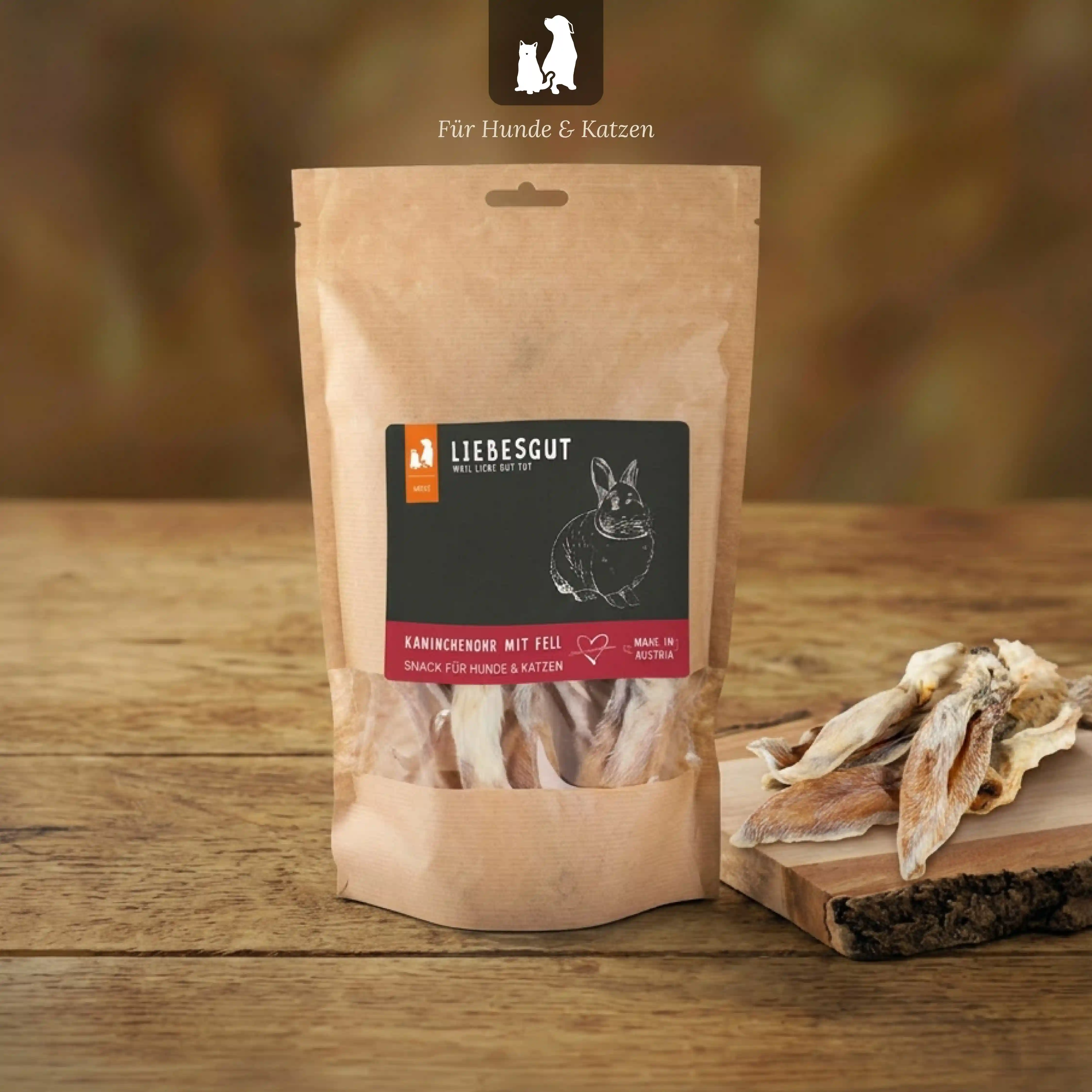
Snack for dogs & cats
Contents: 0.1 kg (€40.90* / 1 kg)

Adult dog food
Contents: 4.8 kg (€7.59* / 1 kg)
Selected for You
Sensitive dog food
Contents: 2.4 kg (€9.73* / 1 kg)
Snack for dogs
Contents: 0.1 kg (€39.90* / 1 kg)
Organic cat food Adult
Contents: 1.2 kg (€12.46* / 1 kg)
Snack for dogs & cats
Contents: 0.1 kg (€40.90* / 1 kg)
Adult dog food
Contents: 4.8 kg (€7.59* / 1 kg)